We Need to Say What Socialism Will Look Like
Socialists can't wave away concerns about the feasibility of a future socialist society — we need to offer people credible answers.
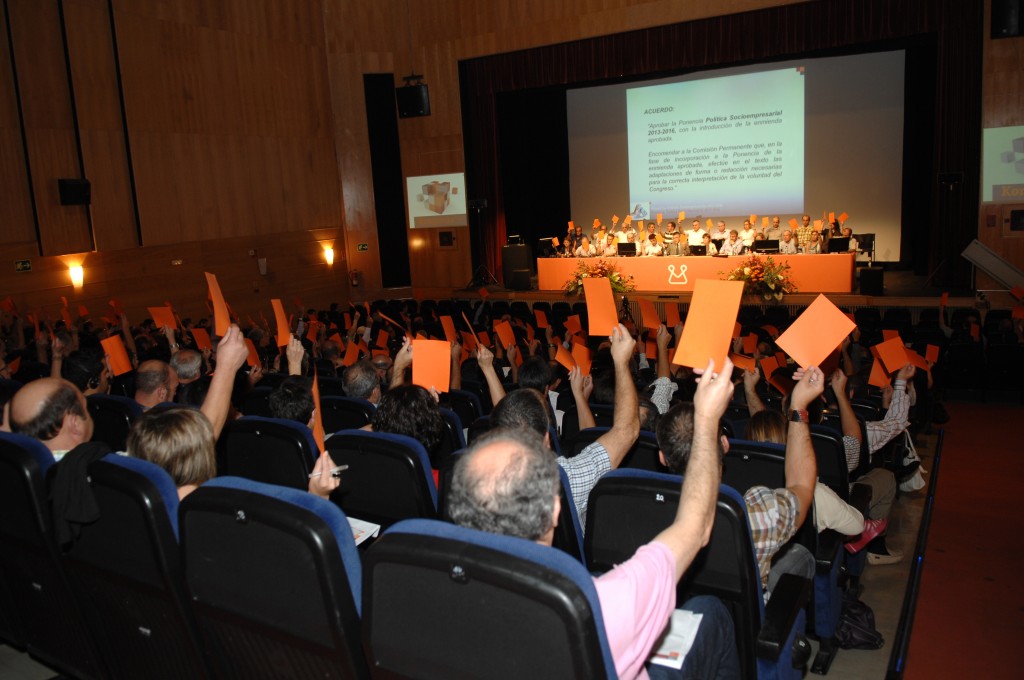
Members of the Mondragón Cooperatives vote on a proposed 2013-2016 corporative policy.
When, some four decades ago, Thatcher arrogantly asserted “there is no alternative,” a confident left might have turned that declaration on its head by adding “yes, there is indeed no real alternative — under capitalism.” But no such left existed. The radical left was too small to matter, and social-democratic parties had by then long retreated from advocating socialism as a systemic option. Over the intervening decades steps towards a radically egalitarian and democratic transformation of society have, in general and in spite of the advent of a vague “anticapitalism,” further receded.
Of the two central tasks the making of socialism demands — convincing a skeptical populace that a society based on public ownership of the means of production, distribution, and communication could in fact work, and acting to end capitalist rule — the overwhelming focus of those still committed to socialism has been on the political battle to defeat capitalism. What the society at the end of the rainbow might actually look like has, with some notable exceptions, tended to receive only rhetorical or cursory attention. But in the gloomy shadow of socialism’s marginalization, the cavalier assertion of socialism’s practicality will no longer do. Winning people over to a complex and protracted struggle to introduce profoundly new ways of producing, living, and relating to each other demands a much deeper engagement with socialism’s actual possibility.
For socialists, establishing popular confidence in the feasibility of a socialist society is now an existential challenge. Without a renewed and grounded belief in the possibility of the goal, it’s near impossible to imagine reviving and sustaining the project. This, it needs emphasis, isn’t a matter of proving that socialism is possible (the future can’t be verified) nor of laying out a thorough blueprint (as with projecting capitalism before its arrival, such details can’t be known), but of presenting a framework that contributes to making the case for socialism’s plausibility.