What Zohran Can Learn From the Sewer Socialists
From Milwaukee’s sewer socialists to La Guardia’s New Deal metropolis, urban reformers changed their cities by forging alliances beyond local power.
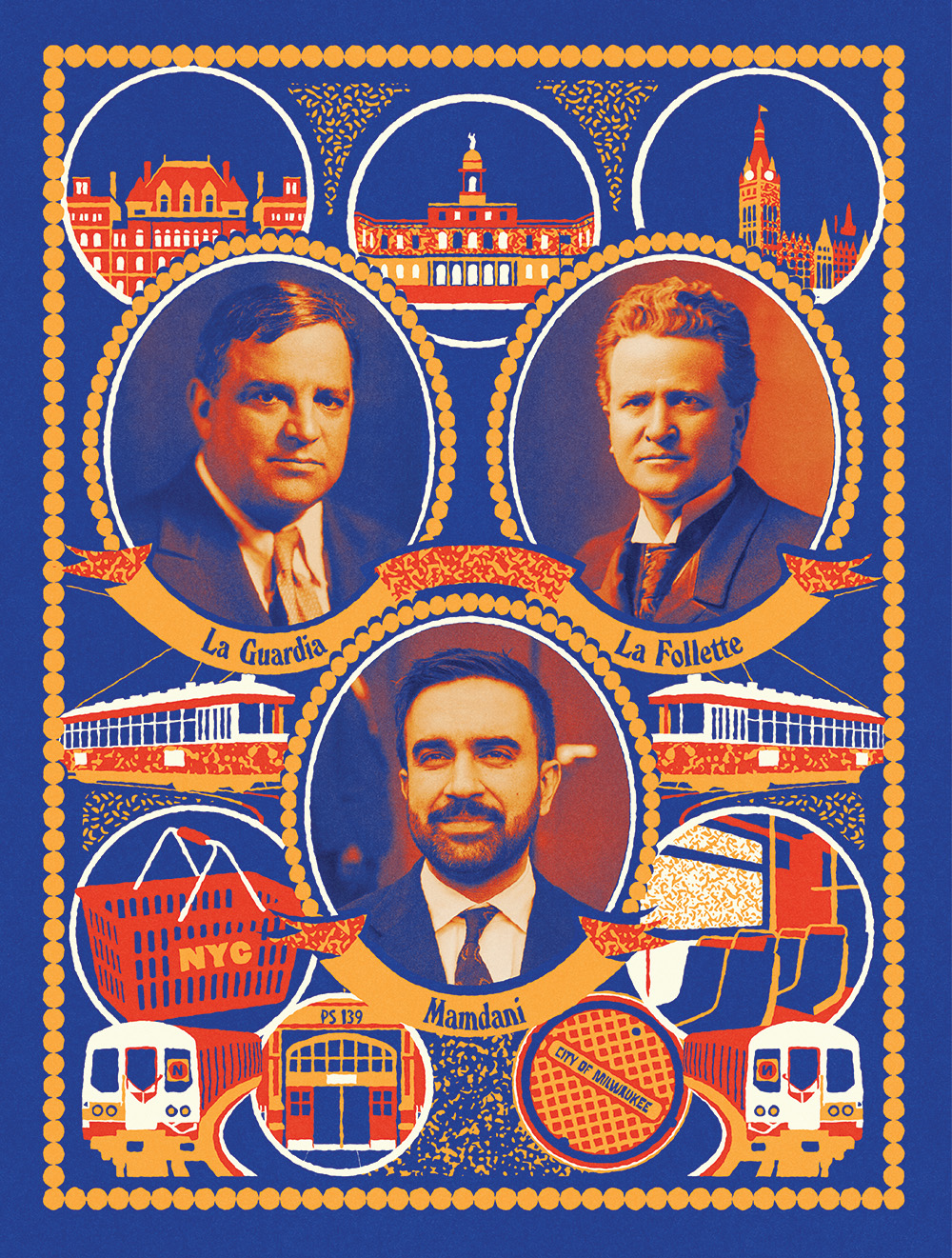
Illustration by Gabe Schneider
It was something like getting the band back together. There at Zohran Mamdani’s closing campaign rally on October 26, nobody could have been surprised to see Bernie Sanders, Alexandria Ocasio-Cortez, five other members of the New York State Socialists in Office committee and the two socialist New York City councilors flanking New York’s next mayor.
But the same cannot be said of some other public officials who spoke from the stage at Forest Hills Stadium in Queens that evening: New York State Assembly speaker Carl Heastie, State Senate majority leader Andrea Stewart-Cousins, and, most incongruously of all, Governor Kathy Hochul. None of them could be mistaken for progressives, let alone socialists. Not long before the rally, Hochul declared herself a “staunch capitalist” opposed to Mamdani’s proposals to raise taxes on the richest New Yorkers. Yet there they were, in front of a raucous crowd of thirteen thousand supporters, boosting the candidacy of the thirty-four-year-old insurgent against former three-term Democratic governor Andrew Cuomo.
The scene was scarcely thinkable mere months earlier, when Mamdani hovered around 1 percent in the polls and even most Democratic Socialists of America (DSA) members considered him a long shot at best. What brought this motley crew together? For one thing, Hochul, Heastie, and Stewart-Cousins are all Democrats, and Mamdani was the Democratic candidate for mayor of New York. Whatever their misgivings about Mamdani’s program, an open rift with their party’s standard-bearer — one who is wildly popular with precisely those voters with whom they need to rebuild their credibility — would have been a bad look for them.