America Can’t Build Homes Anymore
Cities stopped building not by accident but by design. Our housing system is constructed on scarcity, speculation, and private veto power.
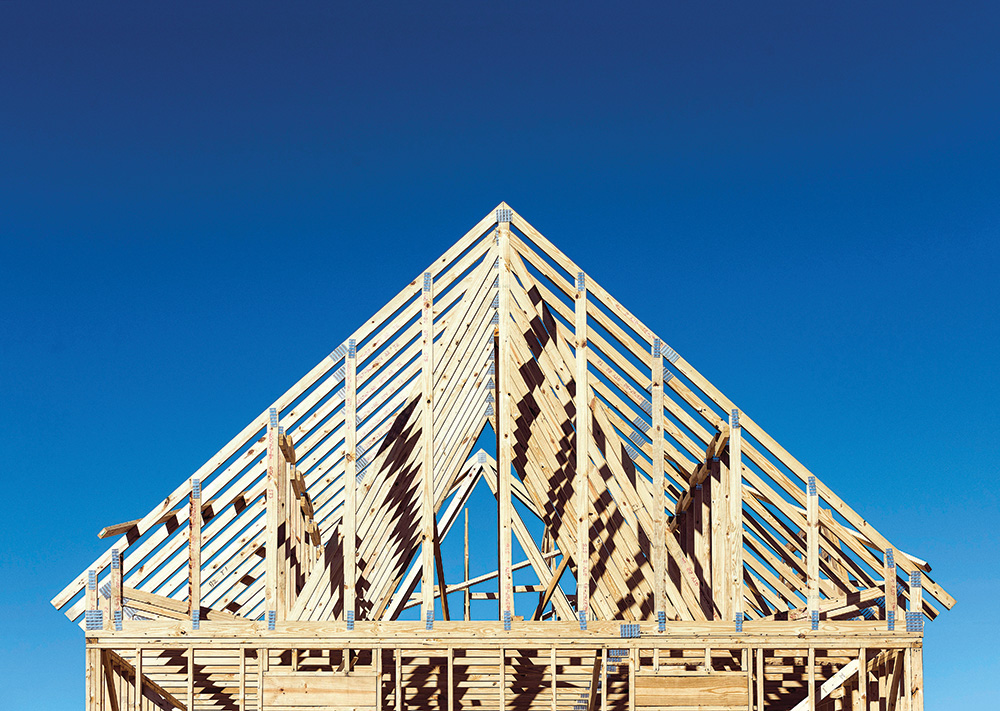
(John Greim / LightRocket / Getty Images)
Walk through any major American city today, and you’ll see the same paradox: vacant office towers beside crowded apartments, underused lots amid soaring rents. It’s not that we lack space or need — it’s that we’ve forgotten how to build. Our once prolific construction machine has sputtered, leaving cities caught between scarcity and speculation.
Inside and outside our cities, the decade after World War II saw one of the greatest home-building booms in the nation’s history. From a low of 3.7 constructions per 1,000 households in 1944, not far from the nadir of the Great Depression in 1933, that figure increased more than tenfold to 44.4 in 1950. The share of GDP dedicated to residential investment hit 7.3% that same year, a level that has not been matched since — not even during the peak of the 2000s housing bubble. And although those elevated numbers were not entirely sustained, construction starts remained above 25 per 1,000 households for most of the 1950s, while residential investment failed to dip below 4.5% of GDP until the mid-1960s.
Compare that to modern history. After the 2008 financial crisis, new housing starts collapsed to 4.7 per 1,000 households, worse than 1935, while residential investment plummeted to less than 3% of GDP, where it would remain until 2013. Neither figure hit anything like normal levels until the late 2010s. That economic “lost decade” built up a massive housing shortage not unlike the one that developed during the Depression and the war in the 1930s and ’40s.