A Palestinian Family Tale Made Epic in All That’s Left of You
Cherien Dabis’s film All That’s Left of You follows one Palestinian family from the Nakba to 2022. More than the story of a single family, it’s the story of a common humanity persisting through the nightmare of displacement and occupation.
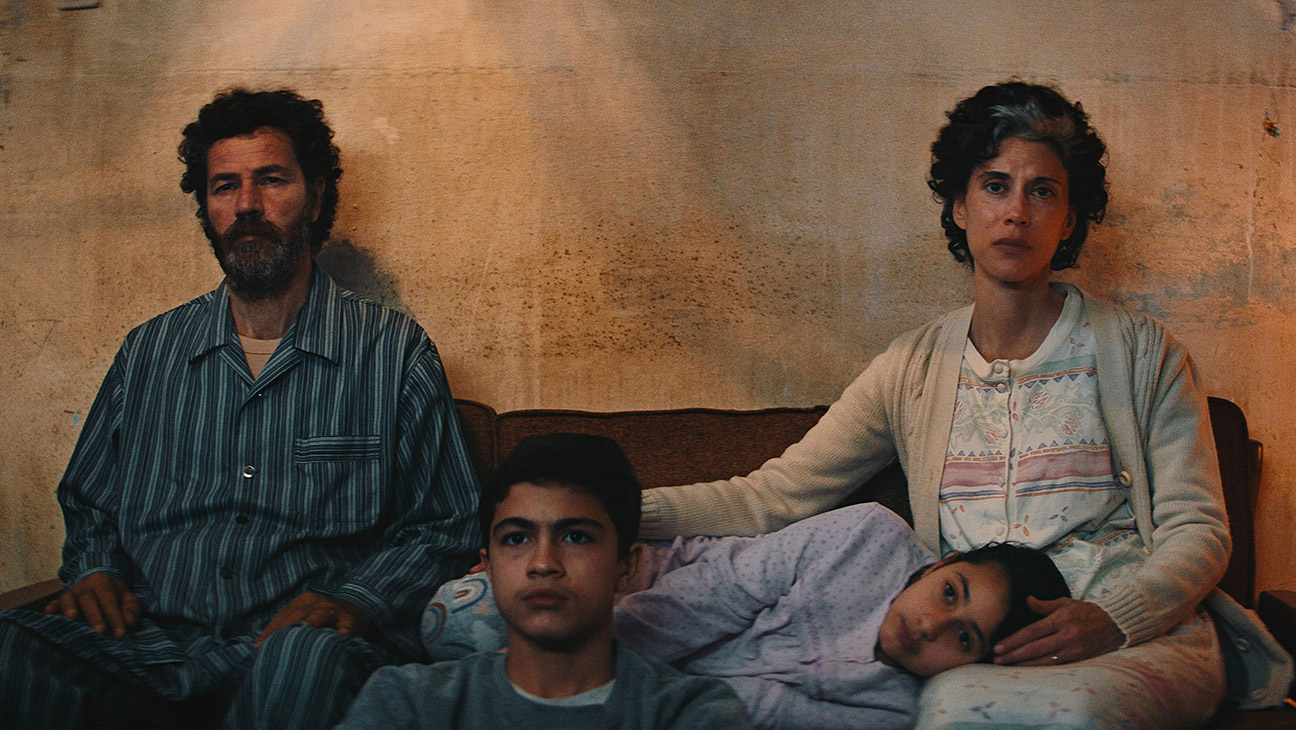
“One thing I really want to leave audiences with is that our humanity is resistance. It’s the one thing no one can take from us.” (X Verleih AG)
- Interview by
- Ed Rampell
Writer-director and actor Cherien Dabis’s All That’s Left of You is an epic for the ages that follows a single Palestinian family from their 1948 expulsion from what is now Israel, to living in a West Bank refugee camp in the 1970s, to the Intifada in 1988, all the way to 2022. In doing so, Dabis has given the much-maligned and vilified Palestinians a human face by telling their side of a story that has long been dominated by the Israeli narrative.
Portraying Hanan, the female lead, Dabis convincingly ages over the film’s time span from a woman in her thirties to an elder in the twilight of her life. As the world-weary Hanan takes stock of the years, she reflects the hardships and enduring humanity of her besieged people. As Dabis reveals in this interview, the final scenes of the aging Hanan were filmed just as Gaza was being blown to smithereens.
A child of the diaspora, Dabis was born and raised in America and attended Columbia University’s School of the Arts. Her 2009 directorial debut, Amreeka, opened at Sundance and earned the FIPRESCI International Critics Prize in the Directors’ Fortnight at Cannes. The multihyphenate received an Emmy nomination for helming an episode of the Steve Martin–Martin Short comedy on Hulu Only Murders in the Building. Dabis has directed and written other shows for HBO and Showtime and acts in the Netflix series Mo, starring Mohammad Amer.
Jordan’s official submission to the Academy for Best International Feature Film, All That’s Left of You, was recently shortlisted for an Academy Award. It is also nominated for the Spirit Award for Best International Film and has won or been nominated for awards at various festivals, including snagging two prizes at the San Francisco International Film Festival. Mark Ruffalo and Javier Bardem are co–executive producers of this nearly two-and-a-half-hour cinematic saga that is a veritable Palestinian persistence of memory. It’s playing now in select theaters.
Cherien Dabis was interviewed in Brooklyn, NY.
Ed Rampell
All That’s Left of You opens with “Based on historical events.” Is the family at center of the story based on any particular individuals?
Cherien Dabis
It’s a fiction film based on historical events. They all happened. The movie is inspired by these events. Through this film I’m looking to see how these events impacted one family, the Hammads, over time. The film is based in reality, in truth, in history.
Ed Rampell
There’s a strong father-son focus in the film and an interesting dynamic in the cast. Mohammad Bakri plays the older Sharif — but his own, real-life son, Adam Bakri, plays the younger Sharif. And Mohammad’s other actual son, Saleh Bakri, plays Salim, Sharif’s son.
Cherien Dabis
I’ll add that teenage Noor is played by Mohammad Bakri’s nephew, Muhammad Abed Elrahman. So there are four generations of one [real-life] family in the film. And you feel it. When I started writing the script, I really — it was my dream to cast the Bakri family. They’re the only acting family dynasty in Palestine. Mohammad Bakri is the patriarch. He has six kids; five of them are actors. For me it was an embarrassment of riches, with so many people to choose from.
It was my dream to really create an intergenerational portrait both on- and offscreen, to really bring a single family to this story and have different generations of one family embody these characters, so as to really make it as believable a family portrait as possible. They brought so many of their own nuances, their own relationships to the screen. Especially Mohammad and Saleh, who are in many scenes together in the 1970s. They’re the two who are in the most scenes together throughout the film. They really brought so much depth to that father-son relationship. You have so many different generations of one family. Not only do they look alike; they sound alike, they have similar mannerisms, so they really help to sell the different generations in one family.
Ed Rampell
What is your own family background?
Cherien Dabis
I’m Palestinian American. I was born and raised in the diaspora, but returning to Palestine often to visit my father’s family. My father’s from the West Bank, and he was exiled from Palestine in 1967, so he became a refugee. It took him many years, like the characters in the film, to get foreign citizenship, just to be able to return to visit his homeland and family. And only with the permission, of course, of Israeli authorities. So I grew up going on these trips and seeing him harassed and humiliated at borders and checkpoints.
More than that, what inspired the movie for me was seeing how the events in Palestine really impacted him over time. In some ways he inspired the character of Sharif, because I watched him, as he got older, get more and more disillusioned, more and more heartbroken, angrier and angrier at the devastating situation back home and the deterioration of his homeland. And I saw his health suffer because of his chronic stress and worry and anger.
I saw the different generations of my family, from my grandfather to my father to my siblings and me. All of us react very differently to what was happening in Palestine, what should happen in Palestine. I always wondered, Why doesn’t the world know how we became refugees, what happened to Palestinians in 1948 in order to create a Jewish majority state? Why doesn’t the world ever get to see the emotional impact and toll of this ongoing nakba on the Palestinian people? And that’s something I witnessed in my own dad, feeling and seeing him become more and more broken over time. I wanted to really show that, because I felt that so often in mainstream media, all that’s shown of us is —
Ed Rampell
Terrorists.
Cherien Dabis
Absolutely, the stereotypes. We’re dangerously misrepresented. We’re totally dehumanized, relegated to numbers, and no one really understands the emotional experience of going through everything we’ve been through for the last eighty years. So I wanted to really place people in the point of view of this Palestinian family and allow them to experience this just relentless, traumatic, ongoing injustice.
Ed Rampell
The organ donor idea in the film is really clever. How’d you hit upon that?
Cherien Dabis
I had always been thinking about a film about organ donation set in Palestine-Israel, a moral dilemma type of situation. I’ve been thinking about that since the early 2000s, when I saw the movie 21 Grams. Then I read a real-life story about a Palestinian man in the Jenin refugee camp who actually did donate his son’s organs, some of which went to Israeli families, and that made international news. I remember just being really blown away by that story.
Then cut to many years later, I’m working on this film, and I’m developing it — I haven’t really started writing the script yet, but I’m really plotting it out, taking my time to know what the structure is, who the characters are. I get to the point where Noor dies in the film, and I think, I don’t know where to go from here. And I’m totally stuck — for weeks. I just start thinking, okay, well, what happens when someone dies? Then it dawned on me: they would come and ask his family to donate his organs.
That’s when I realized that my idea of an organ donation film was not a separate film; it’s part of this film. And I could bring that moral dilemma into this film. The world doesn’t get to see the Palestinian families who’ve made incredible life affirming decisions like this.
Ed Rampell
When the character you play, Hanan, confronts the Israeli recipient of Noor’s heart, she asks him about his military service. And he says he didn’t serve because of medical conditions. Was that a metaphor, that his heart wouldn’t allow him to serve in the IDF?
Cherien Dabis
[Laughs.] That’s funny you say that. I like your interpretation. I think I was being more literal. A heart transplant recipient would really not be medically equipped to serve in an army. What’s so important about that question is that our characters have been haunted by this decision they made because they’re so afraid. It just harkens back to that moral dilemma — it allows people to see the complexity of this one thing within this environment. It’s something people so many people take for granted in different parts of the world. Organ donation? Yeah, sure. In this part of the world, it’s so symbolic, so laden with all this different meaning.
In some ways, after they make this decision, though they stand by it, our characters are haunted by it. Because there is this fear, did this person serve in the army? Did we give life to someone who is killing our people? For me, it just leaned into the layers of complexity of a decision that would be much simpler in many parts of the world.
Ed Rampell
As All That’s Left of You covers seventy-five years, we see the characters age over time. What was it like for you as an actress to so convincingly play Hanan over the decades?
Cherien Dabis
We shot the end of the movie at the end of a very long period of prepping, evacuating Palestine, then re-prepping the film, and taking eleven months to finally complete just production. So by the time we got to the older age, I actually felt that old. After two years of watching a genocide unfold and just feeling the emotional pain of everything we were witnessing and making the film on top of it — art and life were merging. Suddenly we were making a movie about the Nakba as we were watching a bigger Nakba. It was so devastating. We were living and breathing the situation. Creating scenes from 1948 that we were watching unfold on our newsfeeds that were happening in Gaza.
I really wanted to talk about some things that I felt so much my entire life that I couldn’t talk about — they were too taboo to talk about.
By the time [my character] got to that older age, it was a relief to slow down, to slouch, to get to show how tired I felt after all of the work I had done. Honestly my favorite part of shooting was playing that older age.
Ed Rampell
Your film ends in 2022. If there was a sequel, what would Hanan and Salim do?
Cherien Dabis
Tough question. Perhaps they’d start off from Canada, watching the news footage, being as devastated as we all were. Then maybe they’d go back home for a family visit in the West Bank, where things are getting steadily worse. It’d be similar to what is in the movie, but intensified.
Sadly, what makes the movie powerful is how this all began, and how it’s all just accelerated. The movie is mild compared to what’s happening today. What makes the movie powerful is all the knowledge the audience brings to the movie, what they know will happen after the movie ends. It would be quite devastating for the characters to return to that.
Ed Rampell
What is the role of film in the Palestinian struggle?
Cherien Dabis
Film plays a huge role in the Palestinian struggle, in bringing that struggle to audiences outside of Palestine, and helping Palestinians to articulate their struggle, or just celebrate our history. It preserves our memory and shows our humanity when we are dehumanized in the world. All That’s Left of You honors a humanity that has always been there. The film does that in a way Western media has never done, including Hollywood films and television.
One of the reasons we arrived at this point is because for centuries we’ve been so dehumanized and villainized. Palestinian film is inseparable from the Palestinian struggle. That’s why there are so many Palestinian filmmakers, so many women filmmakers, who care so deeply to tell our story, because our story has been missing, erased, omitted from history books. It’s been actively censored.
One thing I really want to leave audiences with is that our humanity is resistance, it’s the one thing no one can take from us. When we’re living in systems of oppression, where these systems are meant to break us down, holding on to our humanity, to our love, is an act of resistance.