On the Value of Putting Things in Plain Language
Emily Witt’s memoir begins with the Brooklyn and Berlin underground rave scenes and the appeal of subcultural escapism. What follows is a reckoning with the social conflicts of the present and journalists’ role in a time of rising authoritarianism.
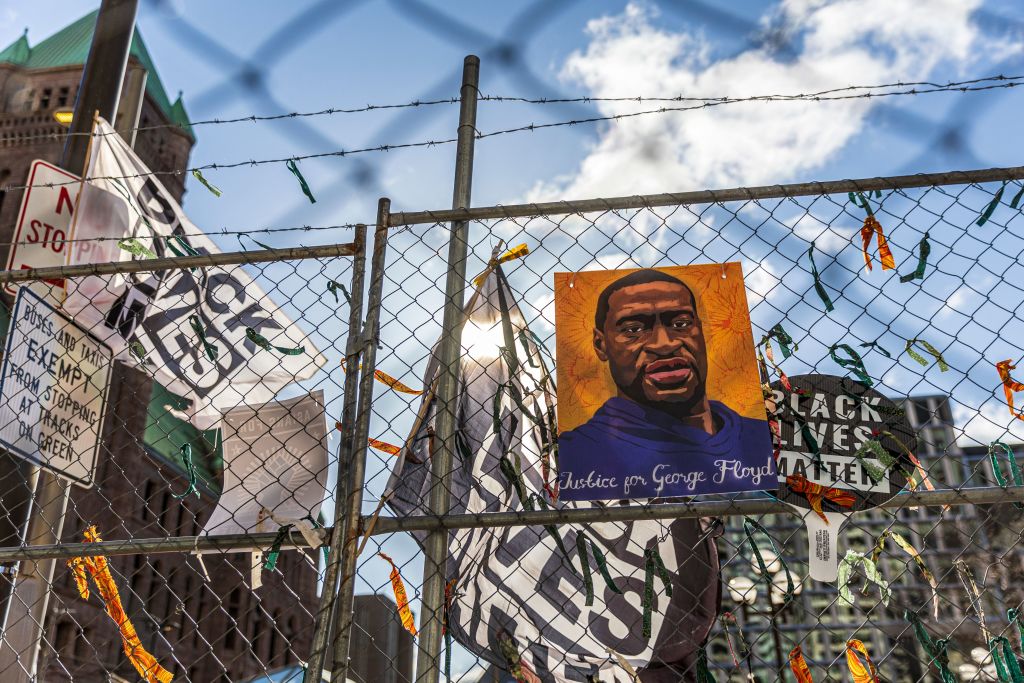
In her memoir, Emily Witt questions what it means to be a journalist amid crises that have unavoidably impacted her personally. (Kerem Yucel / AFP via Getty Images)
- Interview by
- Christopher J. Lee
Midway through her recent memoir, Health and Safety: A Breakdown, Emily Witt describes her new position as a staff writer for the New Yorker as being “part of an anxiety-producing machine.” Set against the backdrop of her reporting on the school shooting in Parkland, Florida, the campaigns of Ilhan Omar and Beto O’Rourke, and Brett Kavanaugh’s controversial nomination to the Supreme Court, Witt’s remark reflects her escalating uncertainty as to what it means to be a journalist at a time when social media is outcompeting mainstream news organizations. It was a situation exacerbated months later by the pandemic and the Black Lives Matter protests. “No rhetorical register seemed to have the power to break through,” she writes. “I understood it was impossible for any writer to see outside the contours of the history they inhabited.”
Health and Safety is about the complexities of this recent period, whose legacies are being revisited and sorted through as the second Trump administration unfolds. What begins as an account of a personal journey in the vein of her first book, Future Sex (2016) — but this time involving recreational narcotics consumption and the underground rave scene in Brooklyn and Berlin — evolves into a broader commentary about the political present.
Guiding the reader from the escapism of these subcultural worlds to her unavoidable confrontation with the social conflicts that defined the first Trump administration, Witt finds herself questioning what it means to be a journalist amid crises that have unavoidably impacted her personally. She further asks whether it is at all possible to cohere our fragmented era into a single, comprehensive, and comprehensible narrative.
Both harrowing and a testament to individual resilience, Health and Safety is a literary montage of the personal, the professional, and the political. It is written with the conviction that the journalist cannot stand apart from the world but is a witness integral to it. In an interview with Christopher J. Lee, ahead of the book’s paperback release this spring, Witt told Jacobin about Health and Safety and its implications for reporting and political journalism today.
Christopher J. Lee
Health and Safety begins as a personal account of recreational drug use, residing within a tradition of confessional literature that goes back to Thomas De Quincey. It is neither celebratory nor apologetic. Can you talk about your approach, both as a user and as a writer?
Emily Witt
To begin with, I think it’s helpful to outline the intellectual model that someone my age was raised with, namely the anti-drug propaganda of the 1990s. The federal designation of a Schedule I substance categorized every drug from weed to heroin the same way. They were perceived as equally dangerous. We were taught that one kind of drug would lead to another like a cascade, that if you ever touch any substance, you might end up on the street, dead or whatever. All the ads were so dramatic.
At the same time, there were psychoactive medications prescribed by doctors — Xanax, antidepressants, anti-anxiety medications, painkillers — and most of us were raised to think if it came from a doctor, it was safe and good for us. What happened with the opioid epidemic, or even the widespread use of something like Adderall, was a surrendering to that medical authority. Meanwhile, people were finding that certain categories of nonmedical drugs, in fact, helped them deal with life’s traumas better than pharmaceuticals.
There was very little understanding of which drugs were more dangerous, the relative risks, and the consequences that come from different things because there was very little good fact-based information. It was all tangled up in either the rhetoric of the “war on drugs” or the diagnostic language of the pharmaceutical industry. Most of the better information came from countercultural sources such as Erowid.
What I describe in the book is something that happened in the early 2010s. As the opioid crisis was ramping up and there was a sudden understanding that doctors had enabled the use of very dangerous substances under the guise of pain-killing medicine, there was a concurrent reevaluation of psychedelic drugs, with studies showing that they could be used to treat PTSD and other kinds of stuff. That’s when I entered, when I really started experimenting.
Christopher J. Lee
It is difficult to talk about this issue in a way that isn’t constantly moralizing. There’s also a class dynamic to the different worlds of recreational drug use versus substance abuse and addiction, as you point to. What I like about your book is that it doesn’t necessarily provide conclusive answers. It’s more, “This is how I approached it, and these are my set of experiences.”
Emily Witt
I think it’s unhelpful to classify drugs as “good” or “bad.” It’s better to understand which ones are more dangerous or less dangerous. Some people would disagree with that. My own philosophy — and I’ve broken this rule a couple times — but generally I try to avoid drugs that can kill you easily. The problem is that most people try drugs for the first time when they’re teenagers, and they’re getting bad information. There is consequently a school of thought that it’s just better to treat them as illegal and never use them.
I recently reviewed Michael Clune’s new novel. He wrote a heroin memoir called White Out (2013). It’s a really excellent book, and his novel, Pan (2025), prompted me to go back and reread White Out. He’s someone who was addicted to heroin in the ’90s before this fentanyl phase, and he got clean. But he’s written many times that he’s against the decriminalization of drugs because it was a felony arrest that put him into treatment. So, it’s a broad world of perspective and opinion for sure.
Christopher J. Lee
Going further with the period of the early 2010s, which forms a backdrop to Health and Safety: your book primarily dwells within the period from 2016 to 2020 and the first Trump administration, and yet there seem to be affinities with the rave culture you describe and the values that emerged during the earlier Occupy Movement. In both instances, people are seeking alternative communities and new kinds of political affiliation beyond the mainstream.
Emily Witt
It’s not something I have thought of before, but there does seem to be a correlation. When Occupy Wall Street took place in 2011, it was also around the time you started to see these underground parties happening again in New York after a time when the dance music scene was kind of fallow, which isn’t to say there weren’t a lot of DIY indie spaces in the early 2000s. But certainly, for me, Occupy stands out.
Somebody my age, growing up in the ’80s, we saw a lot of protest in pop culture, like depictions of the ’60s, but there was very little protest in the streets, where it felt like a mass movement. I went to a couple of Iraq War protests in the early 2000s, and they felt very small and marginal. Occupy Wall Street felt like something genuinely real, a kind of collective consciousness about wealth inequality that had not really been discussed in that way. It felt so exciting and then just kind of vanished. The language stayed about the 1 percent, but it certainly didn’t deliver us a new class of leadership. However, I do think it initiated a decade of protests that culminated in 2020.
Christopher J. Lee
That leads to one of my main questions. Something that became very clear as your book unfolds, particularly toward the end, is how it consciously or unconsciously emulates Joan Didion’s essay “The White Album.” The questions of narration that Didion raises there, and the broader question of what it means to do political journalism, come into the foreground with Health and Safety fragmenting into a series of situations that include Trump’s election, COVID-19, the murder of George Floyd, and the unraveling of a personal relationship — unanticipated contingencies, but whose coexistence also gives further meaning to each other.
Emily Witt
I read Didion all the time, and I just reread Democracy (1984) like two weeks ago. I guess the question is why? What is it about her that still feels so contemporary? Why does her work stand up so well, even when other writers from that era feel so dated? I think it’s her power of showing the way so much of our politics are aspirational and too often inauthentic. She has a way of revealing the lies people tell themselves.
Between 2016 and 2020, at the time when I’m writing, there was a lot of posturing, even when it was well-intentioned, and came from this sense of morality. I think we’re realizing now how inadequate and superficial all our changes in language were. History was a story about conquest, about violence, about rape, about racism and genocide, and in that time, people were reckoning with the truth that many values — as expressed in our national holidays, or our statues, or the books we read as children — were proxies for harm. There was a collective realization that everything you’d been told was a kind of lie. There was this anxiety at the time about how not to continue perpetuating that and to correct yourself, to present yourself correctly.
Patricia Lockwood in her novel No One Is Talking About This (2021) addresses this. The problem is that we are trapped in totalizing systems of thought, and you can’t know the evil you’re perpetuating. You can’t anticipate it. And one thing Didion did well, repeatedly, was noticing the lies that people tell themselves and noticing the posturing. There’s a pessimism to it that part of me rebels against: Didion doesn’t believe in protest, and I resist that. But I admire her ability to puncture self-importance, these optimistic stories we tell ourselves that aren’t rooted in reality. In a Lauren Berlant, Cruel Optimism (2011) kind of way, they blind us to our own subjugation.
Christopher J. Lee
Going further, one of Didion’s innovations is her recourse to the self as a means of approaching disparate situations — in her case, episodes like the Manson murders and the activism of the Black Panthers. She becomes a lens and proxy for her reader. Health and Safety adopts a similar method, using the personal scale to address different crises, narratives, and media images in the belief that maybe the only truth we have is how we perceive things.
Your memoir consequently appears as an attempt to rethink what it means to do political journalism. There’s a tension between an ideal type of the journalist who is an observer, a fly on the wall, versus this person who’s experiencing and feeling things directly, whether it’s going to raves at night or protests during the day. There is a whole picture that your book seeks to capture.
Emily Witt
I have a lot of thoughts on the idea of self and life writing. I went to grad school for English literature and at one point wrote a paper about memoirs by foreign correspondents in Africa. After they finished their stints as daily newspaper reporters, they would almost invariably write a book that was far more first-person and filled with doubt, and it would almost always have some references to Joseph Conrad either in the title or in the language.
In his reading of Conrad, Edward Said has concurrently argued that when you can’t order the world authoritatively, self-consciousness is the only tool you can express. Conrad couldn’t see beyond nineteenth-century imperialism, but he could reflect a kind of unease and doubt through the first person.
When you’re writing for a news publication like a daily newspaper or the New Yorker, you must be an authority, and you must present yourself from a place of certainty and knowledge. That’s the imperative. I think it’s common for journalists to go back and rewrite something they witnessed and reinsert their subject position into the writing: where they were, their uncertainty, their awkwardness, and all of that, which ultimately is a truer recounting of an experience.
And yet there are risks. It could be very generational, but we still live in a period where most people, when they sit down to consume the news each day, they’re not interested in the life of the person conveying the information. They’re wanting just the facts. When a journalist places themselves in the narrative, this might raise an eyebrow: Are we getting the facts, or are we getting the story of the facts?
That leads me to the second half of your question. I think in 2020, I kind of teetered. I began losing sight of all the ethics and rules that I’d been taught as a journalist. I was teetering on the edge of them during the #BlackLivesMatter protests in 2020. Am I a participant? Am I an observer? Since then, I’ve totally retrenched back into journalism. I’d never really been to protests like that before and never had to navigate what it meant and why it was important to stay “objective.”
It was a learning process for me: the importance of those rules and in the process of losing myself that summer, learning I really believe in those ideals. Somebody must be there as a nonparticipant, and it doesn’t make you morally or politically compromised. That subject position is necessary.
People need to know that someone was there watching. The distortion of reality by social media has been getting increasingly deranged, and in the past year I’ve really noticed it. I was in LA during the fires, and when I do these breaking news stories for the New Yorker, I feel like my main job is to describe what’s before me as neutrally as possible because there will be thousands of distortions of the same primary inputs online.
Last spring, I covered the ICE protests in LA, and I went into it being like: I’m going to stand here. I’m going to write things down. I’m going to step away from the skirmish line. It was the first time since 2020 that I felt that fear again, that sense of volatility. But as with the LA fires, you saw how a few recurrent images — some Waymos on fire, a guy handing out protective equipment from the back of a pickup truck — took on an insane mutant life online. When I happened to witness some of those events in person, they had none of the connotations they acquired through their online repetition.
It’s clear to me that the best thing I can do right now, in these situations, is just look at things and try to describe them in plain language. In an increasingly distorted field of reality, being a direct witness is the rarest currency. I’m at a place now where I just want the writing to be a window, so that people can see what I’ve seen.