Moral Crusading Is No Substitute for Mass Working-Class Politics
In the absence of a powerful workers’ movement, 19th-century reformers blamed alcohol for poverty and despair. Their assumption that moral shortcomings rather than political and economic ones were the root cause unfortunately resonates with our politics today.
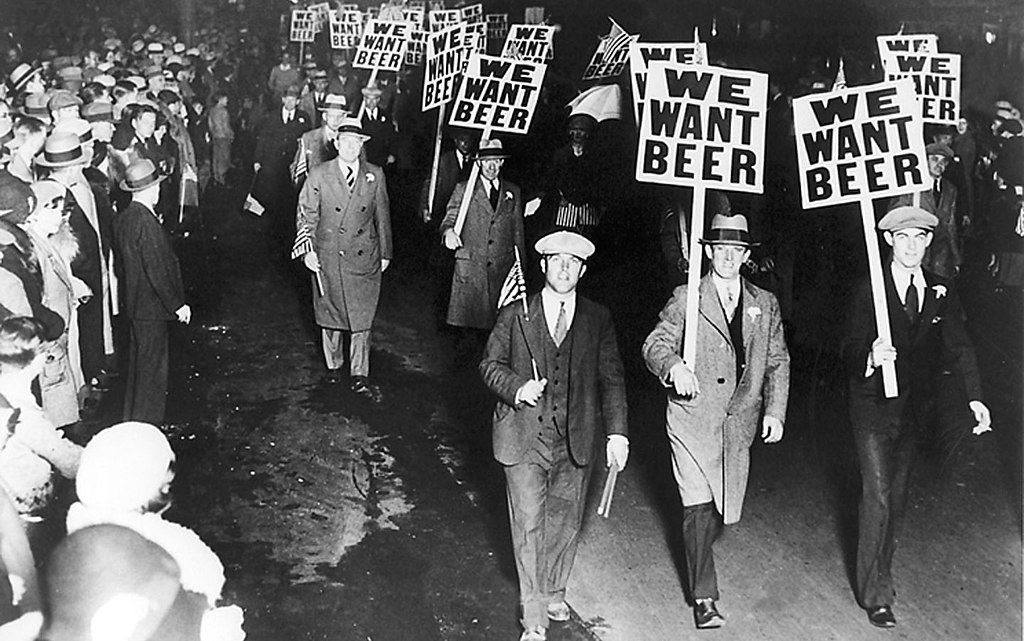
Labor unions hold an anti-Prohibition meeting in Chicago. (Library of Congress via Wikimedia Commons)
There is something overbearing about politics today. Not that you could ever discuss it at the dinner table without risking a fight, but contemporary politics operates in a rigidly moralistic register. If you hold some contrary political position, it’s not just that you think differently than me or hold commitments incommensurable with my own but that you are also a straightforwardly bad person. Worse, politics appears to be infecting everything around it — corporate branding, scientific discussion, individual lifestyle choices. Historian Anton Jäger has deemed the moment “hyperpolitical,” or characterized by an “incessant yet diffuse excitation.” Politics is politics, but so too is everything from consumption patterns to movies to family life, and your political views on this wide variety of subjects indicate who you are as a moral being.
It wasn’t always this way. I remember the “post-political” ’90s and ’00s, when people would politely walk away if I launched into a rant. And in the postwar era, before the gutting of unions and mass membership organizations, politics was largely a reflection of associational life rather than individual preference; more a consequence of what lodge or local you belonged to, rather than your particular boutique viewpoint. Politics has always been personal in some way, but only recently has it become exhaustingly so.
If we’re looking for a rough point of historical comparison here, we would have to go back to the Gilded Age. As historian Matt Karp has written, the parallels between then and now are striking: