The Rank and File’s Paper of Record
The history of Labor Notes shows that labor's strength — and socialists' relevance — depend on a militant and independent rank and file.
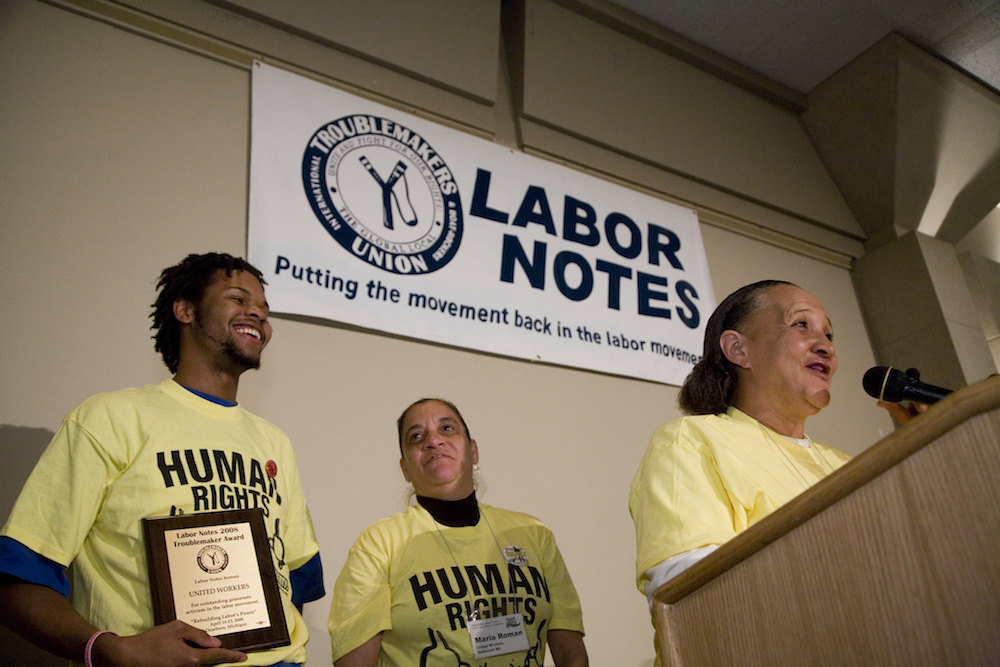
Labor Notes conference in Dearborn, Michigan, 2008. (Jim West / Flickr)
By most measures 1979 was not an auspicious time to start a radical publication in the United States aimed at labor’s rank-and-file activists.
Deregulation in transportation was working its way through Congress and soon to pass, threatening national agreements in trucking and airlines. Chrysler went begging to Congress for a financial bailout and soon extracted concessions from the mighty United Auto Workers. These, in turn, opened the floodgates to union give-backs in industry after industry.
Federal Reserve chief Paul Volcker jacked up interest rates that soon brought on a double-dip recession that cost two and a half million manufacturing jobs, brought strikes to a screeching halt, and effectively undermined a decade and a half of labor upsurge even before Reagan fired the striking air traffic controllers in 1981.