Samantha Kattan Wants to Join New York’s Socialists in Albany
As socialist New York legislator Claire Valdez runs for Congress, socialist housing organizer Samantha Kattan is running to replace her in the state assembly. We spoke to Kattan about her campaign.
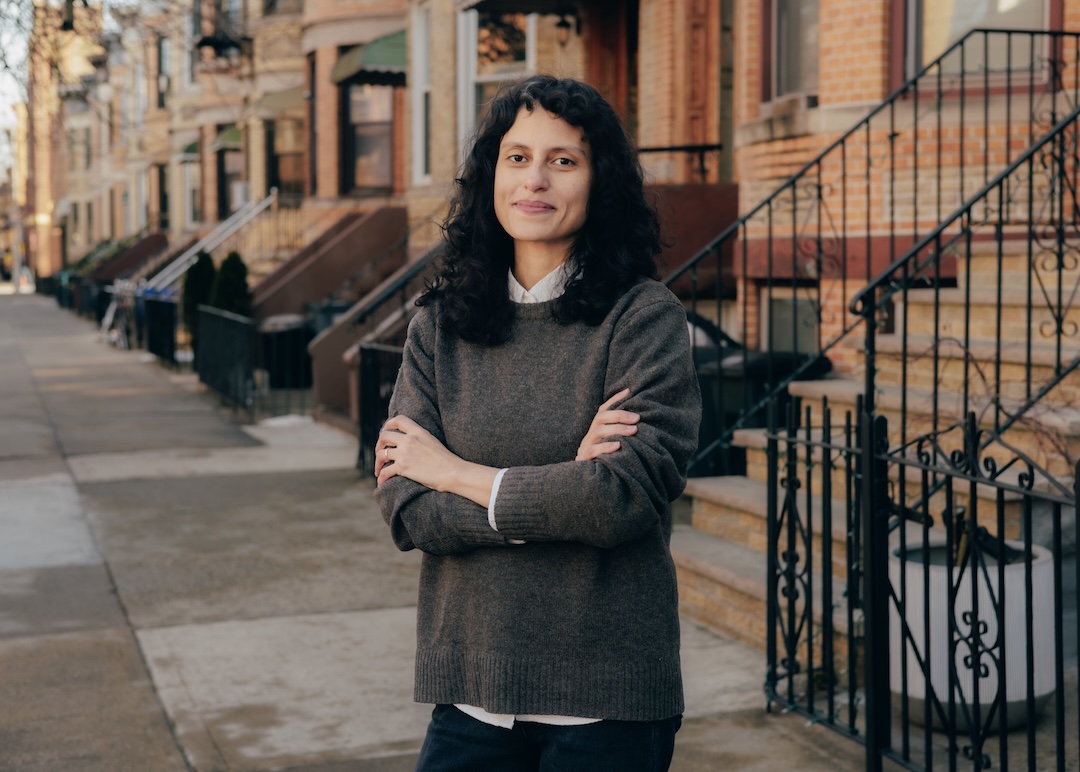
Housing organizer and socialist New York State Assembly candidate Samantha Kattan: “We need to win a future where housing is seen primarily as a way to house people, not a vehicle for profit.” (Samantha for Queens)
- Interview by
- Peter Lucas
Eight years after helping to elect its first socialist to Albany, the New York City Democratic Socialists of America (NYC-DSA) has put seven more socialists into the legislature and two onto city council, with two other sitting councilors currently seeking admission to the group’s Socialist in Office (SIO) committee. As the chapter expands its ranks and aims for higher office, it confronts a new challenge: how to build its bench and retain its seats if and when the incumbent runs for higher office.
In New York State Assembly District Thirty-Seven (AD37), incumbent Claire Valdez recently launched a campaign for New York’s Seventh Congressional District. NYC-DSA and Valdez have both endorsed fellow DSA member and housing organizer Samantha Kattan as successor in AD37, which includes the Queens neighborhoods of Ridgewood, Maspeth, Sunnyside, Long Island City, and part of Woodside.
Kattan joined DSA in 2017 and was the first research cochair of NYC-DSA’s Electoral Working Group, where she volunteered on Julia Salazar’s successful 2018 state senate campaign; she also helped cofound the chapter’s newsletter, the Thorn. Kattan currently works at the Urban Homesteading Assistance Board. As a tenant organizer, she helped recruit Phara Souffrant Forrest to run for office as a DSA member, and she also helped to found Housing Organizers for People Empowerment (HOPE), a tenants’ union in Brownsville.
Jacobin contributor Peter Lucas spoke with Kattan about alternatives to for-profit housing that gouges tenants and working-class homeowners; the growth of NYC-DSA’s SIO project; and how motherhood has changed her relationship to politics and her neighborhood.
Peter Lucas
What are the biggest issues facing District Thirty-Seven?
Samantha Kattan
Affordable housing is almost always the first thing to come up in conversations with my neighbors. The district is over 70 percent renters, and a lot of the homeownership is represented by working-class co-ops in Sunnyside. It’s important to have a representative who is not only a tenant but has been active in the fight for housing justice for over a decade.
I want to strengthen rent stabilization, including reforming how the Rent Guidelines Board operates, and support unregulated tenants who are unsure if they are subject to good cause eviction protections. I want to fight for more resources for cooperatives that are struggling to afford energy efficiency upgrades required for them to be in compliance with Local Law 97, and I am interested in working with the Mamdani administration on property tax reform.
The presence of ICE [Immigration and Customs Enforcement] — and fear that it could become worse — is also a huge issue in this district. Over 40 percent of residents here are foreign-born. Families are afraid to go to work, school, and routine immigration hearings. I will be a champion for state-level legislation to protect our communities from ICE as well as doing the work required to support organizing and resource-sharing on the ground.
Another issue that comes up a lot is local infrastructure — things like park access and street safety. I feel this a lot as a new mom, struggling to move through my neighborhood with a stroller, angry with the lack of green space. The community district that encompasses Sunnyside and Long Island City ranks almost last for park access. A lot of this work and funding happens at the city level, but I would be a strong advocate for parks funding and street safety improvements, alongside the groups who have been doing that work for years. Universal childcare is another big issue. All of these things that make up our lives in our neighborhoods in Queens could be better funded and more beautiful and more expansive.
Peter Lucas
Your background is in housing organizing. Can you tell us how you got involved?
Samantha Kattan
I grew up in Austin, Texas, as it was rapidly gentrifying. As I saw that develop through high school and college, I became much more aware of the decisions that are being made and how they impact working people without their input. It is so often unclear where that power is held and where it comes from. That inspired me to study urban planning in grad school as an attempt to find the answer to that, which ultimately felt a little dissatisfying. I ended up feeling frustrated by the neoliberal constraints around what you can do as an urban planner: prioritizing low taxes and incentivizing big business development.
I grew interested in the history of community organizing and tenant organizing that has opened up opportunities for alternative ownership models. I moved to New York to work with limited equity housing co-ops. These are co-ops that have, for the most part, been around since the 1970s and ’80s. They were landlord-abandoned buildings, and tenants organized in them, started running them, and eventually gained formal ownership and maintained them as permanently affordable housing co-ops. In my role, I helped them make budgets, hold elections, make changes to their bylaws — all the technical things that come up when you’re running your own housing.
This was around 2014 or 2015, during a period of intense gentrification and displacement in Central Brooklyn, where I was living at the time. I wanted to get more involved in the fight to prevent displacement and keep tenants in their homes. I began working with the Crown Heights Tenant Union. Later I cofounded a tenant group in Brownsville called Housing Organizers for People Empowerment. Both of these groups support tenants in organizing their own buildings, but also bring tenants together across neighborhoods to strategize together, support one another, and wield political collective power.
There’s only so much you can win at the building level if the laws governing tenants’ rights are not strong enough. I’ve been involved in many big legislative fights, but I’m particularly proud of my active role in fighting for 2019 rent law changes, where, as part of a massive statewide movement, we won the strongest improvement to tenants’ rights in half a century. It was a historic achievement that not only laid groundwork for future wins like good cause eviction but provided material benefit to millions of tenants, protecting them against outrageous rent hikes and displacement pressures, and in many cases creating the security that allowed people to get more involved in organizing.
Technical expertise is useful, but only when paired with real grassroots organizing power. That’s how you make real change, whether it’s strengthening rent stabilization or creating alternative housing models.
Peter Lucas
Given the enormous constraints under the current system, both at the building level and still at the legislative level, are there other types of housing models that we should be exploring?
Samantha Kattan
Yes, we should absolutely be investing in alternative ownership models of housing. A lot of people can agree that our current housing system is broken. Tenants can’t afford the rent, and working-class homeowners can’t afford skyrocketing costs. We need to win a future where housing is seen primarily as a way to house people, not a vehicle for profit.
We need social housing, which is not just permanently affordable but resident-controlled and democratically governed. A good example of these are limited equity housing co-ops or community land trusts, where the people who live in the housing are also making decisions about how it’s run. When it works well, it’s beautiful. The community that you build through engaging in that project collectively is unique. A key tenet of democratic socialism is to bring democracy into as many aspects of life as possible; social housing is an extension of that tenet.
There are a couple of bills that are moving at the state level that would help us expand social housing. One is the Tenant Opportunity to Purchase Act, which would give tenants the first chance at purchasing their building when their landlord puts it up for sale. Another would establish a social housing development authority that would fund and build social housing. Those are both really exciting, because they represent being at a moment where we can talk about a positive vision for the future of housing instead of only being on the defensive. There’s still more to do on that side of things, but it’s exciting to be able to talk about what housing could look like.
Peter Lucas
New York State controls much of the funding mechanisms that would enable the affordability agenda that Zohran Mamdani ran on to be implemented. How does DSA’s project in Albany relate to DSA’s project at the city level?
Samantha Kattan
A lot of decisions about funding and taxes happen at the state level. Two of his top three priorities are universal childcare and fast and free buses; supporting those policies ultimately will require our organizing in the state legislature. Having as many people in office in Albany who are committed to taxing the rich and also strategizing around how to make that happen is going to be key for us to deliver on the city level.
Peter Lucas
Taxing the rich seems to be more achievable now than it has in my lifetime, with parts of the political class having shown willingness to do so that they previously hadn’t. But it’s still very much contested terrain. Why do you think that is?
Samantha Kattan
People are fed up with the status quo and being told that we can’t pay for things that people want and need, when it’s becoming increasingly clear that it’s a political decision about what to prioritize. This is in part because of the messaging Zohran emphasized in his mayoral campaign and the growth of DSA. Zohran’s campaign knocked on over a million doors and led with a message that resonated with people. People are continuing to door-knock for taxing the rich and universal childcare through organizations like Our Time. It’s taking the message of “the work doesn’t end after the election” and putting it into practice.
Hochul made the announcement that she’s funding 2-K childcare in some neighborhoods in New York City and 3-K seats across the state with a two-year funding commitment, which she says she is somehow doing without raising taxes. People plan their lives around whether this kind of funding or these programs will be there or not in a few years time. It is our job to secure long-term funding so that we know that universal childcare will be there beyond two years from now.
Peter Lucas
You recently became a parent. How has that changed your political outlook?
Samantha Kattan
Becoming a mom has changed what I feel like I’m capable of. It also has changed my relationship with time. I am thinking a lot about what I want Queens and the world to look like when my daughter is my age, when she’s an adult navigating the workforce and trying to start her own family. That kind of long-term thinking lends itself very well to engaging in political work that will sometimes move very slowly. There is a feeling that I’m part of this intergenerational, long-term project of being a parent and the speed of political work in a way matches that.
My relationship with my neighborhood has also changed after having a kid. I spend more time in the neighborhood looking for green space — there’s so little of it in Ridgewood and Sunnyside. I want the library to have more open hours and programming. I get frustrated that so few of the subway stations have elevators. As a parent, you rely on the infrastructure around you much more heavily, and it fuels a new frustration with how we choose to underfund a lot of the infrastructure and institutions that people depend on.
There’s a logistical challenge to running for office as a parent, of course. One of the first conversations I had when I was making this decision was with state assembly representative Phara Souffrant Forrest, who had her son during her first term in the assembly, and that was incredibly helpful.
Peter Lucas
You originally recruited Phara to run, right?
Samantha Kattan
Yes. I knew Phara from the tenant organizing work I was doing in Central Brooklyn at the time. She was an amazing, organic leader in her tenant association and in Crown Heights. She had talked about wanting to serve her community in a different way. So we talked with her about running for office and specifically with DSA. I helped her launch her campaign, was on her kitchen cabinet, and helped her find the staff that she eventually worked with. She won as part of the first-year sizable DSA slate in New York, with four other socialists taking office alongside her. That was a turning point for the Socialists in Office project.
Peter Lucas
AD37 is opening up because the incumbent, Claire Valdez, is now running for Congress. As someone who has been involved in the project to elect socialists to office for the better part of a decade, what is it like to run to fill a seat held by a fellow DSA member and to see the SIO committee’s growth more broadly?
Samantha Kattan
One nice thing about running in a district that already has a socialist in office is that Claire is universally well-liked. She has done an amazing job building relationships with all kinds of groups and people across the district. She’s built up a lot of trust. Her support and encouragement in this run has been tremendously helpful.
We’re in a very exciting moment for the movement. I don’t think anyone thought that we would have a member of the SIO committee as mayor this quickly, if ever. With that excitement, there’s a responsibility to deliver. We want to keep up the momentum from the campaign. We want to do what we can at the state level to realize the programs that he campaigned on. The state project and expansion of the SIO is intertwined with Zohran’s ability to deliver at the city level. It has always been a long-term project to build enough power at the state level to decide votes. We’re not quite there yet, but we’re well on the way to having the type of presence within the legislature that’s needed to open up more possibilities.
Peter Lucas
Some 15,000 NYSNA members are in their fourth week of striking for safe staffing ratios and protection against workplace violence. What role can socialists — or any representative — in office play in a strike like this?
Samantha Kattan
All of these struggles are intertwined. Nurses — and all workers — are struggling to afford things like rent and childcare. We can start to lessen that burden by making sure they are compensated fairly, rather than wealthy executives becoming even more wealthy.
I saw a quote from former mayor Rudy Giuliani this week criticizing Zohran for joining nurses on the picket line, saying mayors should focus on ending the strike as a neutral arbiter. That’s exactly wrong. We end strikes by winning them. Socialists, elected officials, and anyone who supports the working class has a duty to side with workers and support their demands, whether it’s on a picket line or in the legislature.
My own personal history with labor helped shape my position on labor. I worked at a national nonprofit that unionized shortly after I started. Before contract negotiations really began, management laid off about a third of the staff, including me. We weren’t able to prevent the layoffs, but we were able to negotiate better severance. In the nonprofit sector, your boss may be nice or even have similar politics, but good bosses can still hurt workers. That experience made me feel strongly that all different kinds of jobs need unions. We need unions everywhere.
I have a friend who works at the Met, which recently formed a union, and I’m so excited for her and her coworkers. I will always show up in support of workers who are unionizing or who are negotiating contracts. I also plan to pick up the legislation that Claire was moving forward like expanded worker protections for adjuncts.
Peter Lucas
We have seen continued escalation from Trump, ICE, and the Department of Homeland Security, particularly in Minnesota. Multiple ICE officers have been recorded on camera echoing the administration’s threats over free speech and democracy. We have also seen several higher-profile raids in New York. What is your plan to combat the raids and protect your constituents in office? And how might it differ from some of the responses we have seen from Democratic Party leadership?
Samantha Kattan
The escalations we’re seeing right now are horrifying. As a country, we are witnessing what it looks like for an enforcement agency to have both unprecedented levels of funding (more than most militaries across the world) and lack of oversight. I want to be clear: ICE must be abolished.
At the state level, there are opportunities for legislative intervention. We need to pass New York for All, which would prohibit local municipalities across the state from collaborating with ICE. We also need to pass the Mandating End of Lawless Tactics (MELT) Act, which would prohibit ICE agents from masking when interacting with the public. However, we are seeing the actions of an agency that thinks it is above the law, so regulations will only go so far. We need to support the on-the-ground organizing that regular New Yorkers are already doing every day, like forming rapid-response networks and leading know-your-rights trainings so that more people will know how to defend their neighbors. An assembly office has a role to play in supporting this organizing, which I hope to start doing as part of my campaign outreach.