Socialist David Orkin Aims to Unseat a Key Eric Adams Ally
Democratic socialist David Orkin is running for New York State Assembly in Queens, aiming to further bolster the left-wing stronghold and unseat a key ally of former mayor Eric Adams. Jacobin spoke to Orkin about his campaign.
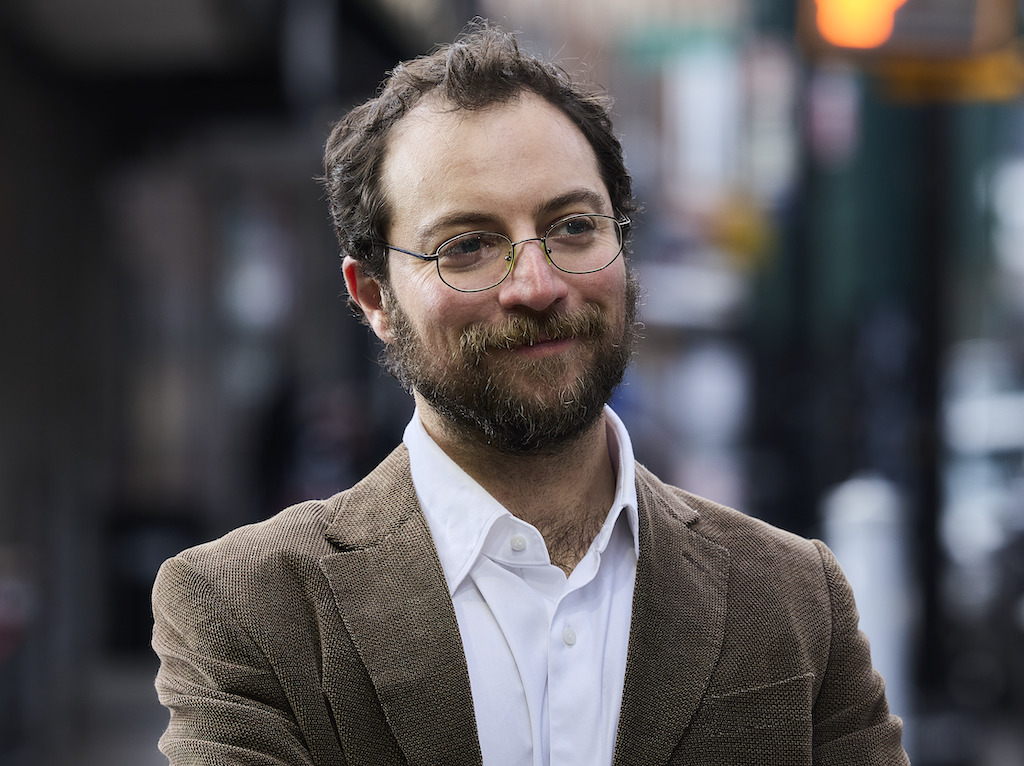
New York assemblymember Jenifer Rajkumar was one of former mayor Eric Adams’s staunchest allies. Democratic socialist David Orkin is running for her seat. (David Orkin for Queens)
- Interview by
- Roman Broszkowski
After their stunning success in helping elect Zohran Mamdani mayor of New York last fall, the city’s democratic socialists are gearing up for a string of races up and down the ballot this year. In addition to defending its incumbents at the city, state, and federal levels, the New York City chapter of Democratic Socialists of America (NYC-DSA) is fielding seven candidates for the state assembly and two for Congress in this election cycle.
David Orkin, an immigrant workers’ rights attorney and union organizer, is NYC-DSA’s challenger taking on New York State Assembly member Jenifer Rajkumar in District Thirty-Eight in Queens. Rajkumar was a close political ally of Mayor Eric Adams and has repeatedly drawn criticism from the political left, but she faced no primary challenge in either 2022 or 2024.
Jacobin sat down with Orkin to discuss his campaign, the connection between alienation and support for fascism, and what Zohran Mamdani’s election taught him.
Roman Broszkowski
When did you move to the district, and when did it start to feel like home?
David Orkin
One of my first clients working at [immigrant rights’ organization] Make the Road [in 2022] was a home health aide who worked in a different part of Queens. She had suffered years of wage theft and was owed an incredible amount of money. And we had a filing deadline to make sure that we could recover the full amount of her lost wages, and she couldn’t make it to the office.
I looked up her address and realized that she lived three blocks from me. I just ran over to her house and had her sign the paperwork. Then I was able to run back to the office, which is also quite close, and file it, and we were able to make sure that her case was timely. That was this incredible realization that I am able to participate in the community in a full way that feels so spiritually fulfilling to me.
Roman Broszkowski
When did you get involved with NYC-DSA? And what made you decide you wanted to run for office?
David Orkin
I’ve been a DSA member since 2017, but my organizing has been spread across a variety of groups. I have been a member of Jewish Voice for Peace (JVP). I started the JVP chapter in Tucson in 2013–14; I’ve always found a lot of spiritual fulfillment through Jewish Voice for Peace and continuing that work in law school. And I’ve been very involved in my union, United Auto Workers Local 2320.
[As for DSA], I participate a lot in campaigns. I did a fundraiser for Phara Souffrant Forrest. I was going hard on phonebanking for Bernie Sanders in 2020. I met so many of my dear friends by doing Bernie phonebanking, and I was knocking on doors for [2024 DSA state assembly candidates] Samy Nemir Olivares and Claire Valdez.
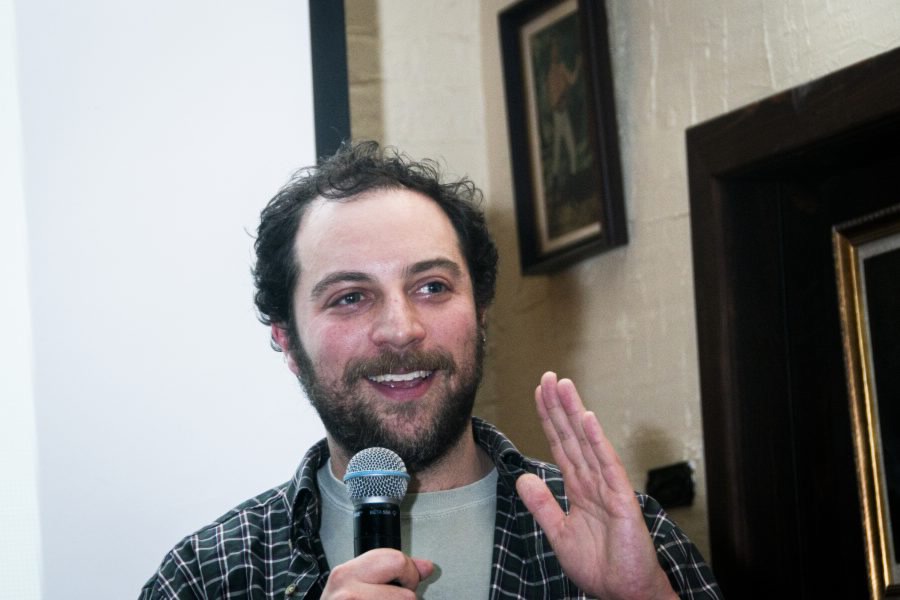
(Roman Broszkowski / Jacobin) I really consider myself to be a reluctant politician. As somebody who is suspicious of all politicians and all people who have political ambitions for their own sake, I find that the people that I’m really inspired by who are in politics are the people who really feel a call to respond.
That’s how I’m understanding my involvement in this race — as someone very uniquely positioned, who’s deeply involved in the worker community here in the district and also very connected to DSA and other activist groups in the area. This is the time when we really need someone to step up. This is a very winnable race, and I’m seeing myself as answering a call from up on high.
Roman Broszkowski
What other organizing experiences have been important for your political development?
David Orkin
I got involved with organizing right out of college, feeling really called to the US-Mexico border as the locus of my existential fears around climate change, growing militarization, and the increasing criminalization of migration, as well as my family’s personal history. My mom grew up in Tijuana and San Diego and had a very traumatic migration experience.
I was [also] very inspired by the Catholic worker movement. I followed that inspiration to living in a migrant shelter in Mexico, completely devoting myself there. It was there in the migrant shelter where I met people who had been forcibly removed from the United States, whose lives were now directly in peril.
I was also involved with No More Deaths, as well as a group called Mariposas sin Fronteras [Queers Without Borders], which was a queer detainee project. There’s a complex of private detention centers in central Arizona, based around the towns of Florence and Eloy. And I was going up to the detention centers, visiting with queer detainees who don’t have traditional family relationships to help them get out of detention, and creating bonds with them so that we could get them out.
Roman Broszkowski
How did those experiences impact your decision to pursue a law degree?
David Orkin
I met so many people [where] if you had [had] a lawyer at that moment, your life wouldn’t be in peril right now. I remember meeting this guy in a migrant shelter in Mexico called “Hermanos en el Camino,” which is along the train going north, “La Bestia.” He was the only other out gay man there, and he couldn’t leave the shelter because that was the only place he could get HIV medication.
I knew that people who were going to be denied health care based on some part of their identity could qualify for asylum — and that this person, if he had had a good attorney in the United States before he was deported, could have won his asylum case. But he didn’t, and now I don’t think he’s alive anymore.
So [I decided] to pursue tangible skills to offer to this movement. Because even though I’m not a migrant, I’m not a person who is being terrorized by the immigration–border security complex, I can provide something tangible.
The position I found with Make the Road was in the workers’ unit, and I was really inspired by that model of not only providing services but also connecting people to organizing. And if the people who are being targeted are the people who need to be involved in organizing, if they can’t pay rent, because their boss doesn’t pay them and their landlord is harassing them, and they’re afraid of their family being torn apart, then how can we expect that person to have a political voice?
That [framework] helped me move from a deportation defense kind of practice into a worker practice — thinking, how can we improve people’s lives so they can be political agents? And also, the only kind of attorney I ever wanted to be was one who was connected to organizing.
Roman Broszkowski
How do you see your role in pushing Zohran’s agenda at the state level? And how do you understand the role of DSA in that push, but also in this political moment more broadly?
David Orkin
The power of being a DSA candidate and the power of being a DSA-supported elected official is that you aren’t [just] another politician who’s in Albany trying to do your own thing, but that you’re supported by a movement of people who are going to help you accomplish your goals, and you are accountable to them.
That’s what I think is so powerful and attractive about being a DSA elected, and the only reason why I would ever consider being an elected official or running for office. I know that there is a very large and strong community of people who are supporting me, and when I enter into the political system as an elected official, they’re going to keep me grounded and keep me accountable and hold me to the promises that I make now — which is necessary for every politician to remain honest and authentic.
In terms of Zohran, I view his mayoralty as the most important political project of my life, because we have an opportunity to speak to people’s material needs. The reason why people are drawn to fascism is because they’re deeply alienated, and fascism and the Right are offering them solutions that are, of course, lies. Like, “You can’t have a good job because an immigrant took it.” Well, no, it’s because a tech company ruined employment by turning everyone into independent contractors and is mediating our employment relationships through technology. “You can’t afford a house” because —
Roman Broszkowski
Also immigrants.
David Orkin
But it’s really because of property speculation. Or, “You can’t get laid because of feminism,” when it’s really because you spend ten hours a day looking at your phone because a technology company made you addicted to it. The answer to those things is socialism.
Zohran has proven that you can talk to people who voted for our current president and show them that [what’s] going on in your life that sucks can be addressed through working together and through solidarity. And I think that the success of Zohran’s mayoralty depends on all of us making sure that his policies are successful, which is one of the reasons why I was really called to do this. We need a budget in Albany that’s going to make sure that Zohran’s mayoralty is successful, and I’m willing to leave my job, upend my life, and have the incumbent slander my name in order to make that happen. Because I think it’s the most important political project of our lives.
Roman Broszkowski
Your campaign website lists three priorities: taxing the rich, protecting our immigrant neighbors, and supporting low-income workers. Why those three?
David Orkin
As I’ve said, funding our affordability agenda in New York is the most important political project of my life so far, which I can engage in to fight the current wave of fascism. I’ve seen exactly how the deportation machine rips people in this country apart. I’ve had panicked afternoons of calling clients, texting them, [and calls and texts] not going through; texting all of their loved ones, fearful that this person has been detained — people who live in the district. And sometimes their phone was off, and sometimes they’ve been detained and I’ve had to do everything I can to make sure they get representation, [to find out] whether they were taken to a facility in New Jersey or Louisiana, making sure they get a habeas petition to get back close so we can fight their case.
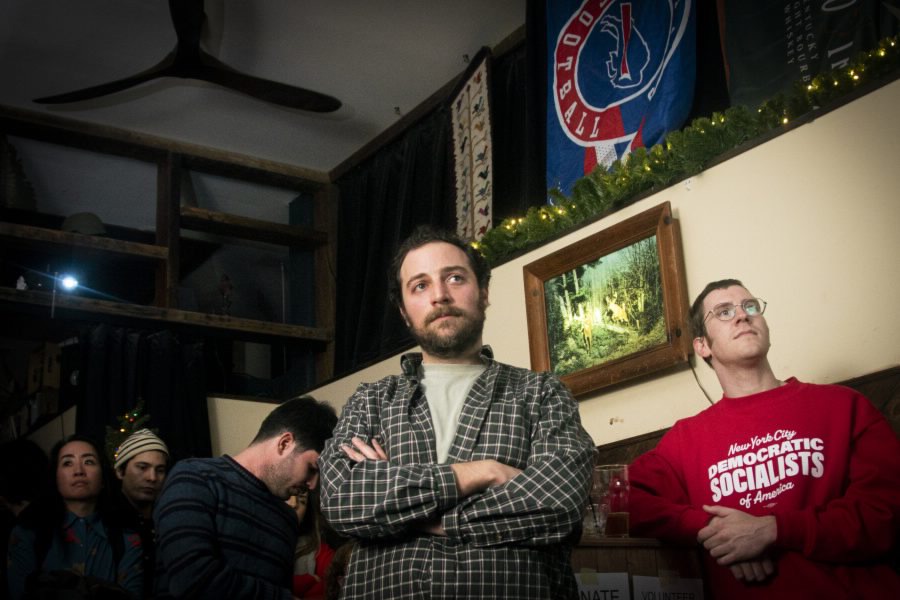
(Roman Broszkowski / Jacobin) Those same people are forced into the most exploitative employment in the city — whether it’s working for a contractor that is going to pay you under the minimum wage and then not pay you your last week of work, so you are forced to miss rent, or it’s working for a big tech company that classifies you as an independent contractor and denies you basic labor protections.
So I see all of [these issues] as being really connected: the lack of affordability and the extreme wealth disparity in this country are fueling fascism, which is facilitating the terror in our communities from Immigration and Customs Enforcement (ICE), and those communities themselves are being exploited by these extremely precarious labor conditions.
Roman Broszkowski
Immigrant rights advocates in New York have been pushing for the New York for All Act; you’ve said that it’s a good start. What additional programs, policies, or initiatives would you push for?
David Orkin
I don’t want to undermine the importance of New York for All. It is the most important legislation that we’re talking about right now for protecting people from ICE terrorism.
But we need to do everything we can. And if we’re thinking expansively about how we can do everything we can, we need to think about what data is being shared with the federal government that facilitates the removal operations. When we think about how ICE finds people, we need to think about the private data brokers, who are collecting people’s data and selling it to the federal government, as well as now, increasingly, AI companies, which are being used in policing to locate people.
[We need to look] at the immigration system as a machine with several cogs that involves cooperation between local, state, and federal agencies and private companies, and figure out what power the state of New York has to throw a wrench in every possible cog. Private data brokers are one we can for sure regulate, and AI is something that we can think about.
Roman Broszkowski
Most of the people in your district are renters. How do you plan to address rising rents and housing instability as an assembly member?
David Orkin
I support a rent freeze across the board. I believe the Good Cause Eviction law, which is undoubtedly doing good, is not nearly broad enough and needs to be expanded. I have done a lot to learn about the Good Cause Eviction law, and it is far too complicated. If you need a law degree to understand the law, it’s too complicated. It should be universal across the board.
I do support building more housing, but I specifically support building more housing that doesn’t put money directly into private developers’ pockets and does so with community input. I’m really in support of Assemblymember Emily Gallagher’s legislation to build a public housing development corporation that builds permanently affordable housing with community input. That’s beautiful.
Roman Broszkowski
There were portions of this district that swung for Trump in the last election. How are you going to address rising support for the Right?
David Orkin
I had a spontaneous meeting with a Nepali community organization yesterday. I was canvassing and just walking by a Nepali community organization, and they invited me inside, and I had tea and samosas with these five uncles. I’m not claiming that they were Trump voters, but there were many landlords and business owners among them.
They were expressing deep skepticism of the socialist project. At the end of the meeting, they were totally on board, because we all have something to gain by acknowledging that a very small handful of people are controlling the majority of the wealth in this country. If we just tax them just a little more, we’ll be able to ease everyone’s pockets. So using the same techniques that Zohran employed, [saying] the things that are really hard in your life are really hard, and it shouldn’t be on you to bear all of that, because someone else is creating this problem. If we can zoom out and look at how we’re all having a much harder time because a few people are trying to extract our wealth at every possible turn, then we all have something to gain.
Roman Broszkowski
You have described the incumbent in your race, Jenifer Rajkumar, as one of Eric Adams’s last allies in Albany. Why is it important to identify her as such?
David Orkin
Jenifer is increasingly trying to distance herself from the decision that she herself made. No one was forcing her to stand with Eric Adams up until the last possible moment. No one was forcing her to defend Eric Adams in his corruption charges. No one was forcing her to make 151 appearances with him in 139 days. She did that on her own because she thought it was a good idea. And now that Adams has been exposed as corrupt, she has to stand by her own decisions and deal with the consequences.
The consequences are that we know now that she sides with and she believes in a politics that puts the interests of wealthy individuals above normal people in the district. It stands with real estate developers instead of people who are being evicted. She’s made it very clear through her words denigrating Zohran that she’s standing in the way of what we need, which is a more affordable New York.
Roman Broszkowski
Is there anything that I haven’t asked about that you feel like you want readers to know about you or your campaign or this district or this race?
David Orkin
As much as my opponent is going to try to make this race about us, it’s not about me, and it’s not about her. It’s about our political moment. As a potential politician and as a current candidate, I see myself as a vector for this movement. I’m doing this to advance the goals of this movement. And it’s about realizing that there’s more power in [working-class solidarity] than there is in a few people’s wealth.
Roman Broszkowski
You were asked at your launch party about a possible nickname to rival Rajkumar’s “the Lady in Red” and some examples that you gave included “the Gay in Green.” I was wondering if you’ve continued to workshop that.
David Orkin
Oh, God. At every campaign event I’ve been going to, people come up to me, and they look me in the eye, and they say, “I’m so excited for the Boy in Blue.” And I think there’s a lot of traction around that, a lot of momentum around that, and who am I, really, to deny the will of the people?