Mayor Mamdani’s Year One Begins Now
Mayor Zohran Mamdani takes office in New York City today. The Left now has a once-in-a-lifetime opportunity to build a socialist movement that could stretch across not only the city and the country but the world.
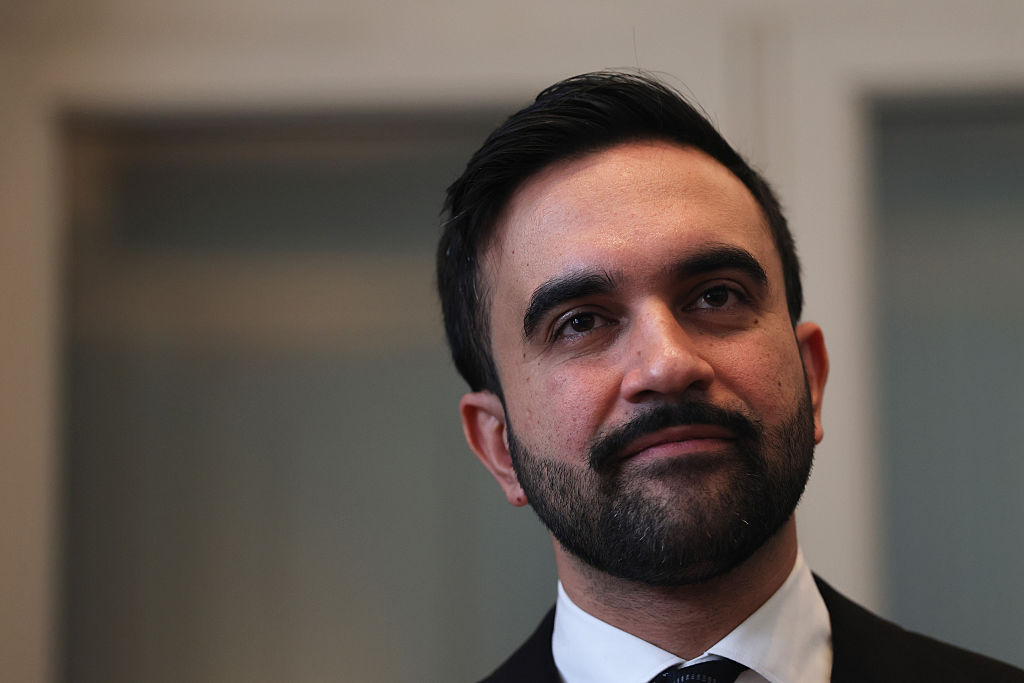
Today Mayor Zohran Mamdani takes office in New York City. What’s at stake is a once-in-a-lifetime chance to build power not only in New York but for the socialist movement across the world. (Spencer Platt / Getty Images)
- Interview by
- Daniel Denvir
After vying for power for a decade, today marks an important new chapter in the American socialist project as Mayor Zohran Mamdani takes office in New York City.
For the Jacobin podcast The Dig, Daniel Denvir interviewed writer and organizer Sumaya Awad, Sumathy Kumar, the managing director of the New York State Tenant Bloc, and Nathan Gusdorf, the executive director of the Fiscal Policy Institute, on what it means for the Mamdani administration to govern New York City, the headquarters of global capital.
Daniel Denvir
Let’s start by talking about how to conceptualize the relationship between organized socialists and the Zohran administration. I think it’s worth reminding [ourselves] that what we’re trying to do here is advance a hegemonic socialist project against — but sometimes inevitably with — establishment Democrats in the face of ascendant, authoritarian fascism in a generalized legitimacy crisis.
So a lot’s happening right now. That doesn’t mean that critique isn’t okay; in fact, it’s necessary, but it should be put forward in the service of that larger project. Sumaya, what’s the model or concept for how we should be thinking about the relationship between the Mamdani administration and the New York City Democratic Socialists of America (NYC-DSA)?
Sumaya Awad
I think on the Left, and this has always been the case, we often get mixed up between the reality we want to see and the reality as it is. This is an instance of that sort of happening. Zohran is mayor-elect, he’s about to be mayor, and he’s a socialist. He’s from our movement — from New York City DSA. He was elected with over a hundred thousand volunteers from various organizations and [including] many who are unorganized.
It doesn’t mean that he has the power to do anything and everything. In fact, his power is quite limited because of the space he’s entering, and the fact that much of the establishment is actively working against him and wants to make an example out of him to other cities and to the Left, and so on. I say all this because I think it means that we have to go into this with a different framework from just, “How are we going to hold him accountable?” Instead, we need to think about this with the million-plus people that voted for him and the eight million people that he now represents and needs to fight for and has promised to fight for.
We, as the people who helped to elect him, are accountable to those people, to those million-plus voters that voted for him. Because he was running and we were knocking doors on a platform that said, “We’re going to deliver a rent freeze. We’re going to make buses fast and free. We’re going to deliver childcare for all.” And that’s what we need to deliver.
Viewing it that way, it’s actually our responsibility to these people whose doors we knocked. It’s our responsibility to every New Yorker to deliver on that affordability agenda and to show what Zohran ran on, which was the politics of consistency; to actually prove that we can achieve, whether we want to call that collective governance or co-governance.
I don’t think that the term matters very much, to be honest. It’s about, in this next period, and especially at the beginning, how are we able to deliver what we promised voters, what we promised New Yorkers, and show that we’re up for it. I think we can do it, but it really means being able to apply pressure.
I think we’re only thinking about it in [terms of] applying pressure on Zohran. But really it’s about how we apply pressure on the establishment — on Kathy Hochul and others in the establishment — to allow Zohran and this incoming administration to deliver on the promises that we all made together.
Sumathy Kumar
I very much agree. This moment requires a new orientation toward how we work with elected officials in our movement.
There are two camps that we generally seem to fall into. One is, like, perpetual opposition. As soon as someone becomes an elected official, we are holding their feet to the fire. We are holding them accountable. They’re the target; they’re the enemy. Then on the other hand, I think, we say “co-governance” — sometimes that feels very much like nonprofit executive directors in a room talking to elected officials. But the basis of that relationship is really around personal connections and less around power.
We have to go further than that [if we are going to] have a successful administration. Mayor Mamdani has to represent eight million people. A personal connection with a few leaders in the movement is just not gonna cut it. We have to move beyond that.
So I think I want us to use more of a mass governance frame when we think about this. Meaning that hundreds of thousands of people should share in the successes and the stumbling blocks of this administration, the same way that we won this campaign with a hundred thousand people knocking on doors, feeling like this was their victory.
I think that needs to extend over the next four and eight years so that thousands of people feel like they are delivering the agenda alongside the mayor. They are making buses fast and free, and freezing the rent, and delivering universal childcare. That is going to help us withstand the attacks from the Right, from the federal government, from the moderate Democrats — if thousands of people feel like they are a part of that. And that is something that we have done in New York City DSA through the Socialists in Office (SIO) Committee.
We’ve started to do that in the legislature in a project where legislators work with members of New York City DSA to achieve shared goals. But it’s not about just leaders in DSA making decisions with elected officials. It’s about everybody having a role and having a part to play in delivering a shared agenda. So whether you’re a new member who’s knocking on doors, telling their neighbors, “Hey, call your elected official. Tell them to tax the rich,” or you’re a state senator talking to your colleagues about how you should get on these bills — everybody’s part of the same project. Now we need to take that legislative project and move it into something that works for an executive and works for 8.3 million people.
The way that we do that is continuing to run these mass campaigns. But there’s all these new opportunities that come with being the mayor and with city government that we can take advantage of so that people feel like they are a part of the success of what is to come.
Nathan Gusdorf
A very ordinary concept is that you want a socialist party to be able to take over a governing function. So the party has to have the capacity to do that. I think having the Mamdani administration now take over the city government, have to make all the ordinary decisions, appointing commissioners and pursuing a policy agenda — it really raises the question of executive branch governance and an executive branch policy agenda, which is very different from a legislative policy agenda.
When you are electing people for the legislature, you can pick particular issues and draft legislation, and the legislation may or may not work, and often it will get ironed out in the process. Whereas when you’re running city government, not only do you need to have a much more expansive and comprehensive policy agenda, but you also have all the operational responsibilities.
So before even getting to co-governance and thinking about this inside-outside concept, it seems to me like, in theory, you want a political organization that has some competency and some ability to also just venture right into the administration and think about how it translates its goals into what the administration can do — both at the big-picture level of stuff that’s kind of visionary, but also at a more quotidian level of thinking about the politics that you wouldn’t normally think about.
There are over two hundred boards and commissions in New York City. I worked professionally in this field, and I probably couldn’t name three of them. This sort of city governance is extremely complex, and most of those issues probably look, in the abstract, like very small issues that wouldn’t be that interesting to the global left. But once you have a democratic socialist in charge of New York City, their political salience becomes much higher. So thinking about the different ways that you can put some of your political capacity and your resources and your personnel into managing those issues, they all start to look a lot more important. It becomes a lot more central to the full product.
So you’re not just — this the way I imagine accountability, which is we’re always kind of on the outside shouting at people in power — but really thinking about these fairly fine-grain politics of managing the state apparatus along those lines.
Daniel Denvir
Nathan mentioned that what NYC-DSA is trying to do is act like a party, and that really brings to mind this influential article that Seth Ackerman wrote for Jacobin in 2016 called “A Blueprint for a New Party.” The basic idea of that article was that the way out of the two-party system trap for the US left was to run socialists on the Democratic Party ballot line, while at the same time building an independent organization that operates like a party in a number of different important ways.
Is that what NYC-DSA has accomplished or is in the process of accomplishing?
Sumathy Kumar
Yes, I think so. When I was cochair of New York City DSA in 2020, we elected our first slate of people to the legislature. We had Senator Julia Salazar, who was in office already. But now, we had a crew of people, and we had already started to use the ballot line agnostically, working in primaries to get our people elected.
Then when we had that sleeper victory, we said it can’t just stop at the elections. It has to go beyond that into governance. So we built something that I think is long-lasting and real. where the socialists in office work together in the way that, if we had a different system in this country, they would be a party: They would be working together, it would probably be a coalition government, and they would be a minority party within the legislature moving things as a bloc.
That’s essentially what they do at the state legislature now. And it’s working. We have won taxes on the rich. We have won new tenant protections and climate victories, not just because the legislators are working together and in concert with DSA leadership, but because of the party-like aspect of it — everybody has a role to play. Every member can join and be part of a project together with thousands of other people to deliver something real and have a shared agenda. And if that’s not what a party is, I don’t know what it is.
Sumaya Awad
I agree with that. I also think that it’s our way of really showing people what socialist politics are in a way that is accessible to them that we wouldn’t be able to do if we were running outside of the Democratic Party line. I think what makes DSA so unique is, it is the only organization of its kind that operates this way, that operates like a party that is democratic.
We’ve seen that play out again and again, certainly in the last few months. That’s also a testament to the power of DSA that we’re building, and we’re still small. We’ve just grown a lot; we’re increasingly a big player in New York City politics, but in the larger scheme of things, we’re still quite small.
That begs the question of, what do we do to continue building power right now? Because even though we have a mayor-elect who is a member of New York City DSA, and that’s incredible, it is not inevitable that that means that we’re going to continue to grow or that that growth will transform into actual power.
Nathan Gusdorf
The only observation I would add to that is the thing that does stand out about the way that New York City DSA’s electeds are organized is their ability to have a line. That really stands out in contrast to a lot of other progressive elected officials, of which there are actually many in New York, but I’d say that tends to be more of a mixture of different perspectives. And everybody has some position that they identify as progressive when they all can’t get bundled together. You don’t see the same exercise in having a specific shared view.
Daniel Denvir
While the Ackerman model, I think, is the best one, it does not solve all of the problems of not having an actual political party. On the one hand, it presents the problem of, how does NYC-DSA preserve political independence when clearly a big part of the project is transforming, if not taking over, the Democratic Party? And then, how does NYC-DSA, as a party-like organization, deal with the reality that elected officials like Zohran have so much power and celebrity that’s autonomous from DSA as an organization?
Sumaya Awad
It’s really complicated. On the one hand, what got Zohran elected had a lot to do with New York City DSA, obviously. And crucially, it also included so many other forces that New York City DSA played a large part in bringing in, as well as others that came in on their own, whether it was the unions or various community groups and organizations — and the list is long — that played a crucial role.
How we relate to all of this now [has to do with] our ability to continue to grow these coalitions that include all these groups and work together toward both the agenda that we ran on but also our long-term vision. For New York City DSA, it’s specific: it’s about building socialist power and building a socialist party in the United States. Other organizations have different goals, but there’s a lot that we align on and that we’re able to move together as far as we can toward our goal that we have. And whoever wants to come along the way, come in and make it easy for them to join.
I think that the question of the Democratic Party is one that we’re probably going to have to keep asking ourselves, and our answer might change over time. It’s probably shifted a bit since 2016 when Seth Ackerman wrote that article as well. When you look at the 30 percent of districts that went for Trump and then went for Zohran; the fact that the Democratic Party leadership didn’t endorse or really say anything about Zohran until the very end. . . .
And yet a few weeks after he was elected, Trump said, “I want to meet with you.” And Zohran did that meeting. What I’m trying to say is, I think the way that we’re operating is also having the affordability language that can get at people who follow both Democratic and, right now, Republican candidates, because it’s getting at what actually matters to working-class people. And I think that is shifting the direction of how many Democrats that are now running this election cycle are thinking about what they need to do in order to align with the base.
Down the line, this might turn into transforming the Democratic Party. This might turn into us having our own party. We have to be flexible about what that end goal is. But along the way, making sure we are gaining the affordability wins and everything that comes with it, and also our wins on foreign policy, which I don’t think we should discount.
I think DSA has really led the charge in many ways, through our electeds, when we’re talking about the genocide in Gaza, when we’re talking about “Not on our Dime” in New York City. Yes, we haven’t exactly won those things, but they have really transformed the political arena in New York City. Zohran was running against Andrew Cuomo who was famous for his BDS [Boycott, Divestment, and Sanctions movement] blacklist, and yet Zohran was able to win openly supporting BDS.
There’s all these ways that we’re actually transforming or beginning to transform the Democratic Party. And the question is, what are the ways to actually make more people understand our politics, understand what socialism means? We’ll have to do that through the party at first, and then there’s a question of what that transformation will look like.
Daniel Denvir
What about the question of political independence vis-à-vis Democrats? And then political power and discipline when it comes to candidates?
Nathan Gusdorf
Certainly, as someone playing in technocrat gear, let me argue with the question a little more. If Zohran came in and decided that he wanted to make every deputy mayor and every agency commissioner be a DSA member, as far as I’m aware, he would literally not be able to do that. I don’t know the details of the membership list, but it is a small number of people who are positioned for those roles, and they’re generally thought to not be DSA. While I often tell people not to overestimate how much expertise and experience is needed to move to a high-level role, it definitely requires some.
I see it a little bit more as the other way around, where there’s this political victory that has, in a sense, run well ahead of the political organization’s ability to match the governing demands. So then, there’s a question of what you do to catch up with that. Certainly, there’s some side of the politics of mobilizing. It can’t really be separated from whatever has to be done to build that internal capacity and think about how you develop an administrative cadre. Which is a policy thing, but it’s a little bit different. It’s people who really end up giving the bones of governance and who are willing to make their careers there in the service of these goals.
Sumathy Kumar
I will talk more about being responsible and representing 8.3 million people in the context of the Democratic Party and DSA. In some ways this isn’t new. All of our socialists in office represent people who aren’t DSA members and have to represent diverse districts that have lots of people with lots of different politics, and yet we have been able to organize them in a shared project with DSA.
We’ve been able to do that because we are fighting for things that everybody wants. We’re fighting for things that working-class people want and need, and we can deliver for constituents and people who live in the city. And that is the most important thing here, and that’s the way that we can not just have the people that we have right now, but also move people into our politics through delivering, through legislating, and through governing. We can’t rest on where we are right now.
DSA has grown tremendously over the last year, and we need to keep growing. We need to keep reaching out to the million people who voted for Zohran and say, “This is the project. You should be a part of it. Join DSA and try to get involved in a political organization.” We’re not going to get all of them, but we have gotten a lot of them through the organizing and governing relationships that we’ve had. Now we have to figure out how to be even more rigorous and really try to reach some level of mass organization over the next four to eight years.
Daniel Denvir
A really important thing, and you keep touching on this, Nathan, that Zohran and the Mamdani administration has to do well is to do a really good job in basic technocratic terms. The big transformative proposals aren’t going to work if the trash isn’t getting picked up. Not only can things like city sanitation not get worse, but they probably need to get somewhat better.
So how does that work? This is a city with roughly 300,000 public employees, some subset of which are political appointees serving at the pleasure of the mayor. How should we think about that? What does socialist public administration look like in the year 2026 in New York?
Nathan Gusdorf
This is a great question, not only because it’s so timely, but because it’s almost impossible to overestimate the difficulty of just getting the city to run. Yes, there are 300,000 city employees. There are around fifty agencies. But the agencies range from really big operational agencies like the police or sanitation to all kinds of smaller agencies that people haven’t really heard of. There are hundreds of boards and commissions.
Managing this, even just at the level of appointing people to fill roles, is no small task. Then getting it all to work is in its own right very challenging. One of the things that is likely to be Mayor Mamdani’s problem, just as it’s every mayor’s problem upon taking office, is there are already built-in budgetary challenges before even his big-ticket priorities. Some of it has to do with the regular contestation of the budget that you get every year in terms of councilmembers’ priorities, and spending growth, and how to manage constituencies that you want to do right by, making sure that teachers get good contracts. . . . And with wage growth, that can also get expensive, and there might be other things that you want to do. There are certain policy issues that will arise in his first budget, like phasing in a class-size mandate that has been suppressed under Eric Adams; also paying for homeless vouchers.
So there are going to be really big conflicts over preexisting issues that have nothing to do with his agenda. He’ll have to find a way to manage that that is both consistent with his values and yet also exists in the real world with the city’s constraints. Mamdani was the only candidate to run on taxing the rich to pay for an expansion of public services, and you could see that every other progressive was too afraid to do that. He did that, and he won on it. But even his tax plan, it’s still a bit separate from these other challenges. We’re unlikely to see tax increases for childcare, housing, and a whole lot of other tax increases just to make preexisting budgetary challenges go away.
Navigating all of these governance and fiscal issues — that’s the sort of stuff that consumes all of every mayor’s administration. I think there’s a question of, how do you do it in a way that is socialist or feels as consistent with being a socialist as possible? There’s no way around the fact that the city’s budget is really big. That’s what it takes to run a city like New York: to educate a million children in public schools, to have a public transit system, to have a robust social service system. At the same time, [we need to be] really attuned to how we can use those dollars wisely, and in some cases [recognizing] that need to be investing in additional capacity and additional personnel in order to find efficiencies in the long term.
That all sounds like, again, ordinary technocrat speak. There’s a way to sound technocratic [where] what we’re really trying to do is austerity and suppress the public sector. Then there’s a way to do it where you really believe in the public sector and believe in public provision. You just recognize that you’re under budget constraints, and that you face real operation challenges.
Daniel Denvir
Nathan, what about the sort of appointments that we already see Zohran making in terms of the mix of people who are more DSA cadre — politically committed people — and people who have worked in other mayoral administrations and clearly know how to run certain types of departments that need to run really well?
Nathan Gusdorf
I will say that the appointments we’ve seen so far are Elle Bisgaard-Church, his campaign manager who is widely respected and loved by those who know her, and Dean Fuleihan, who’s a very experienced state budget hand. The selection of Fuleihan was interesting because, on the one hand, he definitely has the chops to know how to manage a budget. And on the other hand — not exactly on the other hand — he is very aligned with this administration.
So even though that was taken by the press as something like an alternative to picking a NYC-DSA candidate, Fuleihan is not some “team of rivals” move, picking an appointee who would try to undermine him. I believe that Fuleihan is someone who really believes in the agenda. He really believed in Bill de Blasio’s universal pre-K, and so it looked to me like picking someone with the serious know-how.
Sumathy Kumar
Yes, we have to deliver good governance. We have to deliver something that works for people, especially after four years of this past administration where the city has just not been working. But I think there’s also this opportunity with Zohran because he has this huge following. So many people are excited, and I think we should experiment with what that looks like in terms of governance too.
Zohran could send out a call to say, “We’re all gonna clean up the park on this day,” and maybe two hundred people could show up. Maybe I’m underestimating that actually. Things like that could change some of the dynamics and give us more room to do interesting things just given how much excitement and how much interest there is in making this project work.
So I want us to think about things like that too, where people can also participate in making government function even if they’re not employees. That has also been part of the way the whole campaign went. It was about awakening this sense of civic society, and being a part of a city means that you participate in it and you make it work together. We can continue that into the governance in the administration too.
Sumaya Awad
I really agree with what Sumathy was just saying, that there’s all this excitement — people want to work for the city. Seventy thousand applications were sent in in the first week or two weeks. We should think about it as, the way to work for the city or be part of this new era that we’re in is not just by actually working for the city government; it’s also through joining an organization and through Our Time which I think we’ll talk about in a bit.
But I think that both those things are also really concrete ways of actually being part of building and rebuilding our city into something completely new within what Nathan was talking about — that there’s going to be some continuity and then, crucially, some change and some boldness and pragmatism. How do we find the balance between all of these while also knowing that mistakes will be made? Because we’re going into something very new, and I think we should expect that mistakes will be made. The question is, how do we navigate them gracefully — and by gracefully, I mean in a way that we come out stronger and not weaker and more bifurcated.
Daniel Denvir
It’s commonplace to observe that Zohran will govern under constraints. I’m talking about objective constraints that are rooted in the balance of forces in society — constraints that, in turn, produce contradictions. And there are layers of these balances of forces and contradictions to talk about.
Like good Marxists, I want to start with the political balance of forces and then we’ll dig a little deeper, closer to the realm of production. But to start: Trump is in the White House. Congress is controlled by Republicans. And in Albany, with Governor Kathy Hochul, there’s some kind of détente there that was formed with Zohran, maybe having something to do with hopes around universal childcare in city council.
How does all of this define the terrain upon which Zohran will be operating? We have to be real that it was an election won by Zohran and DSA, but also very much lost by a Democratic establishment that is in such a sorry state that Adams and Cuomo were the best that it could produce.
So map this terrain. Zohran, DSA, allied electeds, popular movements — how can they navigate this terrain over the course of the next few years so that what might be impossible today is possible, or even seemingly inevitable, tomorrow?
Sumathy Kumar
This last year has taught me that the terrain shifts very quickly. I was in elected leadership of New York City DSA in 2024, and it was a really hard time. We were running these races for legislature, and there was so much going on. There was this despair over the continuing genocide, the presidential election, and it was really hard to get people to come out, knock on doors, and do the thing. It really felt like this left that I came up in — “We’re ascendant. We are on an upward trajectory.” It [then] felt like, “Oh, is this not the case anymore? Are we actually retreating? Is this the closing of a window?”
Daniel Denvir
Organizing last year felt like shit.
Sumathy Kumar
It was horrible, and we didn’t even get a chance to do the thing before the window closed. I think what I felt is this mass disaffection where people are just feeling like, what is the point? What is happening? None of this feels meaningful, and it’s not moving toward anything.
Now we’re here a year later, and I think we have grown so much. We have built so much momentum, and obviously we’re about to ascend to a power that we have not yet experienced and really enter governing. And a million people voted for Zohran, and a hundred thousand people knocked on doors. So the terrain is always shifting.
Yes, we have a moderate governor. We have what seems to be a moderate city council speaker, but we also have a million people who voted for Zohran. I think I saw there’s 117 million registered voters in the US; so one in every 117 people voted for Zohran. A lot of people voted for him, and a lot of people want something different. I think that we have seen the governor and a lot of establishment politicians respond to that. No matter what your politics are, if you’re a politician, you understand the raw power of votes. And I think that we are seeing that elections matter and they change how people operate.
So currently, the terrain is that politicians everywhere are looking like, “Whoa — we did not see this coming. This is new. We should try to react in some way. We should be accommodating.” Even from [New York City Council Speaker] Julie Menin, we have seen a show of accommodation and wanting to work with the administration.
But the hope that a million people are feeling right now is fleeting. That’s a feeling that exists right now. And it’s on all of us to make sure that it doesn’t disappear and that it’s channeled into winning and actually delivering and then feeding that hope — making it real so that people can stay involved, and we can continue to have that electoral power that we just demonstrated in the state legislative elections, that are about to happen in the city council elections, that are going to happen in the future, so that we can build on it and create real majorities out of it.
Daniel Denvir
Nathan?
Nathan Gusdorf
The first thing, Cuomo and Adams . . . I was talking about socialist good governance, but you could forget about socialist governance. There’s an irony in this election that Zohran Mamdani, it turns out, could have been the city’s only shot at good governance. I’d say this past Adams term, and then Cuomo being the Democratic candidate, shows you the inability of the business community to field the candidate that, in some sense, reflects the rational self-interest of capital, and in some way that’s sort of specific to New York City. . . . You could say at a national level, maybe capital as such should just be strictly opposed to the state, and they would be better off living in some sort of anarchic chaos. I don’t know if that’s convincing, but you could maybe make a case.
That doesn’t work in New York City. You just do not have a city without a pretty substantial municipal budget to allow everything to run. So the fact that business interests were not able to just come up with someone who could effectively run things, I found that striking.
This other stuff about, how do the contradictions limit the Mamdani agenda? Normally, when you do tax and budget stuff, you mostly have to deliver bad news. But I’ve found myself on the other side of this recently. The starting point here, is that none of the Mamdani proposals are really that crazy. I think it was kind of a weird hangover of neoliberalism where it feels like even a little tax increase to pay for a really basic form of social provision that exists in most countries somehow feels revolutionary and impossible. It’s so in the cards. I mean, the DSA 2021 “Tax the Rich” campaign was successful under Governor Andrew Cuomo, who raised taxes on people who make over a million dollars a year. And nothing bad happened.
Often in these sorts of political policy conversations, people raise the issue of a capital strike. I would say, coming from a tax policy perspective, you see this very rarely in the tax world. There’s a certain logic to the capital strike in a labor context, where businesses are willing to inflict economic damage on themselves just for the purpose of deterring unionization, and they will shut down factories and lose profits. Whereas with taxes, it tends to look more like rational behavior. So as long as they’re still making money, they’ll pay higher taxes. If they can make more money by going somewhere else or moving their operations, then they’ll do that.
But it pretty much tracks with how they want to make money. And New York state’s and city’s economies are so big and continue to be so robust that there really just aren’t any meaningful economic concerns with the marginal increases in taxation that Zohran has proposed to pay for his agenda. In other words, all this stuff could be done, and none of it is such a paradigm shift or so provocative that I think it would trigger the existing balance of forces to strike back in some devastating way.
Obviously, he has to get through the governor, so there’s some political challenges to getting it done. But I think those can be done on the terms of state and city politics. They’re not structural factors that would be prohibitive.
The potential real limitations, at a more deep structural level, [have to do with] the risk of a federal crackdown, if Donald Trump changes his mind about this good-looking, likable guy who’s going to be the mayor. Those are the reasons to think it might not be a huge problem, but if the federal government really wanted to fiscally go to war against the state and the city, that could be a real problem. Obviously, the Immigration and Customs Enforcement (ICE) stuff is a real issue, so there are real threats that would have to be managed. But I think the core of the agenda is pretty sound and pretty viable actually.
Daniel Denvir
In certain ways, even as Zohran and NYC-DSA clearly share a fundamental common political project, the strategic orientation of the Left in power versus the Left in movements can inevitably diverge because of the position where the movements and the electeds are situated. So, for example, for Zohran, it might be desirable to effectively work with Hochul to achieve policy aims in the smoothest way possible. But for NYC-DSA, a central goal is likely to build mass agency from below. The point here is not to moralize about these strategic divergences, but we should explore how to think about them.
How do we approach these kinds of strategic contradictions that might emerge and go about maximally reconciling those points of contradiction? Sumathy, what’s the current state of mass organization in New York? What sort of things can Zohran make possible? Specifically, what sorts of actions can the administration take to make new things possible — actions that can put tens or even hundreds of thousands of New Yorkers into motion?
Sumathy Kumar
This is the most exciting part. In terms of where we are at right now with mass organization, we still have ways to go. I think we are now seeing thousands of people say, “I’m ready to take action!” But it’s new. So I think a big task for all organizations that say we want a mass base, all of them need to take on the question, how do we actually make that happen? There are people who are ready, who want to take action, and now we need to grab them and get them involved and get them organized and asking for more.
When it comes to what Zohran can do to increase that mass organization, it’s really exciting. The things that I know the most about and that I’m thinking about the most are around the tenant movement. This is really an example where there’s so many things the administration can do, and all of that needs to be partnered with thousands of tenants organizing in their buildings to make it real.
Code enforcement, for example, on making sure that repairs are actually getting made. Zohran can do the policy agenda that he fought for: increasing proactive code enforcement, actually collecting fines from landlords — but then tenants on the ground, in their buildings, thousands of them get to organize and take advantage of that.
Then we can go a step further in thinking about how, right now in New York City, after landlords have been gambling on people’s homes for decades, buildings are starting to go into foreclosure because they made bad bets and they made risky business decisions and they’re paying the cost. If we are organizing in those buildings and tenants are organizing in buildings that are going through foreclosure and saying, “No, we don’t have to get sold to the highest bidder here.” . . . We can actually use the power that we’ve built at the city government and have the city take the buildings or have the city facilitate a process so that the tenants can take the buildings.
That is so exciting because it’s not just on the administration to do that work. It is something that tenants need to initiate. And that’s the role of mass organizations, of mass tenant organizations — to say, Let’s go organize. We’ve built this power at the city level, but now we need to organize in our buildings and across the city to take advantage of that and use all of those levers of power to do what we really want to — to decommodify our housing, to put tenants in charge of their homes, to actually have livable and affordable housing. And we can do that in a way that’s from the ground up and not just from the city administration, but working together in partnership.
[Another] thing I was thinking about is so much less concrete and is a messy one, but one of the things that Zohran did when he was in the state assembly was introducing Not on Our Dime. One of the things that activated parts of the electorate was that he showed he was able to speak up on something that most people were afraid to speak up on, and that he remained consistent on that throughout until now. And I think there’s this question that’s been flying around right now, at least within the Palestine movement on the Left and also in Muslim parts of the city: What can we expect will happen differently, now that Zohran is mayor, around the question of Palestine or Palestine organizing?
It’s messy. But there’s certain things that I think he’s already shown that he will stand up for and we can expect more of. Basic things like how to respond when there are protests, how to maneuver and navigate the NYPD’s response to protests. It’ll be interesting to see what happens in the spring and in the fall when campuses are back in session, should there be any activity on campuses around encampments or things like this. Then also backing [the Palestine movement], both rhetorically and then, where possible, more things like Not On Our Dime or [divesting from] Israel bonds. . . . And some of it is not within his jurisdiction, but there’s some rhetorical power.
Daniel Denvir
Sumaya, you mentioned earlier the organization Our Time, which Zohran has established to advance his agenda. It’s staffed by some of the city’s most talented socialist organizers.
But what is its role? What should it be doing? How is its purpose distinct from the role and purpose of NYC-DSA? Last, how can it avoid the problems that have beset other post-campaign organizations? Two, in particular, come to mind: Barack Obama’s Organizing for America and Bernie Sanders’s Our Revolution.
Sumaya Awad
The best way to think about Our Time is as a campaign rather than — maybe it’ll become a separate organization — but as a campaign with a purpose of advancing and winning the affordability agenda. And crucially, it is not part of the administration. It is a separate entity that exists and is also not New York City DSA, though obviously there’s a lot of overlap in terms of the people behind it.
It was conceived of as a way of bringing in the tens of thousands of people who volunteered for the Zohran campaign and giving them a direct avenue to turn to after the election, after he had won so that we don’t lose that infrastructure, so that we don’t lose these 104,000 people — and 104,000 people is a lot of people. That’s more people than are organized in probably all of the endorsing membership orgs combined. That’s more people than are in Desis Rising Up & Moving (DRUM), New York City DSA, Jewish Voice for Peace (JVP), and so on.
On the first Our Time call, there were seven hundred people on the call. And there were many comments in the chat that were like, “What is DSA?” That shows that there are so many people that were mobilized and involved in the campaign that still don’t know about DSA, that still don’t know about this organization they can join. So I think Our Time is so important to bring those people in right away, direct them, funnel them into fighting for the affordability agenda. There’s already a big canvass this Sunday for childcare for all, to keep that momentum going. My hope is that they do end up joining an organization because the whole point is that once we’re organized, we’re much stronger. We’re able to do a lot more.
So this is a way to bring those people in, introduce them also to other organizations, and have them join, have them become mobilized. And that’s the way that we’re able to put pressure on the establishment in order to push forward everything that we’ve talked about tonight.
That’s also an important reminder that Zohran is one man, and we are building a whole movement. He’s part of it for sure, and an important part of it. But our real power comes from being able to have those million people who voted for him be people who are not just politicized, but who are mobilized and who are organized. That’s what makes us able to win the various campaigns that we’re running this year in New York City DSA in the election cycle, but also in four years when Zohran is going to run again, and in eight years. And then after that — whatever that project is, wherever we decide that project should go.
Sumathy Kumar
I’ll just add, some people need a landing page of some kind. We have so many people getting involved in politics for the first time. They don’t know any of this, and they just want to achieve the affordability agenda. They just want to, you know, freeze their rent.
Daniel Denvir
They haven’t even been to a Capital study group before. It’s crazy.
Sumathy Kumar
That’s awesome. We should be getting thousands and thousands of people who are like, I want to freeze the rent. I should be part of a movement. Oh, there are these socialists who are also trying to freeze the rent! Maybe I should be one of them; maybe that’s actually what my politics are. So if we can create containers, Our Time is this campaign container that we can put all of these new people right next to longtime socialists, longtime organizers, who can bring them into long-term movement.
Daniel Denvir
Zohran’s meeting with Trump was obviously pretty sensational. I think the socialist left and even much of the mainstream media interpreted it as a pretty huge victory for Zohran, even though some on the Left accused him of selling out all principles for even taking the meeting in the first place.
It seems to me that the most important achievement perhaps was that Zohran, at least temporarily, bought breathing room for the socialist project in New York, lowering the odds that there will be some sort of federal occupation or massive ICE surge — knock on wood — on day one of the administration. But of course we should be prepared for Trump to flip very quickly if he senses an advantage in doing so.
Nathan, how do you assess what Zohran’s accomplished so far in this bizarre relationship with Trump? And what sort of strategy might be required over the long term to protect New York City and the socialist project here over the coming years in the face of an extraordinary authoritarian threat?
Nathan Gusdorf
First, I have to say that that meeting went roughly how I thought it would go. I figured that the president would be charmed and, to anyone with their eyes on the state or city budgets, that was a big relief.
It was a relief because before worrying about these outside threats — obviously ICE is here, but something really dramatic like a federal takeover of the city — the most immediate threats are budgetary, and it’s worth teasing out what the dimensions are. The city’s budget is more insulated than the state’s budget. The city gets about $7 billion a year in federal funding. There’s some other federal funding that flows to the New York City Housing Authority (NYCHA) Section 8, but that’s about $7 billion out of $115 billion. Education, other housing, some social services are generally the primary components.
In principle, it should take an act of Congress to change that. We know those rules are kind of out the window right now, so there’s a real potential pressure there. And then, remember that, regardless of what your views are on federal fiscal policy and deficit financing at the state and city level, they can really only spend the money that they take in in taxes. They have some capacity to use reserves to bridge funding gaps, but there is a tight relationship between taxes and spending. So if a billion-dollar problem crops up for the state or city budget, that’s a very real problem. It’s not like a myth of neoliberalism when somebody says that’s a problem.
The big issue is at the state level, and it’s not a story about some Trump executive order. It’s about the tax cuts that [Congress] passed this last summer that it called the “Big Beautiful Bill,” or what I’m calling the OBBA. That’s a huge tax cut bill. In this sense, it reflects not so much a unique Trump or MAGA angle as just another installment in decades-long Republican commitments to tax cuts.
First, it’s $4.5 trillion in tax cuts over the next ten years. Of that, it’s about $1.2 billion in cuts to Medicaid and the Supplemental Nutrition Assistance Program (SNAP). The effects are going to be pretty serious for New York. The cuts phase in basically after the midterms, but when fully phased in, you could have half a million to a million New Yorkers losing their health insurance. [That’s] billions of dollars lost by the state government in revenue, mostly going into health programs.
So the state is already going to be under a lot of fiscal pressure. That means that, again, before worrying about any new issues, the city’s job and the new mayoral administration’s job is going to be to make sure that the state handles those fiscal challenges without kicking a lot of it down to the city.
That’s partly in the interest of every New Yorker, to not have the bottom fall out of really important programs like Medicaid. In New York, it provides health insurance for about eight million out of twenty million people. Again, everyone has an interest in ensuring the program’s integrity, but that’s the biggest risk to the city.
Then to the extent that that gets compounded by further federal withholding or federal fiscal assaults, it translates into a pretty serious set of bureaucratic challenges that’ll just put pressure on all of the most important parts of the city government — again, undermining the mayor’s ability to successfully manage day-to-day operations. And that’s before you get to the viability of pursuing a new policy agenda on top of it.
Daniel Denvir
Sumathy and Sumaya, what’s your take on this city-federal dynamic? To drill down more specifically on the prospect of a federal occupation or ICE surge, what could mass resistance in the streets of New York look like in that scenario? And how ought or might that resistance interact with resistance led from Gracie Mansion?
Sumathy Kumar
This is a place where Zohran’s role is going to be different from what the movement does for us on the Left in movement organizing. I think an occupation has to be met with mass resistance in our neighborhoods, in public places, everywhere, to say that this is not acceptable.
I think we have to start preparing for that now. One of the most important ways we do that is by organizing with our neighbors, building extremely tight-knit and real neighborhood organizing spaces so that people feel a sense of solidarity and can stand up and stand in between ICE agents and immigrant people in New York. That’s going to take a level of courage and resistance that is only built — it’s not inborn in people — and it’s built through everyday acts of solidarity and organizing.
One of the biggest ways that it can be built is through organizing against a shared enemy, like your landlord or your boss. So that organizing we’re doing now can pave the way for greater resistance later.
I think Zohran’s role is going to be different in this situation, but I think what we all have to do is invoke this sense of New York pride. That has been built in this campaign in a lot of ways. Zohran’s campaign was a love letter to New York City and what makes it vibrant and what makes it special. I think that resonated with a lot of people, not just people on the Left. We have to keep that spirit alive in the face of federal incursion to say, “This is our home. We are the people who get a say in what happens here,” and really provoke mass resistance.
Sumaya Awad
I agree with everything she just said. And I think one of the most incredible things about a campaign that reinvigorates the city is you have people who had just been doing something on a weekly basis ready to be activated again. This is why I think Our Time is so important. And New York City DSA’s other campaigns, electoral and otherwise — for them to keep going is so important because if there’s a takeover, we can reactivate all of this in service of organizing against a takeover. Also, and we were already doing this, being in touch with the other cities that have dealt and are dealing with this in order to think through what strategies work, what don’t, what’s most effective, how do they operate, and so on is really crucial.
Nathan Gusdorf
One more thing, which is in terms of some of the substance of that meeting between Zohran and Trump, I’ve consistently found it interesting how he’s obviously unapologetic about the politics of his agenda, and yet he was also able to very successfully convey the universal appeal of this affordability agenda without ever pretending that it doesn’t require raising anybody’s taxes or making anybody mad. I think that’s a very interesting dimension.
Sumaya Awad
Just to emphasize too that Elle was at that meeting, and I think probably had something to do with it — her brilliance, Elle and Zohran together just charming Trump.
Daniel Denvir
He said, “You’ve got a great campaign manager over there.”
Unruly mass resistance in the streets, while very desirable, could also certainly heighten a key contradiction, which is Mayor Mamdani’s control over the vast repressive machinery of New York City government, namely the New York Police Department (NYPD) and Department of Corrections. And we all know what the city’s carceral state and what the carceral state in general in the United States does — how and why it functions to enforce racialized control over the most oppressed, dispossessed people in the neoliberal city, and also to impose order amid very real disorder and violence that brutal material conditions produce in society.
So there’s the carceral state as an institutional force. But the carceral state is also, particularly by means of police unions, a political force. And then critically, the carceral state is also attached to a social force, which is strong public majorities, including among constituencies that are very important for the socialist left to win over, people who might be or are receptive to certain de-carceral politics, but who strongly believe that police are critical for public safety.
Sumaya, how do you assess these profound contradictions, and what are the best, if inevitably imperfect, ways that Zohran ought to manage them?
Sumaya Awad
It’s a really good question, and one that is being hotly debated, at least on Twitter. I’ll start with the decision to keep [NYPD] commissioner Jessica Tisch on, instead of beating around the bush. Because I feel like that’s a question that everyone’s asking, and I think we can say that Tisch is pretty awful and supported crackdowns on protesters and sending the NYPD into campuses and a laundry list of other things.
Crucially, our role on the Left is not to be debating who the face of the NYPD should be, who the commissioner should. I think what’s a lot more important for us to think about is, what are the changes we want to see happen within the NYPD and how they respond to New Yorkers at large — and certainly protesters or students, et cetera, =but also just regular New Yorkers — and what is their role?
It’s very true what Dan was saying — that many if not most New Yorkers think the police are important for one reason or another. We have to contend with what that means and what safety means to most New Yorkers. And I think here the role of the community safety proposal that Zohran had, and the Community Safety Board and so on, are really interesting. But I think we should be careful not to get carried away with the details of, like, who is the face of this and who is in charge of that and instead focus on the details of the policies and what we want to see change and how we can go about that.
It’s also important to remember that when Zohran chose to keep Tisch on, I think it was a strategic decision, and we can agree or disagree about that. But it was also important that he had conversations, and he said this in his press conference, about changing certain things in the way that the NYPD had operated in the past, and that there are certain things that would change when he was mayor, and that they talked about this. It wasn’t papered over.
One of the most important things that was named, for example, was the Strategic Response Group (SRG) and how it was used against protesters, against campuses, and so on, and that that would change. I think that’s often left out of the conversation when people are talking about the decision to keep Tisch on. And I just want to repeat what I said earlier, which is that there are going to be many things that are done, especially in the next year, two years, in his administration and in our movement that we might later think was maybe not the best decision. And that’s OK because this is all new — because we’re going to make mistakes.
But what seems strategic right now is, how do we move forward? What do we expect of this new relationship between the NYPD and the mayor?
Last thing I’ll say is that, also, it actually doesn’t benefit us on the Left to have a mayor that is in a hostile conflict with the NYPD. That does not benefit us in any way, shape, or form. It doesn’t mean we expect to be best friends with the NYPD. But I think we need to think about, what is it that we’re trying to build? How are we making sure that Zohran and the new administration are best situated in order to move everything forward that we want, and in order for our movement, which will have slightly different goals sometimes, to be able to operate in the most productive, effective, and bold but pragmatic way?
Sumathy Kumar
Given that Zohran has to govern 8.3 million people and that right now a lot of people, a majority of people in New York, are not quite where we are on the issue of policing, I think what is interesting to me. What I would love for us to think through is how do we make this Department of Community Safety that Zohran campaigned on real? And what are some of the demands that we want to make [so that it’s] a functional alternative to the carceral system that we have? And I think that through governing we can organize masses of people in New York closer to de-carceral politics in that way.
Imagine you’re a New Yorker. Someone’s having a mental health crisis near you. You call the Department of Community Safety. It actually responds; it actually deals with the problem. It makes both people feel safe and secure and like the situation’s been resolved. I think that experience is going to move people closer to de-carceral politics than anything that we’ve done before, and we can also do that at the scale of tens of thousands of people by building up an alternative. Then that movement then creates more space for us to make even bigger demands on reforming the NYPD, on changing the violence of that agency right now.
Then the thing about Jessica Tisch is, I think we have to be really thoughtful about the battles that we are picking: which battles and in what sequence. There are going to be thousands of fights. I want us to pick fights where we can exit them stronger than we were before, with more popular support from New Yorkers, and picking fights in the context of all the other things that are happening.
Right now, we’re entering the administration knowing that there’s a very likely possibility of federal incursion in the city. Knowing that, for some reason, keeping Jessica Tisch became the top demand of the business class, which I think is a little bit of a concession on their part and is interesting. It’s sort of like, “Why have that fight right now? Why in the context of all of these things? I think it’s different if she starts undermining the administration, undermining the mayor, not doing the things that Zohran is telling her to do. That’s justification to people, the public, that this isn’t working.
The last thing I’ll say is that most people don’t care who the police commissioner is. The public doesn’t care about personnel fights like that. It cares about issues. So if we’re trying to move masses of people, which I think we always need to be doing in this situation where we’re trying to move a mayor who’s responsible for 8.3 million people, we should be picking fights that are about things that they can feel and care about and are about their lives, not about a person or a name.
Nathan Gusdorf
I would just add that earlier you talked about the relations of forces globally, nationally, outside of the administration; but it’s the same thing within the administration, within this complex bureaucracy. So it’s not just a police commissioner — it’s also the 35,000 police, and the NYPD has its whole internal complex bureaucracy. And rarely is it an effective strategy to pick a huge fight with any branch of a government bureaucracy. That’s a good way to get yourself stonewalled.
But even if you’re going to, you have to be pretty deliberate and strategic about it. And there’s always a certain kind of rational ordering and where you start. Honestly, given what this administration hopes to achieve, not leading with a big fight with the cops is probably a pretty sound and strategic way to make more inroads into other parts of the city bureaucracy. And also just to give themselves some runway to get their arms around the inner workings of government as people who are pretty new to it.
Daniel Denvir
We’re getting closer to the realm of production, but we can’t actually enter it. We’re stuck in the superstructure. But New York is the capital of global capitalism because it is the capital of financial capital, and as mentioned earlier, we witnessed the capitalist class have a collective meltdown over the prospect of Zohran winning and quixotically spending loads and loads of money to attempt to stop him from doing so.
This is not unique to New York — navigating the balance of power between capital and the state. We can see this in really striking ways throughout Latin American history. And we can also look to New York history. The power of finance was a key force imposing neoliberalism here during the 1970s fiscal crisis.
Nathan, how concretely do those contradictions manifest themselves in New York today? And how ought Zohran’s team, on the inside, and the socialist movement, on the outside, navigate them?
Nathan Gusdorf
It cuts a few different ways. On one hand, [there’s] this Tale of Two Cities situation where we really do have a lot of very rich people, and I’m not really talking about a handful of billionaires; I mean the top 1 to 2 percent of very high-earning professionals. We’re talking about, fifty to eighty thousand people who are your law firm partners and real estate investment partners, people who make around $1 million a year. They pay a lot of the taxes, and they allow a fairly high level of city and state expenditure.
That means that there’s actually, unlike many other historic and national contexts, a lot of room to continue expanding social welfare provision and the sorts of things we want to do through taxing them. And I think the economic fundamentals are sound enough that you can go pretty far without it posing much risk.
Obviously, there are a lot of political downsides to being dependent on them. You kind of have to map that out, but it’s a longer-term risk.
On the other hand, I think one of the things that a lot of people hope to see in this administration, in large part signaled by the inclusion of Lina Khan as one of the transition cochairs is a more blue-sky, big-picture regulatory agenda. That’s not something that has traditionally been thought of as the domain of city government.
In principle, there’s no reason why that has to be the case. If all the regulatory muscle is at the federal level, then it kind of makes sense for the federal government to be regulating the national economy. But if they’re gonna not do anything, then why not use the city’s powers?
There are other public-option type proposals that we might see on the table. So you might see something around health insurance. I’m not aware of anything that’s been floated; it’s just an issue that we know is going to arise. At some point, someone’s going to say, what about a public option for health insurance? Nonhealth insurance . . . property insurance now is so expensive, and it’s becoming a problem for rent-stabilized landlords and non-rent-stabilized landlords. So you could see another public option for just property insurance.
Those are the kinds of proposals that would probably seem like serious provocations to the business community. They’ll be accused of extreme overreach, of undermining free markets and capital. I think that’s where you would expect to see some very serious political controversy and will test the ability of the administration to see through an agenda. We could go back to seeing a very deep level of opposition from the business community that would require very serious outside mobilizing if more expansive and imaginative policy options start to come out.
Sumathy Kumar
The only other thing I would add is just that, in the event of the financial sector, the business class, withdrawing support or withdrawing from the city: in the 1970s, we did see that people stepped up to fill that gap. Tenants took over their buildings, and we had one of the largest transfers of property in a generation. So I think that what we have to do here is make sure that people are organized so that they can fill the gaps, but also so that we can keep the agenda popular even in the face of withdrawal — so that we can keep demanding more.
So the answer to all of your questions is that we need to organize a lot of people. Even in the case of the financial sector, we have to be organizing to allow people to be able to adjust to whatever happens, and to keep popular opinion focused on who is to blame for whatever is happening, keep it focused on the business class and the people who are withdrawing support and make sure that we can turn that into political power that can then mitigate that and stop it from happening.
Nathan Gusdorf
One thing on the fiscal crisis, which is that, in a funny way, it’s become this reference point for the Left and for the Right. Because on the Left, people like to be historically minded about things. So there’s always this sense of, how does the fiscal crisis define where we are today? On the Right, they’re always going back to the fiscal crisis because they always want to say we’re about to go into another fiscal crisis, and that the city spends way too much money and it’s a catastrophe.
So it’s also important to say that we are nowhere near another fiscal crisis. It couldn’t be further from the current state of things.
Back in the 1970s, the city was borrowing a lot of money to pay its current expenses that it wasn’t taking in via tax revenues. Regardless of what you think about that, in normal budgeting terms, that was a real problem. Today the city runs surpluses. It gets a lot of tax revenue from a lot of the rich people who live here and all these high property values and uses it to pay teachers and fund homeless shelters and pay the police and a million other things.
So the way that it’s become this specter of every budgetary debate is actually a real problem and hinders us.
Daniel Denvir
As you all are very well aware, the Left across the country, people like me who live out in the provinces, really all across the world, we have a lot riding on the success of this project in New York. And at the same time, New York is a big part of something that is much bigger than just New York. In Providence, Rhode Island, we have David Morales, a young socialist state representative, challenging our neoliberal real estate aligned mayor in next year’s Democratic primary.
How do you conceive of moving this huge New York project forward as a key pillar of this much larger left-wing hegemonic project that proposes that we exit this moment of extraordinary danger by fundamentally transforming the country?
Sumathy Kumar
We have to deliver the agenda. We have to deliver on the three Mamdani campaign promises to freeze the rent, make buses fast and free, and deliver universal childcare, because that is going to show people that socialist governance actually means something and makes people’s lives better. That is going to inspire thousands of people, millions of people across the country to also do the same thing so that we can take power for working-class people not just in the city but across this country.
Nathan Gusdorf
Think about what it means to have an executive branch governing strategy and what that means in terms of personnel, and how you cultivate people, and who you can bring into an administration, and then who you develop within the administration. All of the little policy challenges of running the government will turn into big political challenges. So you have to deliver on the agenda, but there’s also a lot of stuff you have to not screw up. And then, you’ll have to make some hard choices and honestly do some stuff that’s kind of screwed up, and you’ve got to give it political meaning in the right way, and that works a lot better if you have the right people in the administration with you. But developing that personnel is no small task.
Sumaya Awad
I agree with both of those. I think delivering on the agenda is especially important because we’re already seeing so many people running for office around the country using a very similar strategy to Zohran, which is amazing, and hopefully many of them win. But the real success is going to be if we’re able to pass this agenda. Then everyone else will say, OK, it’s possible. It’s not a pipe dream. This is actually possible. We can get this; we can win this. If they won it in New York, we can win it here, no matter how big or small their city is. Frankly, much of the world is looking at us right now.