The Olympics May Soon Embrace Private Equity
The International Olympic Committee, the body that oversees the Olympics, is hunting for more revenue. It may soon open the door to private equity, which has been increasingly reshaping sports to squeeze every last dollar out of athletes and fans.
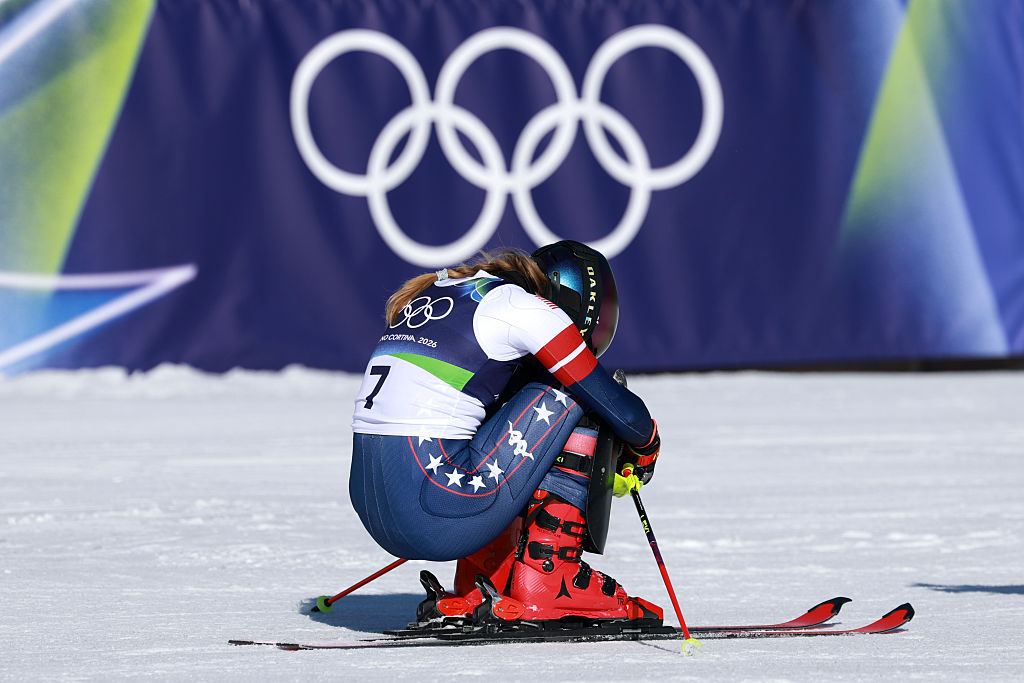
The International Olympic Committee is exploring new sources of financing to help cover the enormous costs of mounting the Olympic Games, and it appears to be zeroing in on private equity. (Ezra Shaw / Getty Images)
For more than a century, the modern Olympic Games have elevated the world’s top athletes in service of peace, diversity, and shared dignity. But the Milan Cortina Winter Games are also highlighting a less celebrated reality: The Olympics are a multibillion-dollar business — one now flirting with private equity, the profit-driven investment firms that are reshaping sports and squeezing every last dollar out of athletes and fans.
Now, as Los Angeles grapples with the economic potential — as well as financial risks — of hosting the 2028 Summer Olympics, vulture capitalists seem poised to make a play.
The International Olympic Committee (IOC), the nongovernmental body that oversees the games, primarily relies on television broadcast licensing for revenue. NBCUniversal holds exclusive US broadcast rights under a multibillion-dollar long-term agreement, while the Worldwide Olympic Partner program grants global marketing rights to major corporations.
Created in 1985, the Worldwide Olympic Partner program has become a major pillar of Olympic financing, generating billions of dollars in recent cycles and now accounting for more than a third of IOC revenue between 2021 and 2024, up from 19 percent between 2013 and 2016. Between 2021 and 2024, the program generated $3 billion in revenue, according to IOC financial data, compared to $96 million in its first three years. This year, corporate sponsors included Airbnb, Deloitte, and Visa.
Investors Enter the Picture
Still, the IOC is exploring new sources of financing to help cover the enormous costs of mounting its events, and it appears to be zeroing in on private equity. A 2022 paper commissioned by the organization argued that while private equity investment is “not cheap, and their tools are not particularly novel,” it could provide “much-needed financial resources, expertise, and excellence in execution” and help professionalize sports operations through a more “commercial mindset.”
The idea gained prominence last year during the IOC presidential race, when investment banker and current vice president Juan Antonio Samaranch proposed partnerships with major private equity firms such as Carlyle Group and CVC Capital Partners to bolster the Olympics’ long-term financial footing
Samaranch — whose father served in Franco’s fascist government and later led the IOC for more than two decades — said such deals could prove highly lucrative, according to the German outlet Börsen-Zeitung.
“Sport is becoming an asset class,” he said. “I have tested the idea with people, and we would have no shortage of companies that would try to partner with us.”
Samaranch’s plans included an IOC-advised private equity fund to invest in sports-related businesses such as equipment manufacturers and training programs — which he claims could raise as much as $1 billion in its first funding round.
Investors took notice. The following month, the Germany-based trading platform Finexity noted that private equity “could participate in financing the Olympic Games, the development of athletes, or marketing rights.”
The Private Equity Playbook
Previous Lever investigations into private equity’s expansion into minor league baseball and bowling alleys have documented similar dynamics, revealing how firms take advantage of minimal regulatory oversight and taxpayer subsidies to turn beloved American pastimes into get-rich-quick investor schemes.
Even youth sports aren’t safe: the Lever’s reporting recently prompted a private-equity-backed youth hockey conglomerate to reverse a policy that banned filming during games and forced parents to pay for a streaming service.
Private equity’s money-first, people-last mentality has alienated sports novices, superfans, and professionals alike — suggesting the industry’s inclusion in the Olympics could undermine the humanist values it exists to uphold.
The IOC did not respond to the Lever’s request for comment.