Credit Reporting Companies Want to Hide Consumer Complaints
The major credit reporting companies that help determine your ability to obtain a loan, buy a house, or get a job are urging the Trump administration to hide consumer complaints about their potential misdeeds, which can wreck families’ finances.
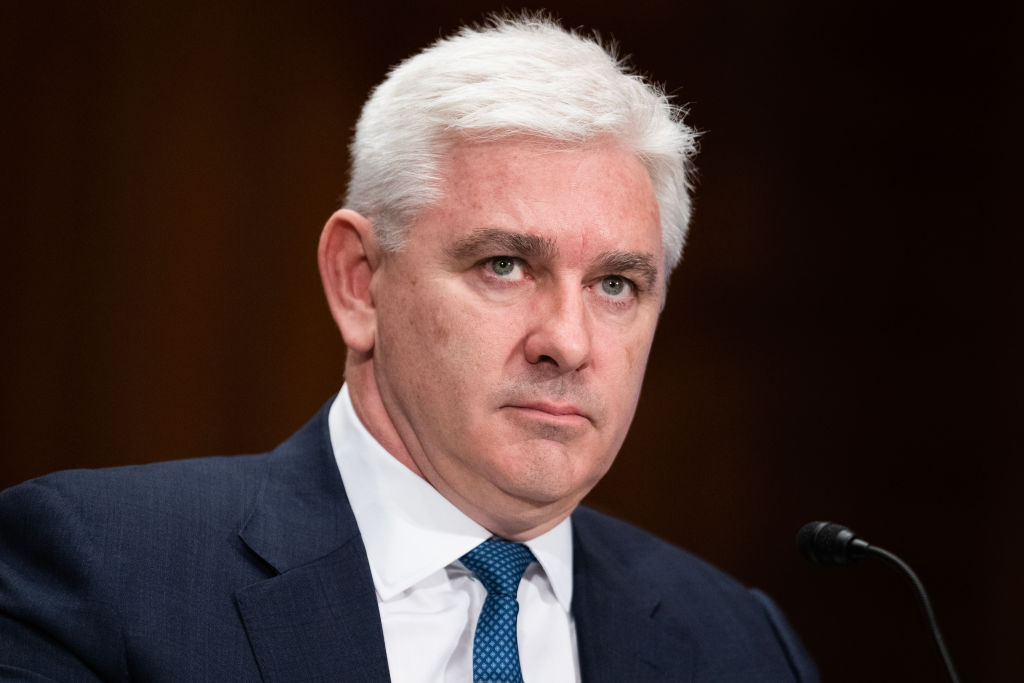
Brian Cassin, CEO of Experian, testifies during a Senate Banking, Housing, and Urban Affairs Committee hearing. (Tom Williams / CQ-Roll Call, Inc via Getty Images)
The companies collecting detailed information about you and selling it to corporations to determine your ability to obtain a loan, buy a house, or get a job are now urging the Trump administration to move forward with a proposal to hide consumer complaints about potential misdeeds that can wreck families’ finances.
These same credit reporting companies, which spent more than $1 million lobbying the government on consumer protection laws in 2025, have been sued for deceiving consumers and publishing false information impacting people’s credit scores.
On January 30, the Consumer Financial Protection Bureau (CFPB) began accepting public comments on whether the agency’s complaint intake system, which allows consumers to file public complaints against credit reporting companies, “is necessary for the proper performance of the functions” of the agency. The request for comment also seeks ideas on how to “minimize the burden of the collection of information” on companies flagged.
A potential rule change could make it harder for consumers to file complaints and publicize mistakes made by these credit reporting companies, which can “devastat[e]” families with higher interest rates and loan denials, according to a recent press release from the National Consumer Law Center, a nonprofit law group.
Three days before the announcement, the Consumer Data Industry Association — the lobbying group representing the “Big Three” credit reporting firms, Equifax, Experian, and TransUnion — noted in a letter to the CFPB that it should “cease publishing data related to individual consumer complaints” and that the bureau’s consumer complaint database is akin to a “Yelp for Financial Services.”
These three companies control the credit data of more than 200 million Americans.
Experian was sued by the Consumer Financial Protection Bureau in the final days of the Biden administration for allegedly including inaccurate information in its consumer credit reports. The case was among the few that the new Trump administration refused to drop, but a federal judge dismissed it in August.
The agency also sued TransUnion in 2022 for allegedly tricking consumers into a paid monthly credit monitoring program by “employing deceitful digital dark patterns to profit from customers.” The government dropped its lawsuit in February 2025, shortly after President Donald Trump took office.
Consumer protection experts warned that the potential rule change is not only a giveaway to big businesses but could also silence consumers.
“Last year, consumers filed nearly five million complaints with the CFPB regarding credit reporting, mostly against the Big Three credit bureaus, one of the worst oligopolies in this country,” wrote Chi Chi Wu, director of Consumer Reporting and Data Advocacy at the National Consumer Law Center. “Instead of fixing these problems, which is supposed to be [the] CFPB’s mission, [acting CFPB director] Russell Vought and his cronies appear ready to bow to Experian’s demands to sweep the problem under the rug by suppressing the volume of complaints.”
The Lever previously revealed how some of these same credit reporting companies attempted to kill a rule in 2025 that would limit how they can sell sensitive consumer information, such as Social Security numbers and home addresses.
The announcement comes just as the bureau takes a hammer to its examinations of banks, creditors, and debt collectors nationwide, including by eliminating in-person exams in favor of virtual inspections, according to Bloomberg Law. Instead of inspecting these financial institutions in person, examiners will now be forced to conduct their work online — and take a “humility pledge” noting their willingness to work collaboratively with the very institutions they’re supposed to be overseeing.
The Trump administration all but shut down the Consumer Financial Protection Bureau last year by gutting its budget and reducing the number of examiners and administrative support staff from 437 to fifty.