Building “Mass Governance” in Zohran Mamdani’s New York City
Zohran Mamdani is now mayor of New York City, and the Left’s old ways of relating to elected officials won’t cut it. We need a “mass governance” approach.
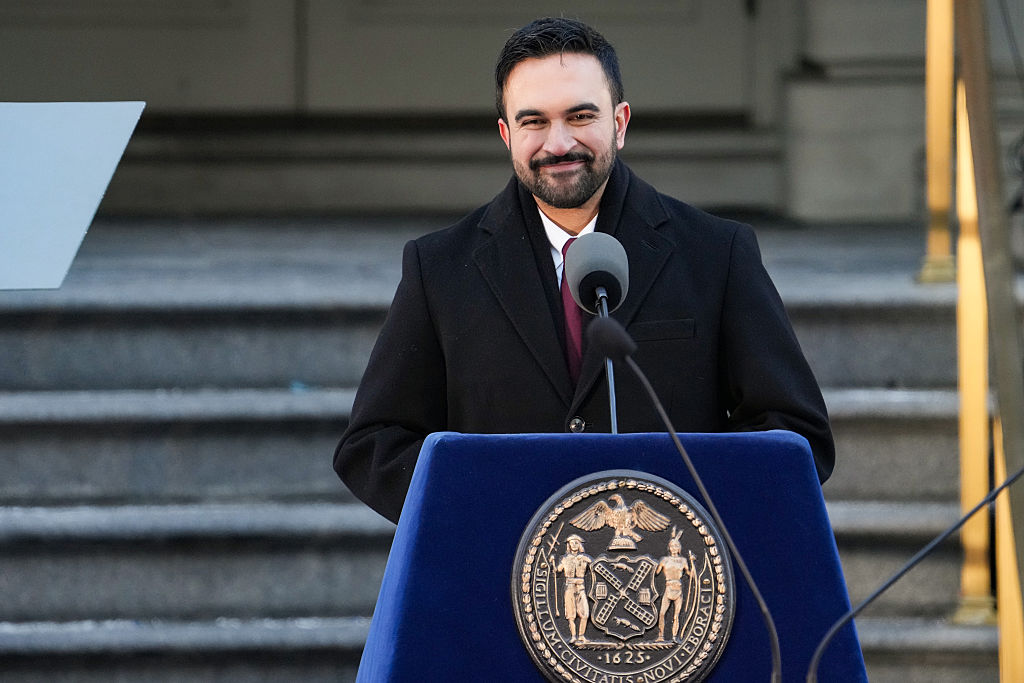
With a socialist in New York City's mayoral office, the Left needs to think differently about how it relates to elected officials. Socialists have come to occupy a different, more central place in the political process, with new levers of power open to us. (David Dee Delgado / Getty Images)
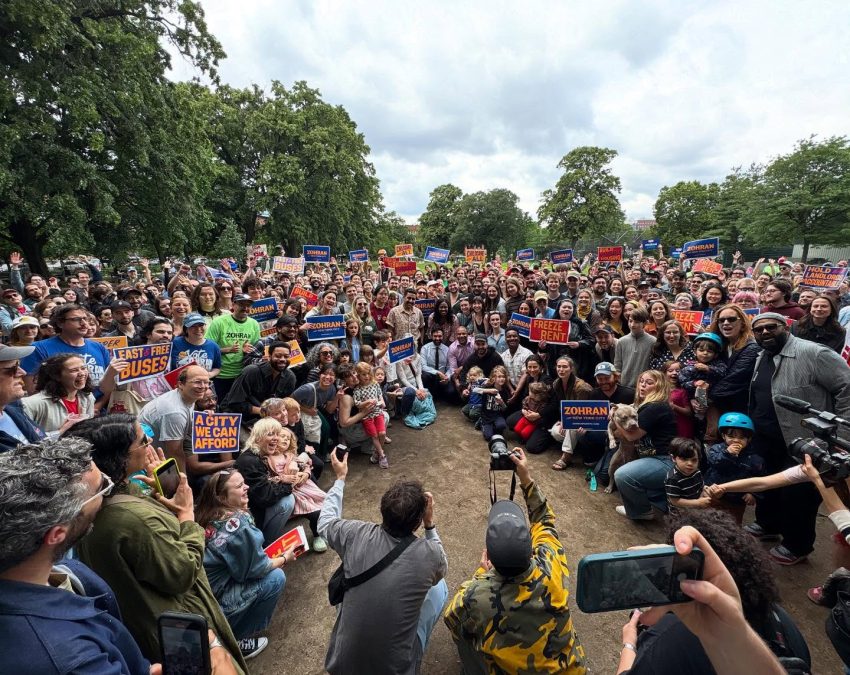
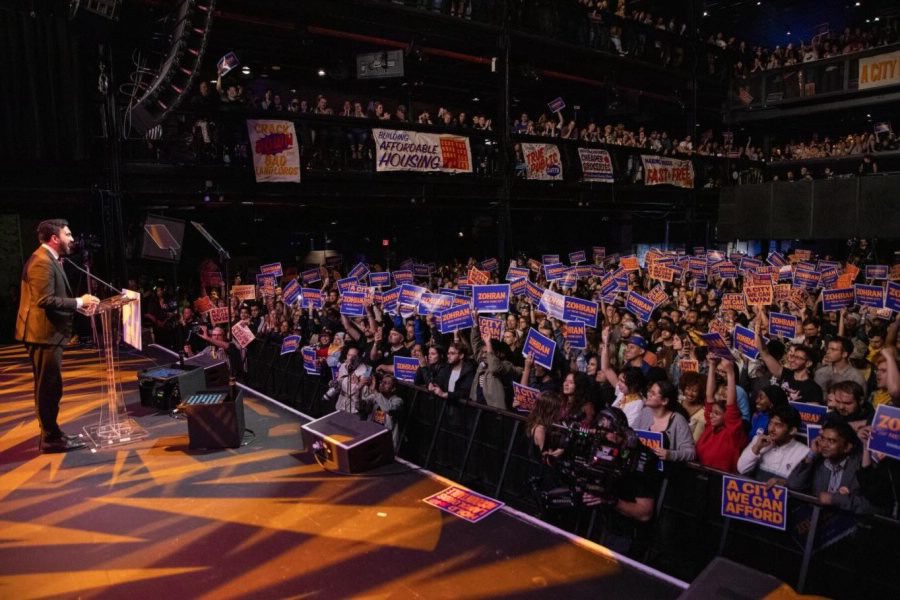
In late May, hundreds of volunteers flooded Herbert Von King Park in Brooklyn’s Bedford-Stuyvesant neighborhood on a sunny Saturday not just for a rally with then-mayoral candidate Zohran Mamdani, but to knock on doors and talk to strangers about voting for him. We filled the park and spread out into satellite groups across the lawn, where dozens of field leads coached new and regular volunteers on how to canvass, reviewing the three core campaign promises we had all started to memorize by then.
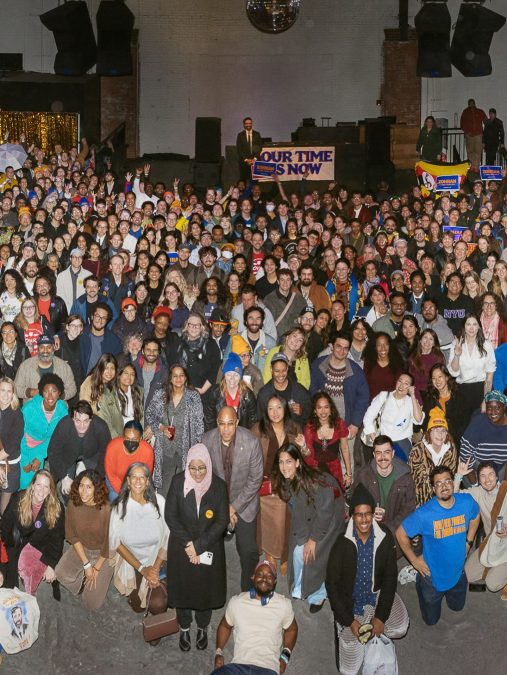
This scene played out over and over throughout New York City over the past year. In all, over one hundred thousand people volunteered for the Mamdani campaign, knocking on doors, making phone calls, talking to their friends, neighbors, and to strangers. The victory that has shocked the country and the world, culminating in Zohran’s swearing in as mayor yesterday, is because of their labor, and is proof that sustained, mass organizing around clear class politics produces results.
Now comes the test that matters. Will those same people and others energized by the Zohran campaign walk into power with the new administration and feel part of the political project, or watch from the sidelines?
Our default mode on the Left won’t suffice. Treating a socialist mayor like any other politician, “feet to the fire” from day one, isolates City Hall from the very forces that elected them and gives leverage to our many opponents. The tactics of pressure politics we have developed make sense in the context of most other “progressive” elected officials: the Left is a part of an electing coalition, and we need to maintain pressure over politicians to keep them to their promises amid all the compromises.
But we have to think differently now: we have elected one of our own, and socialists have come to occupy a different, more central place in the political process, with new levers of power open to us.
The other default position, retreating into insider “co-governance” based on standing meetings with nonprofit directors and a handful of leaders, also won’t do, as it leaves the hundreds of thousands of people who did the work back on the sidelines. The meetings may feel important, but without a concrete way for tenants, riders, and parents to shape decisions and see their fingerprints on outcomes, the base demobilizes and the administration gets weaker.
In other words, the two default scripts we know best, pure pressure from the outside and insider co-governance at the top, both shrink the field of politics just when we finally have a chance to expand it. We need to think bigger.
The alternative is mass governance, putting the people at the center of the administration’s political project. It means redesigning existing institutions and creating new ones so that large numbers of working-class people become and stay engaged in the administration’s project and exercise binding power over issues of material importance.
Unlike standard “co-governance” or even bland forms of “participatory democracy” that never touch real decisions, mass governance means the administration itself runs ongoing political education, helps organize neighborhoods, and opens up meaningful decision-making to neighborhood and borough assemblies to decisions on budgets, buses, and services. For socialists, the goal needs to be that we govern like we campaigned, so that every victory feels owned by the people who delivered it. That is how this administration will be successful, and how we will use this moment to bring millions of people into socialist politics and set the stage for more victories across the country.
Building Mass Governance
Mass governance builds off of the work New York City Democratic Socialists of America (NYC-DSA) has done to build its Socialists in Office Committee, where endorsed socialist legislators and their staff work closely with DSA members to achieve shared goals and build the socialist movement. By organizing together in this way, we have won increased taxes on the rich in 2021, new tenant protections in 2019, and major climate victories in 2023.
The Socialists in Office project works when legislators are organizing in lockstep not just with DSA leaders, but with thousands of rank-and-file members all playing a part in a campaign. From the members knocking on doors to urge their neighbors to call their state representatives to the state senators organizing their colleagues to get on a bill, we all work together to win. We must now extend the logic of that project to an executive office and the biggest movement we have had in recent years.
We are fortunate to draw on lessons from the global, municipalist, democratic socialist left in Europe and Latin America that successfully pivoted from movement organizing to governance. In Porto Alegre, Brazil (1989–2004), under the Workers Party (PT), the Left managed to succeed electorally while setting the stage for dozens of further PT victories municipally and federally.
The city’s fabled participatory budgeting process, which drew hundreds of thousands of participants, was a system of neighborhood- and theme-based assemblies that ranked capital projects and published delivery calendars. It delivered meaningful projects to working class communities in timely and transparent ways. It doubled as campaigning from the seat of government, with annual assembly “roadshows” that served as political education events where everyone learned the contours of the city budget and how a municipal administration works. And it mobilized volunteer corps of elected delegates/councillors who worked in communities around the city.
Other cities went further. Montevideo, Uruguay, under the Frente Amplio (in city government since 1990), combined participatory budgeting with standing neighborhood councils (comisiones or concejos vecinales): voluntary bodies of residents recognized by the municipality that channeled proposals from each barrio into the decentralized district centers and monitored implementation. Working-class neighborhoods could help not only set priorities for local investments, but propose ideas for existing services like bus lines and management of public spaces.
In Barcelona (2015–2023), Ada Colau and Barcelona en Comú launched Decidim, a digital platform through which residents could propose, debate, and prioritize projects, while the Pla de Barris program in the most excluded districts anchored face-to-face assemblies where neighbors codesigned investments in housing, schools, and public space. Those assemblies were supported by small territorial teams of community organizers and neighborhood facilitators who did outreach, organized meetings, and helped residents navigate city hall, so the new tools were backed by real on-the-ground capacity.
These projects were uneven, often constrained by higher-level institutions and internal contradictions, as critics of Spanish municipalism have rightly pointed out. The lesson is less perfection than the ingredients: these administrations succeeded in advancing a socialist politics when they mobilized large numbers of working-class people and created neighborhood structures for real decision-making.
Mass governance means that hundreds of thousands of people feel ownership in the successes, stumbling blocks, and potential failures of the administration. That feeling of mass ownership will help us avoid othering and isolating the Mamdani administration from the base that elected him.
An isolated city administration will only turn more moderate and will not be able to deliver on the affordability agenda that propelled Mamdani to victory. Instead, we want to make sure that masses of New Yorkers feel connected to the administration, feel that attacks on the administration are attacks on them, and fight back accordingly.
The Pillars of Mass Governance
In practice, mass governance rests on three pillars: an administration that keeps campaigning from the seat of government, organized volunteerism, and binding public decision-making.
First, we need to keep building mass movements to demand taxes on the rich and public programs that lower the cost of living for working-class New Yorkers. We will only do this through mass movement organizations that can involve tens of thousands of New Yorkers in legislative fights at the state and city levels. For the first year of the Mamdani administration, that means organizing mass campaigns to deliver on the core campaign promises: universal childcare, fast and free buses, and a rent freeze.
We will need to organize people around the state and city budget cycles, make sure masses of New Yorkers know who their city council members and state legislators are, and have the tools they need to demand that those elected officials support the affordability agenda. Many organizations are gearing up for this work, with the new formation Our Time partnering with membership organizations like NYC-DSA, the New York State Tenant Bloc, and others to keep the Mamdani campaign volunteers mobilized and knocking on doors, starting with a statewide fight to tax the rich for universal childcare in the 2026 state budget.
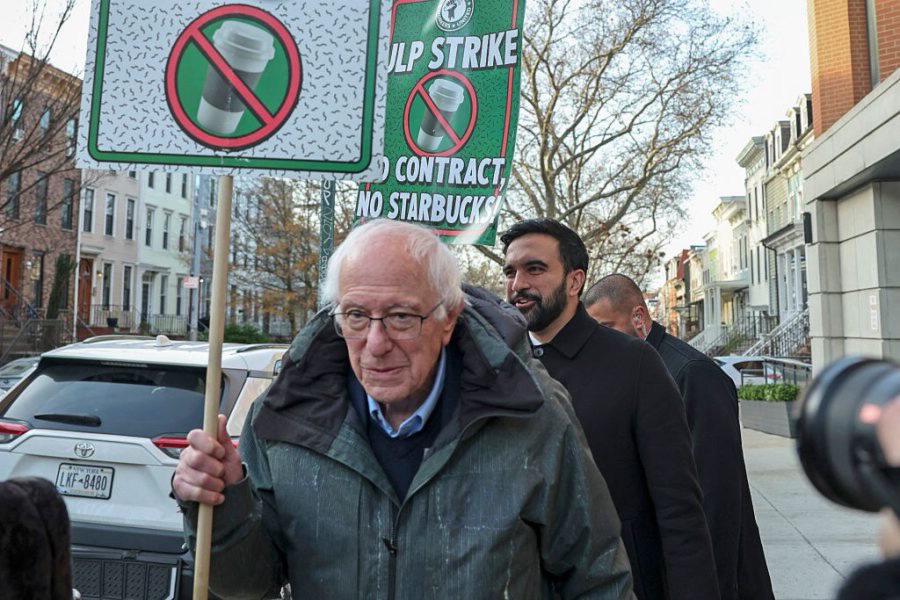
We also don’t need to limit ourselves to legislative and budget-related campaigns. Tenants who live in buildings that are part of large landlord portfolios can organize their buildings en masse as part of the New York State Tenant Bloc and demand that the city step in to help negotiate for repairs, ownership transfers to tenant cooperatives or the public sector, and more. Zohran can walk the picket line, as he did with Starbucks workers, and lend a megaphone and bully pulpit to contract fights across the city. Organizing mass campaigns of all stripes will allow us to involve thousands of working-class New Yorkers in the project of making the city more affordable; they will feel ownership over those victories, and a connection with the mayor who worked with them to win.
Second, we need to support mass volunteerism. Many people already volunteer with the city in hundreds of different ways. We know elderly tenants who volunteer at their local public libraries to teach literacy, friends who volunteer with the Parks Department to plant trees and wildflowers across the city, and many more. Outside of city government, we know of mutual aid networks throughout the city that were crucial for everyday survival during the pandemic. And we know of ICE defense networks to protect neighbors from illegal seizure and deportation.
We can expand these volunteer opportunities and give volunteers some level of decisionmaking power through the work they do, to give them more ownership over the city. This level of mass volunteering can make more people feel a connection to their city, and could mitigate people’s tendency to blame the government or the mayor for anything and everything that goes wrong.
The city already supports volunteering efforts, but this could be vastly increased and organized. Using his vast social media following, the mayor could send out calls to volunteer for particular projects like a specific park cleanup or restoration project, to give direction to a thousands-strong corps of volunteers and make people feel like this city is ours to fix and build. These volunteer opportunities could be followed up with political education on the size of the parks budget and lead volunteers to develop connections between the parts of the city they love and the political considerations that shape New York. The city could hire and deploy organizers around the city to expand and sustain this mass volunteer approach, building off of the feeling of connection that so many people felt during the campaign and giving people a sense of belonging and ownership over the city.
And third, and perhaps most challenging, we need to make participation within city government structures meaningful. New York already has significant participatory infrastructure, but much of it is shallow, fragmented, and symbolic. People are tired and skeptical of endless “listening sessions.” Processes today are uncoordinated, repetitive, and disconnected from outcomes. Many New Yorkers who have taken time off work or childcare to show up for government-led engagement feel their time was wasted.
A Mamdani administration can do things differently by adopting a coherent activist posture toward engagement that emphasizes clarity, outcomes, and respect for people’s time. Every participatory initiative should be coordinated within a citywide architecture, not left siloed. Engagement should be seen as “campaigning from government”: ongoing mobilization tied to real decisions, not passive consultation.
Making participation meaningful starts with very basic, very concrete things: childcare, food, language interpretation, disability access, and even some “festival” elements: music, flu or COVID shots, legal or immigration clinics. Every process should also build shared analysis: simple maps and infographics, basic numbers about who gets what, examples from other cities, and one or two people in the room who can answer technical questions.
A socialist administration doesn’t have to invent everything from scratch. New York already has community boards, school councils, participatory budgeting, and all manner of advisory commissions, though too often they are treated as symbolic. A mass governance approach would start by auditing these bodies, strengthening and upgrading the ones that people already use, consolidate or retire the ones that don’t work, and organize the rest into a coherent system that maximizes participants’ ability to make binding decisions that materially deliver for them. Every process should produce a public list of priorities, a written response from the city, and a visible timeline, so people can see whether their participation actually moves resources.
In New York, assemblies should be organized at two main scales. Neighborhood assemblies would meet monthly in schools, libraries, or New York City Housing Authority community centers, always tied to concrete issues like housing, transit, or community safety in a defined area, with relevant city staff in the room. Borough-level assemblies would meet quarterly to debate and rank broader priorities, especially around budgets and major projects. Their calendars should be synchronized with existing decision cycles, like the state and city budgets, so they become a front door to real institutional power while the rest of the participatory infrastructure is being brought into line with our political project.
Within that framework, community boards would be crucial. New York’s fifty-nine boards already cover every neighborhood; with clearer mandates and defined decision rights, they can function as real civic governance bodies. People activated by the Mamdani campaign should be encouraged to attend and apply for community board seats, and the administration should inject greater responsibility into the board structure so these spaces feel like vibrant forums where residents can exert control over their city. We can use this same community board structure to host neighborhood forums on issues, and outside groups should prioritize turnout to these meetings.
To deliver fast and free buses, the administration or supportive organizations could organize mass town halls where residents map out their ideal bus routes, then get organized to pressure their council members and community board to approve new bus lanes. On housing, we can imagine tenants organizing in their buildings toward cooperative ownership, partnering with the city government on enforcement, and then joining mass movements for budget justice to win the financing for social housing and rental assistance.
The city could host town halls to source what produce should go in the city-owned grocery stores, and attendees could then participate in budget hearings to demand that the city council approve the funding necessary to get that pilot program up and running. We can use internal participatory avenues to bring people into the functioning of government, and external mass movement infrastructure to organize people into the fight to win our big picture demands.
Beyond an Inside/Outside Strategy
Pursuing a mass governance strategy would allow us to discard the tired “inside/outside” orientation of movements to elected officials. The task isn’t to manage a socialist mayor or to offer a shield; it’s to govern with a majority that can win fights, absorb setbacks, and grow more powerful. That requires visible delivery on basic and material gains people can feel, and it requires that those gains be the outcome of processes people can see themselves in. We can create a new orientation for movements toward governance, one that can be replicated across the country. City officials and movement organizers can work together to bring people into the project of delivering a more affordable New York.
The core of mass governance must be bringing thousands, even millions of people into the shared project of delivering the affordability agenda alongside the mayor. That is how we will be successful not just in delivering material improvements to the working class, but in developing a true majority for socialist politics. We need as many New Yorkers as possible to feel like they are a part of the project to lower the cost of living in the city. That is how we deliver the affordability agenda and weather serious attacks from hostile federal, state, and city politicians, as well as a panicking capitalist class who will use every lever imaginable to stop the success of this administration.
This is our chance to make socialist governance successful in the largest city in the United States. We only get one chance to get it right. If we do, it will lead to municipal socialism across the country and feed into a national fight to take power in this country for the working class.