In Ukraine, Joe Biden and Vladimir Putin Are Playing with Fire
The current Ukraine-Russia standoff is the most dangerous European war crisis in decades. Rhetorical grandstanding and the buildup of weaponry risk setting off a devastating explosion. Progressive movements must urgently organize for peace and de-escalation.
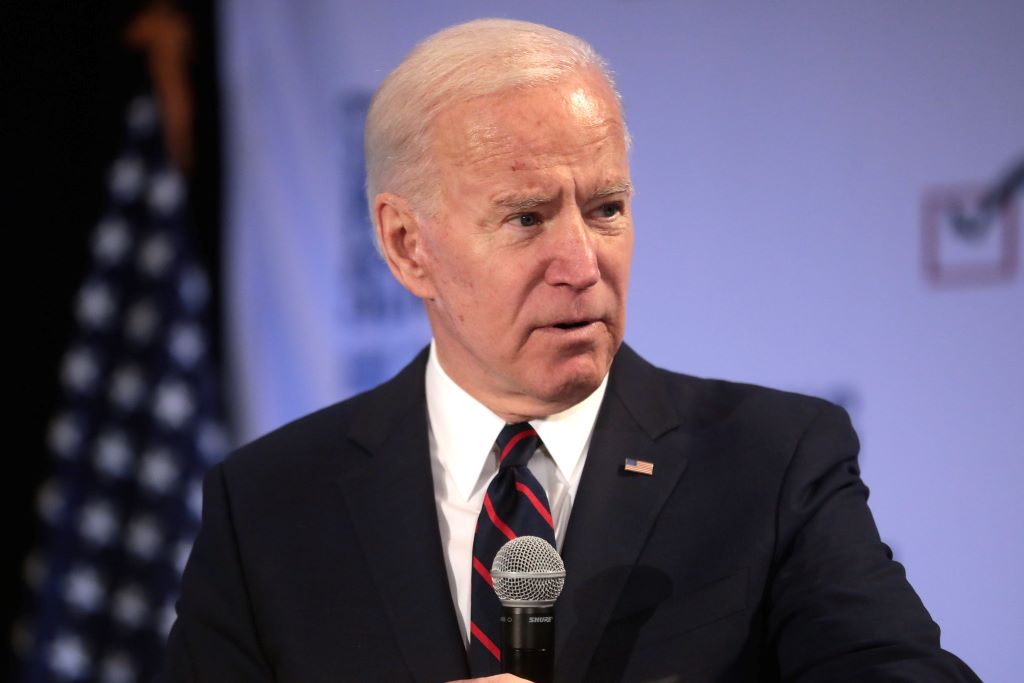
Joe Biden speaking with attendees at the 2020 Iowa State Education Association (ISEA) Legislative Conference in West Des Moines, Iowa, on January 18, 2020. (Gage Skidmore / Flickr)
It is no exaggeration to say that what is currently happening in the heart of the European continent is the most dangerous moment in contemporary history — and the closest to a third world war since the 1962 missile crisis in Cuba. True, neither Moscow nor Washington has hinted at the use of nuclear weapons so far — although there can be no doubt that they have put their nuclear arsenals on standby. It is also true that the level of military alert in America has not yet reached the same heights as in 1962. But while Russian military buildup at the borders of Ukraine exceeds the levels of troop concentration and forces buildup at a European border witnessed even in the warmest moments of the Cold War, Western verbal escalation against Russia has reached a dangerous level — accompanied by military gestures and preparations that create a real possibility of conflagration.
In this, the rulers of the great powers are playing with fire. Vladimir Putin may think that this is like moving one’s queen and rook on a chessboard in order to force the opponent to withdraw their pieces; Joe Biden may believe that it is a suitable opportunity for him to repolish his domestic and international image, very much faded since his embarrassing failure in staging the withdrawal of US forces from Afghanistan; and Boris Johnson may believe that his government’s pretentious bragging is a cheap way to divert attention from his domestic political problems. The fact remains, however, that events in such circumstances quickly acquire their own dynamics to the beat of the drums of war — dynamics that surpass the control of all individual actors and risk triggering an explosion that none of the players had originally intended.
The current tension between Russia and Western countries in Europe has reached a degree arguably not seen on the continent since the end of World War II. The first European war episodes witnessed since then, the Balkan wars in the 1990s, never reached the level of prolonged tension and alert between the great powers themselves that we are witnessing today. If a war were to break out because of the current tension, even if it initially raged only on Ukrainian soil, the central location and sheer size of that country are enough to create a grave and imminent danger of the fire spreading to other European countries bordering Russia, as well as to the Caucasus and Central Asia.