Women’s Work Is Devalued Under Capitalism
Women are overrepresented in low-paid work, care work, and unpaid labor. Their time, their bodies, and their emotional energy are resources for capital. Feminism cannot succeed without confronting the economic system that structures these inequalities.
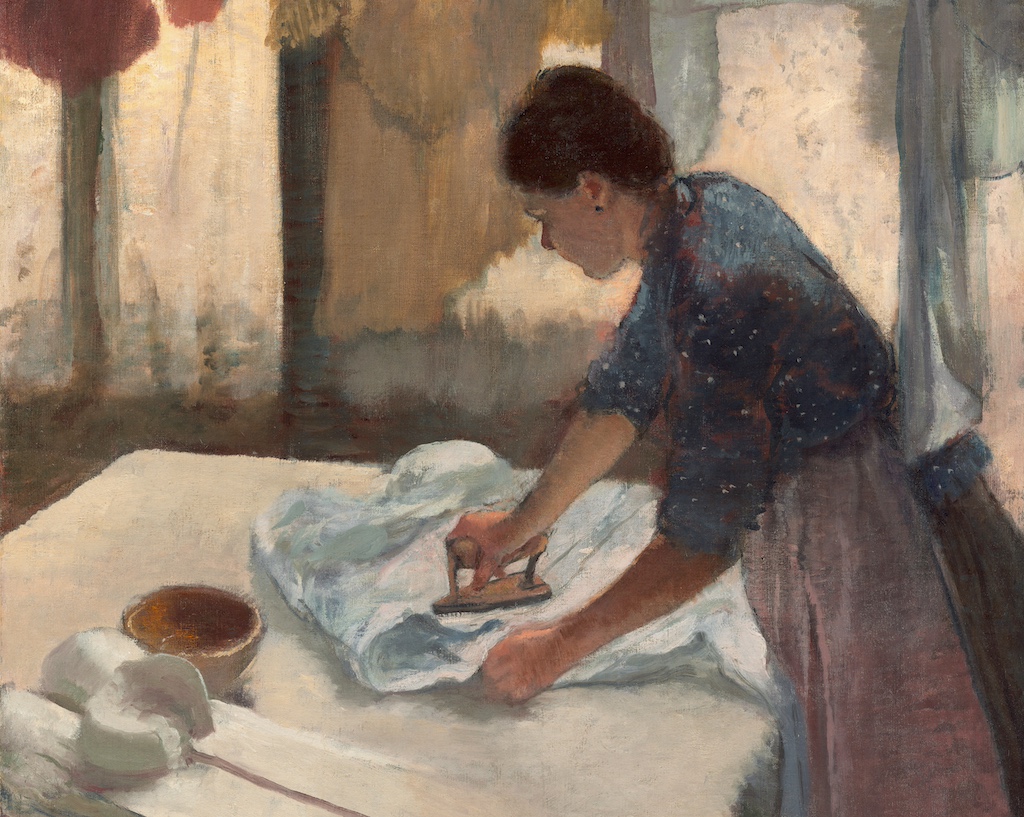
Feminist Marxist social reproduction theory makes it possible to understand both the differences between women and the conditions they share. (VCG Wilson / Corbis via Getty Images)
Few questions have haunted feminist theory and the feminist movement as persistently as the deceptively simple one: What is a woman? Some have tried to answer it directly. Others have argued that the question itself is a form of exclusion, a demand for definition that inevitably leaves someone out. Still others have rejected the question altogether, insisting that feminism should not begin from the search for a universal essence.
Different answers have reflected different political moments. In the 1970s, Marxist-influenced feminists approached the question in structural terms, asking what role women as a group play in maintaining the existing social order. In the 1980s, psychoanalytic and poststructuralist approaches shifted the focus to subjectivity: what it means to live as a woman, how femininity shapes one’s relation to the body, to language, to sexuality, and to others. In these accounts, the feminine subject was never stable but fractured and historically produced.
In recent decades, the debate has increasingly taken the form of a dispute over identity. The question is no longer only what a woman is, but who counts as one, and how the category intersects with race, class, sexuality, disability, and nationality. This shift is often associated with intersectional feminism, though intersectionality itself is broader than the identity-centered version that dominates public debate. Within this framework, there is no single answer to the question of what a woman is. Women’s lives are shaped by multiple structures of power that cannot be separated from one another.
This emphasis on difference is often presented as a break with earlier feminism. But the idea that women’s oppression is shaped by class and race did not begin with intersectionality. Black feminists made this argument long before the term existed, and Marxist feminists criticized liberal feminism for isolating the “woman question” from the class question decades earlier. As the Swedish gender scholar Lena Gunnarsson has pointed out, the claim that earlier feminist theory treated women as a homogeneous group often rests on caricatures of earlier generations of feminism.
One of the traditions most often dismissed in this way is Marxist feminism. Yet this tradition offers some of the most useful tools we have for answering the question What is a woman? The answer will not be found by searching for an eternal definition but by asking what role women play in the reproduction of capitalist society.
Feminist Marxist social reproduction theory makes it possible to understand both the differences between women and the conditions they share. It allows us to see how women’s lives are shaped by the same economic order even when their experiences are far from identical. The question is not how to erase difference but how difference itself is produced within a common system. As the postcolonial feminist theorist Chandra Talpade Mohanty once asked: What does it mean that we all live within a global capitalist order? And how does that order create shared conditions that can form the basis for solidarity among the majority of women, despite the divisions between them?
What Is Social Reproduction Theory?
Karl Marx’s critique of capitalism focused above all on production: how workers create value, how commodities circulate, and how crises emerge from the contradictions of the system. But Marx was well aware that production does not stand alone. Capitalism depends on social processes it does not fully control. Labor power is the one commodity capitalism cannot produce by itself, even though it depends on it completely. Marx planned to write more about the state, colonialism, and the credit system, but he never completed the project. His work should not be treated as a closed doctrine. It is a starting point.
As the philosopher Nancy Holmstrom has argued, Marxist feminism does not need to abandon Marx in order to understand gender oppression. It needs to extend his analysis.
Social reproduction theory does exactly that. It asks what has to happen, day after day, for capitalism to continue functioning. Workers have to be born, raised, fed, educated, cared for, and kept healthy enough to work. Families have to function. Schools and hospitals have to operate. Entire systems of care and maintenance have to be in place before a single commodity can be produced.
These activities are not outside capitalism. They are among its hidden foundations.
Nancy Fraser describes them as capitalism’s background conditions — forms of labor and social life that the system depends on but refuses to recognize as part of itself. Much of this work takes place in the private sphere, especially in the family. It is there that workers are produced and reproduced, not only biologically but socially and emotionally. Without this sphere, capitalism could not survive. Yet capitalism constantly erodes the very conditions it relies on by expanding into new areas of life in search of profit, pulling care, family, and social relations into the market.
Marxist feminists have long argued that women as a group have been assigned a particular role in this process. Women have carried the main responsibility for domestic labor, care work, and emotional support. As the Marxist sociologist Lise Vogel showed, capitalism rests on the interaction between economic exploitation and gendered social relations. Patriarchy and capitalism are not identical, but they reinforce each other.
Silvia Federici famously argued that housework and care should be understood as labor rather than as expressions of pure love. Women sustain men emotionally and physically, and men in turn sell their labor to capital. The political theorist Anna Jónasdóttir described women’s care as a form of “love power,” comparable to labor power, that supports men’s sense of autonomy.
Social reproduction theory often distinguishes between exploitation and expropriation. Exploitation refers to wage labor, where workers are paid less than the value they produce. Expropriation refers to work that is necessary but unpaid, such as domestic labor and care. Capitalism depends on both. Without unpaid work, paid work would be impossible.
Later theorists have expanded the concept to include public institutions such as schools, welfare systems, and health care as well as global processes like migration and slavery. All of these are part of the reproduction of labor power. Capitalism requires not only workers but workers who are alive, trained, housed, and able to show up every day.
Because women are concentrated in these activities, they are affected in specific ways by capitalist development. Most women belong to the working class. Many work in care, education, service, and domestic labor — jobs that are essential for society but systematically undervalued. These sectors are constantly under pressure, as capital seeks to lower the cost of maintaining the workforce. The struggle over profit is therefore also a struggle over how much society is willing to spend on care, education, and welfare. It is a struggle over the conditions of life itself.
Neoliberalism, Care Work, and the Global Division of Reproduction
These pressures have intensified. Public services have been privatized, welfare systems cut back, and care work increasingly turned into a commodity. Schools, hospitals, and elder care are no longer expected only to sustain society; they are expected to generate profit. Workers in these sectors face worsening conditions, while those who need care are treated as customers.
When the state withdraws, the burden falls back on the family — and within the family, on women. Women are expected to work for wages while continuing to carry the main responsibility for unpaid care. The result is the familiar double burden, sharpened under conditions of austerity. Not all women experience this in the same way. Middle-class women can often buy their way out of domestic labor by hiring others to do it. Emancipation becomes a commodity. Those with resources can pay for childcare, elder care, and private health services. Those without must do the work themselves.
The women who make this arrangement possible are often migrants and racialized workers. As Arlie Russell Hochschild has shown, our lives are sustained by a global care chain in which women from poorer countries perform the reproductive labor that wealthier women need in order to compete in the labor market. Care has not disappeared. It has been outsourced. This logic extends even further in the growing market for surrogacy, where reproductive labor itself becomes a commodity. Poorer women carry pregnancies for wealthier clients, often across national borders. The global care chain reveals how deeply capitalism depends on the unequal organization of social reproduction.
Social Reproduction and Intersectionality
Contemporary social reproduction theorists such as Fraser, Tithi Bhattacharya, and Cinzia Arruzza argue that feminism cannot represent the majority of women unless it confronts capitalism itself. The fact that some women’s liberation depends on other women’s subordination makes this unavoidable.
Despite this, they rarely describe their approach as intersectional, even though the two perspectives share important concerns. Both analyze multiple forms of oppression. Both reject the idea that gender can be understood in isolation. Both insist that class, race, sexuality, and gender interact.
The difference lies in emphasis. Intersectional theory, especially in its more identity-centered forms, often treats different structures of power as equally fundamental. The focus tends to fall on lived experience and on the ways individuals inhabit multiple identities at once.
Social reproduction theory asks a different question: How are these forms of oppression organized within a specific social system? The point is not to rank injustices but to understand how they are connected. As Susan Ferguson has argued, intersectional analysis sometimes describes multiple forms of oppression without explaining the social relations that produce them.
For social reproduction theory, capitalism provides the historical framework within which these relations take shape. This does not mean that every injustice can be reduced to class. But it does mean that the organization of production and reproduction shapes how other hierarchies function. The goal is not to deny difference but to understand it as part of a larger totality. Women do not share identical experiences, yet their lives are connected by the same economic order. Solidarity is not based on sameness but on shared conditions.
Why Social Reproduction Theory Matters Today
The idea of a unified women’s movement is often dismissed as outdated, based on the assumption that women are too different to act together. There is truth in this. Women’s lives differ enormously. Race, class, sexuality, and nationality matter.
But the opposite mistake is just as misleading. Most women, whatever their differences, live under a capitalist system that relies on their labor in specific ways. Women are overrepresented in low-paid work, in care work, and in unpaid labor. Their time, their bodies, and their emotional energy remain resources for capital. This does not mean that women should only organize as women. But it does mean that feminism cannot succeed without confronting the economic system that structures these inequalities.
Social reproduction theory offers a way to think about both difference and commonality at the same time. It shows how the production of life itself is organized under capitalism, how some lives are supported while others are neglected, and how struggles over care, work, and survival are inseparable from struggles over profit. By asking who performs the work that sustains society — and under what conditions — we can see the outlines of a politics that speaks not only for a few, but for the many.