The Making of the Teenager
The teenager we know today came of age in the postwar era — but she owes her existence to the New Deal.
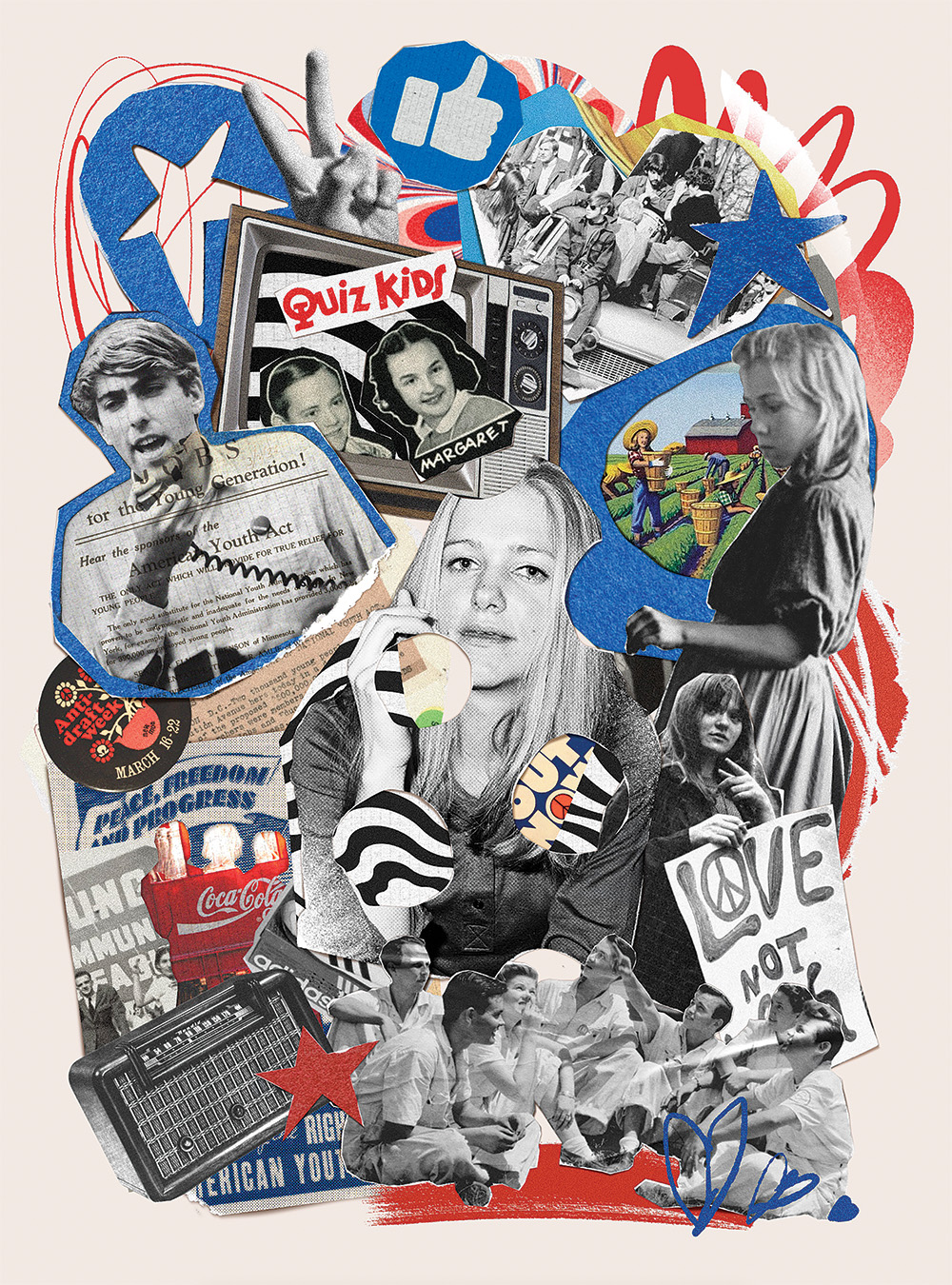
Illustration by David Milan.
In December 11, 1944, Nina Leen invented the teenage girl. While whispers of her had been circulating for more than a decade — in advertisements for three-cent “beauty care” books and $3 budget shoes — it was not until Leen’s Life magazine photo essay “Teen-Age Girls: They Live in a Wonderful World of Their Own” that this new creature assumed her prototypical form.
The photos themselves were of a group of average fifteen-to-seventeen-year-old girls living in a St Louis, Missouri, suburb. But through Leen’s iconic work, each of them became the embodiment of a new American demographic, archetype, and cultural figure. At school, she could be identified by her Shetland sweater, wool skirt, bobby socks, and loafers, eyeglasses painted red with nail polish — and was that a boy’s ring on a chain around her neck? After hours, she donned men’s slacks or jeans and a shirt borrowed from her father or brother. Her weeks were routine affairs characterized by school and homework, babysitting gigs at 25 cents an hour, Friday night sleepovers, and Saturday night double dates that gave way to Sunday church service. Some even found time for high school sororities, replete with their own secret ceremonies. “There is a time in the life of every American girl when the most important thing in the world is to be one of a crowd of other girls and to act and speak and dress exactly as they do,” declared Leen between photographs of slumber parties and candlelit cult-like activity. “This is the teen age.”
Six months later, Leen profiled a group of boys in Des Moines, Iowa, for a follow-up piece entitled “Teen-Age Boys: Faced With War, They Are Just the Same as They Have Always Been.” Despite the imminent threat that these young men might be drafted to fight on the Pacific Front, Leen captures them “behaving exactly as they have always behaved, devoting themselves to all the vastly important details connected with the complete enjoyment of playing, eating and sleeping.” One Richie Burns is depicted eating his way through an average day: orange juice, cereal, milk, eggs, toast, jam, sandwiches, pie, ice cream, soda, sandwiches again, soup, chops, potatoes, string beans, ice cream again, apples, and a candy bar to top it off. “When Richard finally got through and went to sleep at 10:30 he had consumed more than 3,000 calories,” Leen reports. “He slept dreamlessly until 7 o’clock next morning, when he woke up feeling hungry.”