Why They Hated Rosa Luxemburg
Today is the birthday of the revolutionary Rosa Luxemburg. Routinely reduced to an inoffensive libertarian figure, the harder edges of her class-struggle politics are often ignored.
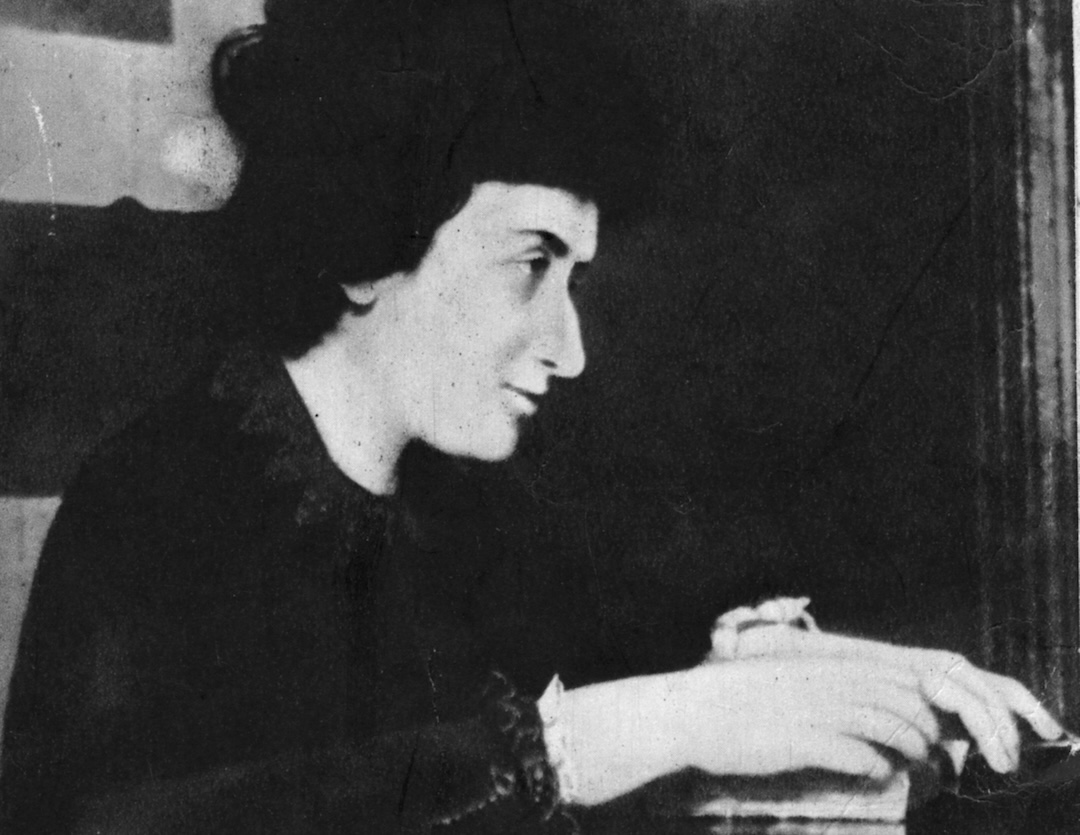
Today liberals and even EU institutions try to count Rosa Luxemburg as part of a vaguely progressive European tradition. She would have hated the idea. (Hulton Archive / Getty Images)
Since 1998, Rosa Luxemburg’s name has slowly been crumbling to pieces. Back then, she was included on a huge monument in Barcelona’s Montjuïc hill alongside twenty-four other founding fathers of the European project. She thus figures alongside Willy Brandt and Winston Churchill: now the site has fallen into disrepair. Yet even the fact that she was ever included in such a memorial to contemporary European liberalism is a testament to just how far-reaching — and distorted — her memory has become.
Since her murder in 1919, it sometimes feels like Rosa Luxemburg has become everything to everyone. Her unique status in German politics at the time means she is often praised for who she was — a “source of inspiration” as a Polish, Jewish, disabled woman — rather than engaged with for what she did and thought. At the same time, the sheer breadth of her engagement has allowed her to be adopted as a figurehead by everyone from anarchists to the Stalinists of the first postwar Polish government.
Luxemburg’s most oft-recited quote, holding that “freedom is always and exclusively freedom for the one who thinks differently,” has often helped make her a stand-in for a “libertarian” and soft version of socialism, an image sometimes bolstered by highlighting the more “feminine” parts of her private life. Surely, she was a sensitive woman and a wonderful writer. From her prison cell, she wrote movingly to friends and lovers, listened intently to birdsong, captured the beauty of the sky, and collected plants and flowers.
But it’s also important to remember why Luxemburg was in prison in the first place — as a revolutionary and a threat to the stability of the German Empire.
Luxemburg was a deeply contradictory figure: not least given that she was from Poland but against Polish independence. She was a woman who refused to be siloed into typically female domains of socialist politics; Jewish, but uninterested in focusing on “Jewish issues.” She criticized Vladimir Lenin, but from the perspective of a comrade who shared his core assumptions, and her own tactics as a leader in her own party rivalled or even surpassed Lenin’s in their ruthlessness.
In her day, she was more likely to inspire awe, or anger, than admiration. On this anniversary of her birth, I want to highlight why “Red Rosa,” as she would come to be known, was in her own time more often called “Bloody Rosa” or even a “poisonous b-tch” or much worse. Rosa Luxemburg would want you to remember why they hated her, and why they killed her.
Saintly
Rosa Luxemburg’s deification in the political memory of the international left is made possible by the general overall superficiality of engagement with her ideas. In Germany in particular, the image of Luxemburg is ubiquitous, employed by everyone from hard-line communists and Maoists to Trotskyists and left-liberals. Here it has been relatively easy for aspects of her identity to be positively referenced, while generally smoothing over her actual ideas regarding these identities.
For the German left, Luxemburg is often held up as an unproblematic “international” figure. She was rare, as a Jewish woman from Poland who made such an impression on German politics.
Yet things get trickier when dealing with a more “problematic” fact of Luxemburg’s politics: her adamant opposition to Polish separatism and other national-political aspirations within the then–Russian Empire. Luxemburg disparaged nearly all pretenses to national self-determination as impractical at best and reactionary at worst. This was, naturally, not out of any love for the empire: despite her Polish origin, and respect for Polish language and culture, she envisioned a quite different heroic role for the Polish workers. They were, for her, the most militant core of revolutionary workers within the empire. Their force would be crucial in overthrowing tsardom and in building a socialist future in Europe. Her experience during the 1905 revolution secured her in this belief, as illustrated in her work The Mass Strike.
This opposition to national self-determination also regarded Jewish nationalism, in the form of Zionism, and so too Jewish cultural and political autonomy through the Jewish Bund. If there is one difference in the appraisal of Luxemburg among the German as compared to the international left, it is here. In Germany, positive appraisals often ignore the issue, where critical appraisals are much more likely to refer vaguely to her unfavorable views on “Zionism and Poland.” Beyond Germany and its warped discourse on Israel, Luxemburg’s total lack of interest in Zionism is one of her aspects that is viewed most favorably. Even one famous “humanist” quote of Luxemburg — “I feel at home in the entire world wherever there are clouds and birds and human tears” — is much more likely, in German, to stand alone, without its preceding clause “I have no special place in my heart for the [Jewish] ghetto.”
In part because Luxemburg spent most of her adult life in Germany, it is less often known how far she was involved in the machinations of a Polish socialist party that she led from abroad, mainly differentiated by its opposition to this Polish independence. This helps us understand why many left-wing Polish organizations today have an uneasy relationship to her actual positions.
Economic Writings
It’s easy to see why today few share Luxemburg’s position on Polish nationhood. Yet however ignored or travestied in retrospect, Luxemburg surely had well-reasoned, intelligent grounds for believing and arguing for these stances.
Such “problematic” elements of Luxemburg’s thought are inseparably linked to her economic thinking, some of her most commonly dismissed and ignored writings. Her PhD dissertation, completed in Zurich, Switzerland, in 1897 was the first one ever written (by anyone!) on the economic development of Poland, and it argued that the economic growth of Russian Poland could not have taken place without the substantial Russian market, so much so that, economically speaking, Russian Poland was an integral part of the Russian Empire. This reinforced her position that Polish nationhood was a utopian and bourgeois idea and not in the long-term interest of Polish workers. While she considered a Polish nation-state both undesirable and infeasible, she nevertheless remained a staunch opponent of cultural assimilationist policies of the Russian and German empires and readily identified as Polish.
Luxemburg’s Polishness also made possible her first role in German social democracy. The brief story of her political career is often presented beginning with her appearance as a theoretician of the left of the German Social Democratic Party (SPD) in opposition to the revisionist right of Eduard Bernstein in Reform or Revolution in 1900. But she had already been in Germany with the SPD for two years. It was her staunch position against Polish nationalism that first brought her to Germany from Switzerland. Her first major engagements with German social democracy saw her sent to Silesia (a region of Poland annexed by Prussia) as a speaker for the SPD in 1898. She was sent at the behest of Ignaz Auer, a figure on the party’s center right who acknowledged the implicit goal of Germanizing Poles in the German Empire: “One cannot do the Polish workers a greater favor than to Germanize them, but one may not say this publicly.” It was here that she first gained favor with the German party executive, setting the stage for the rest of her political career.
In part due to a better understanding of her real positions on Polish independence, engagement with Luxemburg as anything other than a symbol or a historical curiosity in contemporary Poland is rather thin. The Rosa Luxemburg Foundation in Germany is a think tank associated with the Die Linke party that takes on, as a secondary mission, furthering research and promoting the memory of its namesake. No comparable Rosa Luxemburg historical association, research institute, or museum exists in Poland. In fact, contemporary Polish historical institutions have worked actively against commemoration of Luxemburg in Poland.
In 2018, a commemorative plaque on a former childhood home of Luxemburg’s in the town of Zamość was removed. At first, it was suspected that this might be an act of neo-Nazi vandalism. But it turned out to be done at the behest of the Polish government, then headed by the hard-right Law and Justice party. According to Poland’s premier institution for policing history, the “Institute of National Remembrance,” since the plaque was put up in the 1970s under the Polish Communist government and commemorates Rosa Luxemburg, a communist, keeping it up violates the Polish state’s law against commemoration of communism. Despite some protest and international outcry, particularly from the German left, the plaque was not reinstated.
A more recent attempt by the mayor of Zamość and the Polish office of the Rosa Luxemburg Foundation to install a new plaque in time for Luxemburg’s birthday in 2026 has been indefinitely delayed, apparently for bureaucratic reasons related to historical building protection laws. It is now unclear if the new plaque will ever go up. The Institute of National Remembrance and other anti-communist individuals and institutions are outspoken in their reasoning for opposition: she was a communist, one who opposed Polish independence.
There really is no denying that both charges are true. How does the side in favor of commemorating Luxemburg respond? “Rosa” is good for tourism. Zamość’s mayor says people come to the town and ask about Luxemburg, since (not that they mayor said this explicitly) she is probably one of the most famous Polish-born historical figures to ever live.
It’s hardly a full-throated endorsement. But why should we expect a different treatment? Evidently Luxemburg was wrong about the economic-historical impossibility of Polish independence. Under these circumstances, I don’t think that she would expect a different form of treatment from such an anti-communist Polish nation-state.
Revolutionary
Remembering Rosa Luxemburg, readers are often reminded of her nickname: Red Rosa. Commonly “Rosa Luxemburg” is rendered as just “Rosa,” which conjures an endearing personal closeness to the figure. But in the press in her day, she was more often “Bloody Rosa,” a bloodthirsty revolutionary, hated by enemies in the German state and ruling class but also by the right of her own party. If today’s left-liberals are happy to iconize her, in her own time figures like sociologist Max Weber were less likely to sing her praises. He commented, amid the revolutionary tumult of January 1919, “[Karl] Liebknecht belongs in the madhouse and Luxemburg in the zoo.”
The nickname “Red Rosa” strikes contemporary readers as benign. But it was once also used by her most bitter enemies, alongside “Bloody Rosa.” It was back then a more contradictory epithet, intended, in a historical era with very strict codes of names and titles, to be at least slightly belittling in its overfamiliarity. What the scorn heaped on “Bloody” and “Red” Rosa reminds us that she was a revolutionary, above all. If today her image as a democrat and critic of Lenin distorts the truth, her murderers were sure that she was, indeed, a communist.
Even her nearest and dearest were ready to acknowledge at least in private that she could be as ruthless as conditions required. On learning that their old comrade Felix Dzerzhinsky had become head of the Soviet secret police (the Cheka), Leo Jogiches found these words to console her: “If the need arises, you can do it too.”
It is hard to square the saintly image of “Rosa,” the sensitive animal-loving democrat with this: her closest confidant’s only semijoking assurance that — of course — she had what it took to run a 1920s Communist Germany’s secret services. Yet we must try, since evidence suggests he might have had a point. As her longtime partner and coleader of their party in Russian Poland, Jogiches knew what Luxemburg was capable of more than anyone. The two routinely organized purges and expulsions of people they considered threats to their leadership or who deviated too far from their line. From exile abroad, they even employed such underhanded tactics as exposing the real names of comrades operating under pseudonyms, opening them up to tsarist state repression.
Even her most well-known quote about “freedom for the one who thinks differently” — often cited to portray her as a democrat and prophetic critic of Lenin — was said in the context of a much longer critique, a critique grounded in a perspective fundamentally internal to a revolutionary Marxist worldview. That view imagined successful socialist revolution to be an inherently democratizing process, a view in fact shared by Lenin and the Bolsheviks, something she reiterates multiple times in The Russian Revolution. As Luxemburg’s most thorough biographer concluded his discussion of her engagement with Lenin, “Those who are made joyful by criticism of the fundamentals of the Bolshevik revolution would do better to turn elsewhere.”
When Rosa Luxemburg was released from prison and sprung into the tumult of revolutionary Berlin in late 1918, she too favored workers’ councils — “soviets” — and opposed the convening of a more straightforwardly “democratic” constituent assembly. In the article “What Does Spartacus Want?” published on December 14, 1918, she called explicitly for “the dictatorship of the proletariat.” By January, independent workers were pushing toward insurrection in Berlin, and despite initial misgivings and fear that the uprisings were premature, she was willing to follow and then further push the initiative of revolutionary workers, even if she realized that this was a localized uprising without great chance of success. By the beginning of January 1919, the main newspaper of German social democracy, Vörwarts, that Luxemburg herself even briefly edited in 1905, ran articles with murderous implications. They published even poetry with murderous implications:
Many hundred corpses in a row — Proletarians!
Karl, Radek, Rosa and Co. —
Not one of them is there, not one of them is there!
Proletarians!
This poem charged her — at the least — with moral responsibility for the dead of the early days of the Spartacist uprising. This, even though it was the SPD-led government’s police, and far-right Freikorps forces, doing the killing of these same workers. When Luxemburg was eventually arrested by Freikorps at the behest of the ruling majority SPD and murdered on January 15, 1919, her former allies were relieved.
Afterward, the “investigation” into her murder was a sham. The car used to dispose of her body in Berlin’s Landwehr Canal was not even examined. Hundreds of other men and women had died in similar circumstances. For decades among Freikorps, it was normal to brag about having been the one to kill Rosa Luxemburg and other communist women.
A Freikorps general once said, “Rosa Luxemburg could destroy the German Empire today and not be touched; there is no power in the empire capable of opposing her.” This man, who also called her a “she-devil,” was in a very important way more right about her than left-liberals today, who would soften her image to oblivion or skirt around the aspects of her thought that are out of step with today’s mores. No matter how much she enjoyed collecting plants and flowers, she was no wilting violet. She would prefer us to remember that she died on her feet. The general was right in saying that there was no opposing Rosa Luxemburg — that’s why they killed her.