Pro-War Pundits Are Putting Words in Iranians’ Mouths
After Iran’s leader was killed by a US air strike, pro-intervention media emphasized the celebration of many Iranians. But a nation of 90 million isn’t a hive mind, and the bitter experience of previous wars puts initial celebrations into grim perspective.
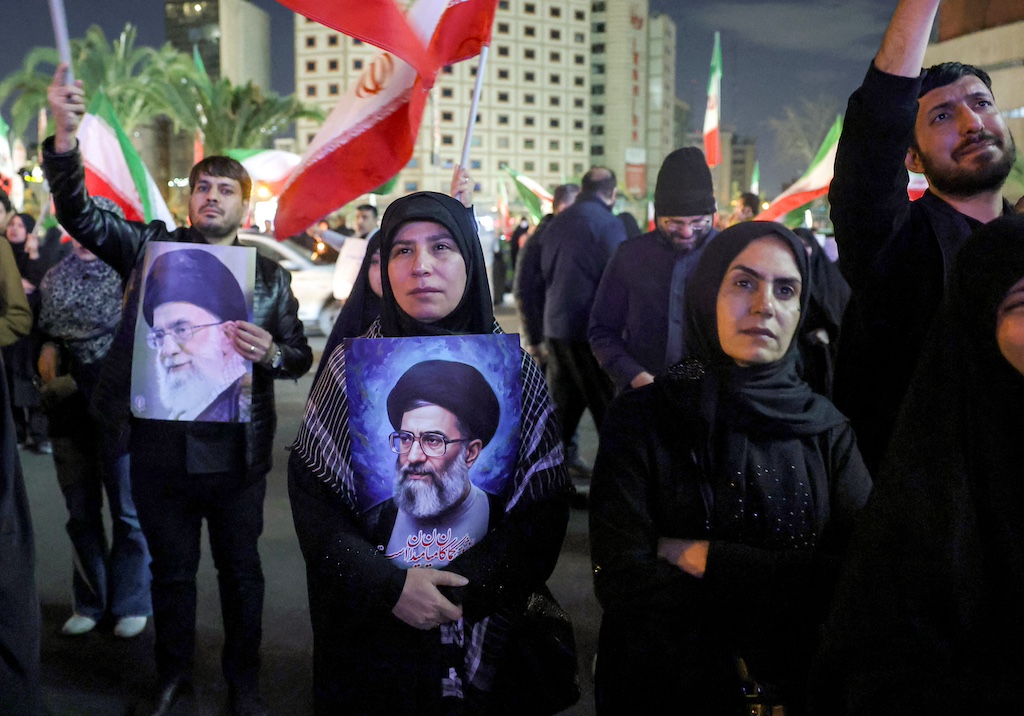
Anyone presuming to speak for “the Iranians” is elevating some subset of Iranians to speak for all 90 million of them. (AFP via Getty Images)
In 1982, Israel invaded Lebanon. On the fourth day of the attack, Israeli journalist and former Knesset member Uri Avnery, traveling in a private car accompanied only by a photographer, “crossed the border at a lone spot near Metulla and looked for the front, which had already reached the outskirts of Sidon.” As Avnery and his photographer drove into the country, their progress was slow.
We passed a dozen Shiite villages and were received everywhere with great joy. We extracted ourselves only with great difficulty from hundreds of villagers, each one insisting that we have coffee at their home. On the previous days, they had showered the soldiers with rice.
A few months later I joined an army convoy going in the opposite direction, from Sidon to Metulla. The soldiers were now wearing bulletproof vests and helmets, many were on the verge of panic.
Avnery recounted the story in an article titled “Bitter Rice,” published in CounterPunch less than a week after George W. Bush launched his war in Iraq. At the time, many Iraqis, both in Iraq and in the Western diaspora, were celebrating the ouster of Saddam Hussein’s brutal dictatorship. Avnery’s message to Americans was simple: Don’t count on this lasting. Relief at the fall of a hated regime can quickly turn into seething resentment against the foreign attackers who have turned the country into a war zone. Some of the same people who really might be momentarily willing to greet you as liberators may be shooting at you by the end of the year.
When Iran’s supreme leader, Ayatollah Khamenei, was killed in an air strike on Sunday, plenty of Iranians cheered. It’s not hard to understand why. He led a brutally repressive theocracy deeply opposed by large swathes of the population. At the same time that thousands of Iranians were gathering in the streets to celebrate, though, thousands of others were gathering to mourn. It was a stark reminder that anyone asking us to listen to “the Iranians” or talking about how “the Iranians” are celebrating while arrogant Western leftists are upset is treating a nation of ninety million people as if it were a hive mind.
There are pro-regime Iranians, secular democrats, monarchists, and all sorts of other shades of political opinion. No one really knows what percentage of the population supports any of these factions right now, never mind how sentiment might change as there are more and more incidents like the missile strike that killed over a hundred and fifty people at an Iranian girls’ school on Sunday, or the strike that hit a sports hall and killed dozens of student athletes at volleyball, basketball, and gymnastics practices several hours later.

Right now, Trump’s apologists are busy assuring us that this won’t be a serious or prolonged war — despite the Trump administration’s own professed willingness to put boots on the ground. Anyone who believes the assurances may think Avnery’s warning doesn’t apply in this case. We’ll see.
As hard as it is to believe that the White House was quite this naive, current indications seem to be that the Trump administration may have thought they could go in hard, kill the supreme leader and massacre both quite a bit of the rest of the country’s leadership and hundreds of civilians, and then that whatever was left of the regime would be so desperate for peace that they would be willing to cut a deal that let the United States simply saunter away with little Iranian retaliation. So far, at least, that’s very much not what seems to be happening. Instead, Iran — having been subject to surprise attacks while negotiations with the United States were ongoing twice in less than a year — seems to have decided that further talks are a waste of time, and fighting is spreading to other countries.
The Obscenity of Ventriloquism
On the first day of the war, the same day as the strikes on the girls’ school and the sports hall, a group of families gathered at cafés around Tehran’s Niloofar Square to break their Ramadan fast. There was an explosion, and then another larger one shortly afterward. A witness described the scene to Drop Site News: “There were scalps torn off, hands severed, a few people were laying here all cut up and two people were martyred.” The witness described seeing a severed head fall to the floor of the café.
Is it possible that, despite all of this, a majority of Iranians hate the regime enough to support the intervention right now? It is. It’s also possible that they don’t. No one actually knows. One of the only things we can say with any real certainty is that it’s very likely that, however many Iranians are willing to accept the United States and Israel as clumsy liberators despite everything right now, that number will shrink as the war goes on. And exactly nothing about our history of regime-change wars in the Middle East should make us think this will be the first time one of these wars ends just because a decisive majority of the local population turns against it.
The war will end when US decision-makers lose interest or make a calculation to cut their losses — not before and not after. This is one of many reasons that positive change in any society is not likely to come about through outside intervention.
Iran’s theocracy massacred socialists and communists when it first came to power, has enforced gender apartheid for decades, and, though hard numbers are hard to come by, has doubtless massacred large numbers of protesters. If it were overthrown from below, by a popular revolution, that would be cause for celebration. But the United States and Israel have no possible legitimate role in deciding the country’s fate from above, and Trump and Israeli prime minister Benjamin Netanyahu certainly had no right to initiate a war of aggression against a country that’s sometimes armed and supported proxies elsewhere (as the United States and Israel both have, in many countries) but which hasn’t initiated any direct war with another nation even once in the modern era.
Anyone presuming to speak for “the Iranians” is elevating some subset of Iranians (usually the ones most aligned with the anti-regime diaspora in cities like Los Angeles) to speak for all ninety million of them. In reality, that ninety million includes people who support the regime and people who oppose it in any one of several political directions but might be very far from pro-American. It also includes all of those who, like their counterparts throughout the world, don’t spend their lives thinking about politics and prefer to spend time with their families, watch soccer, celebrate life milestones, and not see their loved ones killed or mutilated in air strikes.
Political ventriloquism presents itself as humble deference to “the Iranians.” In reality, it’s the height of imperial arrogance. It always boils down to the command: “Listen to the voices that I’ve picked because they agree with me.”