Cornel West on How Neoliberalism Gave Us Trump’s Neofascism
The horrors of Donald Trump’s second term didn’t come from nowhere, Cornel West argues. They’re the inevitable result of decades of neoliberal policies that built the oligarchy, which, at long last, got behind him in 2024.
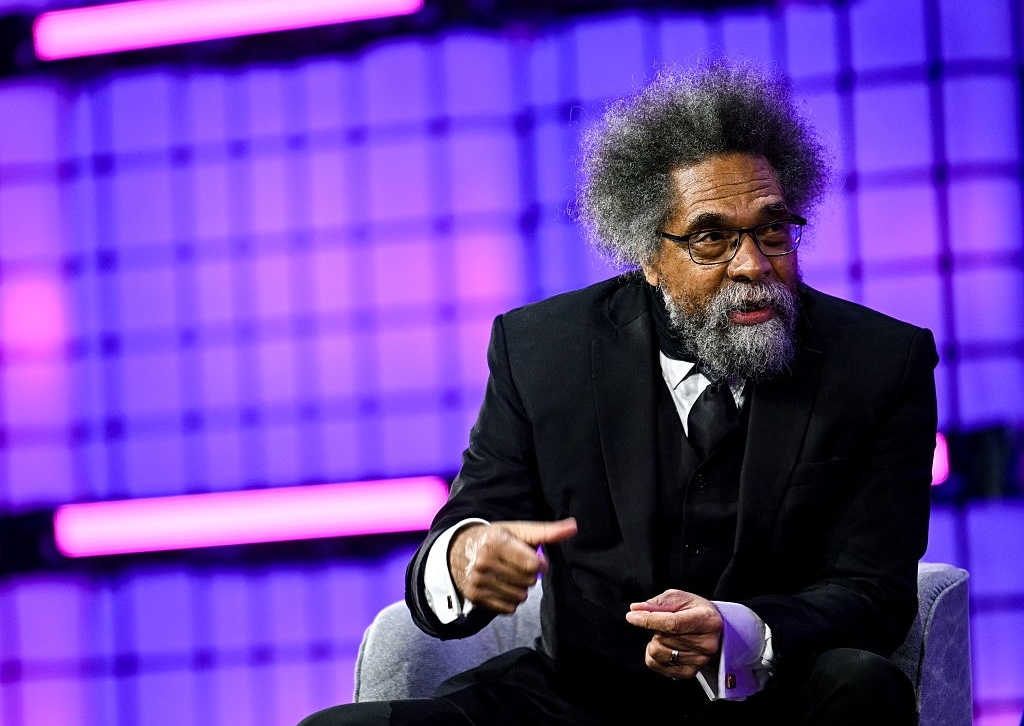
(Ramsey Cardy / Web Summit via Sportsfile via Getty Images)
- Interview by
- David Griscom
With Donald Trump’s war in Iran heating up, the times can feel uniquely dark. But crisis is not new. And resistance, including spirituality, has always led the way out into the light.
In this episode of The Jacobin Show with David Griscom, Cornel West reflects on our political moment defined by deep crisis and equally deep reservoirs of courage. Moving from global solidarity amid Donald Trump’s onslaught to the spiritual resources of Christian socialism that sustain struggle, West insists that resistance is not merely reactive but rooted in love, memory, and a long tradition of radical hope.
You can watch the full episode here. This transcript has been edited for clarity.
David Griscom
Two weeks ago, we had Robin Wonsley on, who’s a socialist city council member in Minneapolis. And I had a similar feeling speaking with her because on the one hand, what we’re seeing in this country is so heartbreaking and devastating, but then at the same time, you see the bravery, creativity, and passion of everyday people standing up.
I’m curious to hear your experiences. We’ve been seeing all of these horrors in this country, but then again, this willingness of everyday people to really take a stand.
Cornel West
One, at this present moment with the escalating neofascist sensibilities and neofascist policies — not just the gangster Trump administration, but Big Tech and Wall Street, Silicon Valley, and big military behind him — [Trump] is trying to somehow seduce enough people to allow him to stay in in office. I always understand this against a larger backdrop though, brother.
I think most of human history, the history of organized greed and weaponized hatred and institutionalized cruelty — routinizing difference toward the plight of everyday people — and those wonderful moments of interruption, which are not just moments of resistance but moments of remembrance, of resistance that give us a reverence of something bigger than our egos and our tribe. They connect us to the larger issues of humanity as a species and even beyond. And so in that sense, I say to myself, “Well, you know, Trumpism and neofascism, given the legacies of white supremacy and predatory capitalism and patriarchy and homophobia and transphobia, it’s not new at all.”
It’s precisely what you said: How do we muster integrity, courage, decency, both as persons, and then connect it to moments of the movements of solidarity across region, across color, across national boundaries? And that’s always been an uphill battle, brother, as long as we human beings have been around.
So the good news is there’s always a cloud of witnesses in every generation who are willing to stand up with courage and integrity and tell the truth about the suffering of the poor and working peoples, and most importantly, don’t have a brand. It’s not just the market strategy at all. They have a cause and they’re willing to live for it. They’re willing to die for it. And I know you got figures in your book who exemplify what I’m talking about in Texas, man.
David Griscom
Just seeing over and over and over, throughout human history and American history, the willingness of people to take on systems that felt like they were unbeatable. You talk about Jim Crow in the South — it felt like it was unbeatable.
You talk about the power of the railroads and the monopolies — they felt like they were unbeatable. But it was just simple folk organizing together, challenging these kinds of systems. It’s tough to organize today, but that was a very hard time to organize, and you should take some inspiration from it.
Cornel West
And you can imagine Harriet Tubman and Frederick Douglass trying to organize dignified Africans enslaved by the American slavery system, and yet they persisted. They persevered, but they had a certain kind of character, brother. They decided: “This is the kind of human being I want to be, the kind of movements I want to be a part of, and if I have the chance of a snowball in hell, I’m still giving my all.”
David Griscom
Let’s talk a little bit about this current moment though. This is the second Trump administration and the first one was horrible. I wonder if you feel like the lessons that are needed to be learned are being learned right now. Because obviously there’s tremendous resistance to Trump, but I do worry that there is such a focus on him that people are forgetting the systems that put him into place.
Cornel West
I think the last thing we want to do is to fetishize any one individual. To fetishize Trump and ascribe to him magical powers as if somehow if he were not here, the same social, historical, and cultural forces would not be operating is highly problematic. Now, Trump plays a role, there’s no doubt about that. Tied to the MAGA movement and so on. But there is no Donald Trump in the White House without those major monopolies and oligopolies.
And at the same time, the massive complicity of slices of the professional-managerial class — the lawyers, college presidents, professors, doctors, pharmacists, and churches. There’s no Trump without right-wing, white supremacist Christian nationalism either. It doesn’t exist without them. Eighty percent of the votes he got from my fellow Christian evangelicals, you see.
On the other hand, I want to always begin with the notion that the first thing we go to is not Trump, Trumpism, neofascism. See, I never begin by looking at my foes as the point of reference. I begin with people. I love what I’m willing to speak for, who I’m willing to live and die for. So I look at it through the lens of the tradition, in my case of the black freedom struggle. That’s in solidarity with other struggles, and I look at Trump through those lenses so that he’s not my primary point of reference.
That way, he’s not the host and I’m just a parasite on the host reacting every day a zillion times to what he’s saying and what he’s doing. There’s never enough energy for that. You’ve got to fall back on your tradition of remembrance, reverence, and serious resistance, and you begin to see, well, lo and behold, we are in movement.
Now, if you look in a broader sense as a spectator and you say, oh my God, we up against a Goliath, he would never have a chance. Because you become so distant from the movement on the ground, and that’s why grassroots activism goes hand in hand with the most sophisticated social analysis, and it goes hand in hand with issues of morality and spirituality. By morality, I mean people who will not sell out or cave in. People who are morally consistent and not blinded by narrow ideology so they can make the connection between genocide in Gaza, kidnapping presidents in Venezuela, repressive practices in Iran and Taiwan, solidarity with peoples in India against an authoritarian Hindu nationalism.
Those kind of connections and links become crucial. One of the main reasons I even ran for president, calling for the abolition of poverty, the abolition of ICE [US Immigration and Customs Enforcement], calling for the dismantling of the American Empire and the relative abolition of 800 military units around the world — all of those are breaking up the monopolies and oligopolies and so forth. And people say, “Oh, you don’t have a chance of a snowball in hell.” What they don’t say is that it’s bearing witness, so people can see — in motion, in words, in people organizing — what it means to stand up and keep alive.
The tradition of so many of those radicals you talk about in Texas in the 1880s, after the massive move of those slave owners bringing their slaves to Texas, right? As the Civil War was being lost more and more, the Confederates moved to Texas. That’s true. Texas had already abolished slavery in 1829 when it was under Mexico. But then Texas, you know — we got the longer history. Can you imagine their sense of relative hopelessness? Well, they kept fighting. They kept laughing. They kept loving. They kept organizing. They kept mobilizing. That’s the spirit. That we have to keep alive in a variety of different ways.
David Griscom
That’s a tremendous point. And I think one thing on the Left is that all too often we become very pessimistic. I wanted to talk to you kind of technically about some of the things that we are dealing with and seeing, because on one hand, we are seeing some revitalization of the Left and labor. On the other hand, what we saw with this Trump victory in 2024 was something that was very worrying just in the amount of people who were willing to kind of cross over from the Democratic Party’s coalition — people of color, working class people — and start voting for Trump and the Republicans.
So we’re seeing some exciting movements, but at the same time, when it comes to the larger classes in this country, we have a lot of work to do on the Left to win their trust.
Cornel West
You are absolutely right. And, of course, it’s very important to keep in mind that there really is no American neofascism without the failure of American neoliberalism — that was a soil they had invested themselves in. Initially, when Goldman Sachs went to [Barack] Obama, some of ’em even voted for my dear brother Bernie Sanders. They tried to hold on with [Joe] Biden. But then they said, no, this is not working. We on the Left couldn’t provide an alternative vision of program. So they said, “Let’s try something else.” And so they opted for this neofascist project, and of course now the colossal failures of that project are more and more manifest.
But it has unleashed, of course, this wholesale permission for greed and hatred and contempt, and it has made empathy a foe. It has made cruelty a policy. We have to see how far down the line this thing is actually going to go.
David Griscom
I wanted to talk also about some of the ways that our politics, particularly some of the stuff that we see out of the neoliberal Democratic Party, pits people against each other.
So one very cynical thing that we saw in 2024 was people trying to pit black rights in this country against Palestinian rights. And we see this, too, to an extent when it comes to Iranian human rights and Palestinian human rights, where people kind of create these false choices.
How do we challenge and push back against these attempts to pit people against one another?
Cornel West
First, I think the issues of both consistency and that certain blindness are matters of ideology, you see. One of the arguments about rendering the suffering of our precious brothers and sisters in Iran and the Iranians in general in the country is that, well, the country is part of the axis of resistance. Therefore, the needs, the struggles, and the pains of Iranians must be subordinate to the ideological needs and ideological demands of those who are critical of the American Empire. And you say to yourself, “Well, we’ve heard that argument with the Soviet Union.” I was in South Africa in the 1980s with [Nelson] Mandela and company. The Soviet Union did support the African liberation movement. It was very important.
Does that mean you don’t say a mumbling word when they crush dissenting voices in their own territory? Those are realities and you tell your Soviet comrades that we are critical of all forms of oppression and repression wherever we see it, but we do accept your support. So the Iranian support of the Palestinian resistance, I view that as significant. I don’t downplay that at all. But that doesn’t mean that I’m locked on their plantation and have to be silent. That I can’t say a mumbling word when I see precious Iranians being killed by the thousands, and then my leftist comrades tell me, “Well, when you engage in that kind of moral concern, that’s nothing but CIA talking points, Brother West.” I say get off the crack pipe!
Coming out of a black freedom movement, we’ve been in solidarity with folks across the board. So we just have to have those kinds of open disagreements. Conversations, critical engagements, and some of us are going to be in solidarity with people dealing with repression, whether they are in Tehran, Guatemala, Ethiopia, Chicago, or Ireland. They have to push aside their narrow ideological concerns that end up justifying massive repression, justifying actually fascist policies.
I’d say, to that person, he ought to be ashamed of himself. I would say that silence in the face of massive human suffering, silence in the face of ugly repression, is a betrayal of the people who are suffering. And that cuts beyond any ideology. For me, I believe that every country and people in that country have a right to resistance and revolution. So if you’re part of the axis of resistance, does that mean that the people in those countries have no right to resistance and revolution? But they do.
I’ll remain unequivocal in terms of my solidarity with Palestinian brothers and sisters and the vicious genocide and ethnic cleansing. I’d say the same thing about what’s going on with Africa. I’d say the same thing about US interventions in Haiti and certainly interventions in Venezuela and so forth. But repression is repression. And then we can be critical of various forms of repression in Venezuela as well. That’s a moral issue, but that doesn’t justify American imperialism going in and somehow overturning it for their oil at all. But of course, it’s up to the people of Venezuela. And people who think that the CIA and Mossad are fundamentally responsible for resistance in Iran? Yeah, really get off the crack pipe — as if that’s not an organic movement of tremendous resistance against ugly repression.
David Griscom
There’s a bit of it, too, where it becomes a paranoid existence, to be completely honest.
Cornel West
Right. No, that’s true. I think you’re right about that too.
David Griscom
I wanted to pivot and talk to you about Christian socialism because I think this is something about your work that people are very interested in and inspired by.
Here in Texas, Democratic Senate candidate James Talarico is rightfully calling out Christian nationalism and right-wing Christianity. I think he comes from a fairly different political tradition, but I do think that is something that the Left could do more of. I wanted to hear your thoughts on how a form of Christian socialism can be used to reclaim the mantle of Christian religiosity from the Right.
Cornel West
I was blessed way back in 1984 to be asked to put together an issue on Marxism, religion, and liberation struggles for Monthly Review. This is with my dear brother Paul Sweezy and my dear brother Harry Magdoff. And one of the things we were talking about, it was international. So we had Latin America and we had Poland at that time. But, see, in the United States, the vast majority of fellow citizens are religious and significant numbers are Christian. Therefore, in any talk of organizing, mobilizing everyday people in the United States, if you’re not talking about religion, you stand in your little secular silo.
The masses of folk don’t go to college. The masses of folk have religious sensibilities. More and more, they’re suspicious of institutional religion, but the spirituality still cuts very, very deep. And we haven’t even gotten to the music yet. Even the Super Bowl and football in Texas and other places are a kind of religion, too. You know what I mean? So let’s just be honest about these structures, the feeling that motivates people.
And someone like myself, I just come out of a legacy in which the Martin Kings, the Malcolm Xs, the Fannie Lou Hamers, the Harriet Tubmans — these are all profoundly religious people and you can’t separate Malcolm’s revolutionary spirit from him being a Muslim. And certainly that’s true for Fannie Lou Hamer, Howard Thurman, Martin King, and James Lawson. I can go on and on and on. Part of it has to do, too, with having enough sensitivity and openness to people thinking for themselves every day. You don’t need to hand them Voltaire or Bertrand Russell, have them read something and all of a sudden agree with your secular sensibility.
Now, they think for themselves, but within these religious traditions, even though most of institutional religion has accommodated itself to the empire, the predatory capitalism, the white supremacy and patriarchy, homophobia and transphobia, there are strong prophetic elements and strong prophetic figures in the history of these religions that play a crucial role in allowing those religions to be sources for strong progressive, leftist, socialist, anarchist politics.
David Griscom
And this is kind of a living system of human experience and human understanding. I’m not going to get into the middle of a theological debate with anybody, but I think to just give it away to the Right in this country is a total mistake because there’s a very strong tradition that we can win back.
Cornel West
Absolutely. In the end, it’s about how deep your love is for the people, what forms of service you want to give to the people, and what kind of sacrifice you’re willing to make for the people. So, a socialist Christian? The core of Christianity is about the depth and the scope of your love for the least of these, and that that’s biblically verified, validated, and so forth. But the long history of Christianity and its association with empire is real, that goes back to Constantine.
But keep in mind, out of the first thirty-five popes, thirty-one were executed. To be a Christian in the first generation meant you were an “atheist” because you refused to worship the gods of the Roman Empire. You worshipped your Christian God and that made you an atheist. So you had to be willing to sacrifice disciples — St Peter was crucified upside down, so that’s a level of calling, of seriousness, of integrity in your life that is required for anybody concerned with making the world a better place.
Now, after Constantine, it’s a very different matter for Christianity. It’s then tied to empire and tied to the powers that be. It’s that prophetic strand that people have held onto in a variety of different ways. But it’s also true that the institutional forms became very much embedded in an unjust status quo.
David Griscom
I know music plays a big role in your life. In closing, I want to ask you what are you listening to right now to get you through these dark and difficult times?
Cornel West
I was listening to “Ball of Confusion (That’s What the World Is Today)” by the Temptations in 1970, just in terms of the levels of catastrophe and crisis and how people are responding. But I mean, I can go back to “Good Morning Heartache” with Billie Holiday, the great Irene Higginbotham, who wrote the melody, and the Jewish brother Ervin Drake, who wrote the words with Dan Fisher. I was thinking of “Good Morning Blues,” too, with Lead Belly.
Catastrophe is an intimate companion, but we never allow it to have the last word. And what has the last word in the face of catastrophe? Compassion. What breaks the back of fear? Love. What changes the world? Organized, mobilized people with integrity and character who are willing to serve and sacrifice, and thereby leave the world a little better than they found it. So we should always have that smile when we resist, even in such an overwhelmingly cold and crude world, my dear brother.