The Afroman Ruling Is a Victory for Artistic Speech
Seven sheriff’s deputies sued musician Afroman for defamation after he mocked their failed raid in viral diss tracks. His victory comes at a moment when the lines of what constitutes artistic free speech are continually being redrawn.
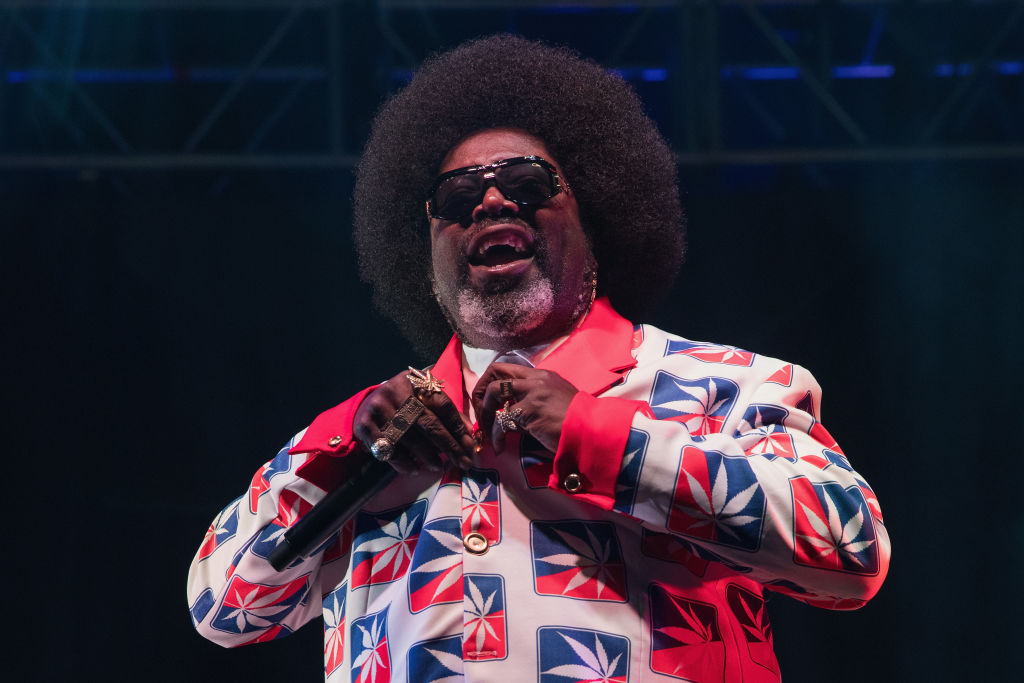
Musician Afroman's defamation trial was absurd, hilarious, and also one of the clearest free‑speech wins for artists in years. (Rick Kern / WireImage via Getty Images)
On March 18, a jury took six hours to rule entirely in favor of musician Joseph Foreman, better known as Afroman, in a defamation lawsuit brought by seven current and former Ohio sheriff’s officers. The ruling centered on a series of diss tracks recorded by Afroman after the officers raided his home under mistaken circumstances.
The case went viral for obvious reasons. Afroman, clad in a bold American flag suit, issued ardent statements about free speech from the stand and sat back as his ridiculous songs were played in court. His lawyer struggled to pronounce the names of Cardi B and Megan Thee Stallion. An officer soberly testified about how he couldn’t be sure if his wife slept with Afroman — a contention of one of the silly songs.
As memeable as the situation is, the comedy of it shouldn’t obscure the place of the trial in a broader shifting landscape of artistic free speech.
The case comes when the distinction between an artist’s stage persona and biography is increasingly blurry. Rap lyrics are being used as evidence of guilt in high-profile trials, governments are targeting musicians for political speech, and musicians are having to be cautious about which causes they support lest they face professional blowback.
Moments like the Afroman trial — clear-cut, fun, absurd — have a way of making the principle of free speech easily legible as a public good. For this reason, it’s an important conversation starter at a time where the details aren’t always so evident.
Because He Got Sued
Afroman, best known for his 2000 song “Because I Got High,” became the subject of widespread conversation after he was sued by seven officers from the Adams County Sheriff’s Office. Their suit contended that the rapper had portrayed them in a false light, publicized their private lives, and defamed them.
The situation developed after a 2022 sheriff’s raid on the rapper’s home. According to a photo of the warrant circulated on social media, the Sheriff’s Office wanted to search Afroman’s home for drugs, paraphernalia, and weapons tied to his alleged participation in drug trafficking and kidnapping.
Reportedly, a confidential informant claimed the musician’s home had a secret dungeon in the basement. But their search failed to produce any evidence, and Afroman was never charged with a crime.
The artist wasn’t home at the time, but extensive video of the raid was captured. A few days later, Afroman released some of his home security footage, showing armed officers kicking down his front door and sweeping through his home.
Later that year, he began releasing satirical songs addressing the incident. One of them, “Will You Help Me Repair My Door,” addressed how the officers damaged his front gate and door and rifled through his clothing, asking, “Any kidnapping victims inside my suit pockets?”
The other video, “Lemon Pound Cake,” poked fun at deputy Shawn Cooley, who is captured on video doing a double take upon seeing a lemon pound cake sitting on the rapper’s counter. Afroman sang, “He’s an Adams County sheriff. He’s hungry, and he’s big as hell. He was sniffing for weed, then he smelled another smell.”
In March 2023, the officers filed a lawsuit against him. They claimed that the artist’s social media posts, merchandise, and songs misrepresented them, provoking ridicule and even personal danger.
At the time, Afroman explained musical parody was his “peaceful” solution for how to recoup costs to repair his home and call attention to police overreach.
As the trial drew closer, he further emphasized that the case was a referendum on free speech. So did the American Civil Liberties Union, who filed an amicus brief contending the lawsuit was meant to stifle criticism of public officials.
Two weeks prior to the trial, Afroman released a sort of trailer, “Freedom of Speech,” which included footage of the rapper in his American flag suit and an image of the US Constitution. On March 16, he also put out a song called “RANDY WALTERS IS A SON OF A B-TCH,” during which he claimed he had sex with an officer’s wife.
The trial lasted for two and a half days. It generated a number of ridiculous moments, including one where Cooley testified that he’s been mailed “hundreds of pound cakes” by pranksters and a second exchange where an officer’s ex-wife discussed her personal feelings about the song “WAP.”
Afroman’s lawyer also addressed a number of popular rap songs to illustrate how they represent a form of entertainment — fumbling through artists’ names and asking the jury to consider whether Lil Wayne’s “P–sy Monster” was about a literal monster.
Jury deliberation lasted about six hours before returning a full defense verdict. After the ruling, tears ran down Afroman’s cheeks. As he exited the courthouse, the rapper shouted, “We did it, America! Yeah, we did it! Freedom of speech! Right on! Right on!”
Art on Trial
In and of itself, the Afroman trial is a fun moment featuring an artist who has always straddled the line between absurd comedy and savvy social commentary. But it takes place within a broader conversation about what constitutes acceptable musical expression.
Controversy around music isn’t new. In the 1960s and ’70s, musicians like Phil Ochs, Bob Dylan, and John Lennon were subject to FBI investigations. In one more absurd example, the Kingsmen were investigated by the FBI and the Federal Communications Commission for harboring secret messages in their 1963 recording of “Louie Louie” — as it turned out, the lyrics were just hard to make out because of the bad recording quality.
For many years, hip hop was a particularly live site of controversy around obscenity and fair use, with groups like 2 Live Crew and NWA facing both legal trouble and cultural scrutiny for their music.
In the last several years, a shifting landscape has reintensified conversations about artistic expression.
In 2025, Drake filed a lawsuit against the record label Universal Music Group alleging that Kendrick Lamar’s diss track “Not Like Us” defamed him. That moment also fueled humor and generated negative publicity for Drake himself. While the suit was dismissed last year, Drake appealed the ruling in 2026.
Other instances get at more challenging social issues. Lyrics, for example, have been used as evidence in hundreds of court cases, prompting debates about whether this practice chills free expression. Rap music in particular has been a target.
The most high-profile recent example followed the arrest of Atlanta rapper Young Thug, part of a sweeping RICO indictment alleging his label YSL (Young Stoner Life) was also a street gang. During the trial, a judge ruled that some of the rapper’s lyrics could be used as evidence of the organization’s criminal activities and structure. The case culminated in Young Thug taking a plea deal. Lyrics also figured into the high-profile double murder trial of Florida rapper YNW Melly, which has been rescheduled to 2027.
Critics of this practice counter that rap artists are unduly targeted compared to artists working in other musical genres, where they are assumed to be creating a persona rather than offering literal statements about crime. As Georgia Rep. Hank Johnson put it, Freddie Mercury “did not confess to having ‘just killed a man’ by putting ‘a gun against his head’ and ‘’pulling the trigger.’ Bob Marley did not confess to having shot a sheriff. And Johnny Cash did not confess to shooting ‘a man in Reno, just to watch him die.’”
California and Louisiana have passed laws restricting the use of creative works as evidence, and there have been multiple attempts to advance a similar bill on the federal level. Even so, the situation remains very up in the air.
The line of what constitutes acceptable political expression in music is also becoming controversial again. Artists like Kneecap and Bob Vylan have been subject to criticism, canceled events, and even legal troubles for their comments on Palestine.
In October 2025, country musician Zach Bryan was subject to condemnation from Trump administration officials after he posted a snippet of the song “Bad News” calling attention to Immigration and Customs Enforcement (ICE) raids; White House spokesperson Abigail Jackson remarked that the musician wanted to “Open The Gates to criminal illegal aliens and has Condemned heroic ICE officers.”
Political pushback has gone beyond statements like that. In March 2026, the Trump-Kennedy Center filed a lawsuit against jazz musician Chuck Redd, who canceled his Christmas Eve jazz concert after Donald Trump’s name was added to the building’s signage.
These incidents testify to the way that lines about what constitutes artistic expression are shifting once again — centering music in broader conversations about freedom of speech.
Freedom of Speech, Right On
The Afroman case offers something that is not always present in conversations about artistic expression: clarity. Many cases about free speech involve ambiguity and public controversy — lyrics that may or may not characterize real crimes, political commentary that comes against an uncertain, contentious moment.
Afroman’s case is different. A rapper made light of an otherwise frustrating situation, presenting silly commentary that a jury saw as clear satire. The absurdity of the situation, and its viral popularity, make the principle obvious to the broader public.
At a moment when the lines keep shifting — in courtrooms, concert halls, and the Oval Office — that kind of clarity is rarer than it seems.