Trump Is Threatening to Cut Transit Left and Right
Donald Trump’s new transportation proposal will hurt transit funding in every single American state, undermining affordability across the board. From red states to blue states, and from drivers to nondrivers, everyone will feel the impact.
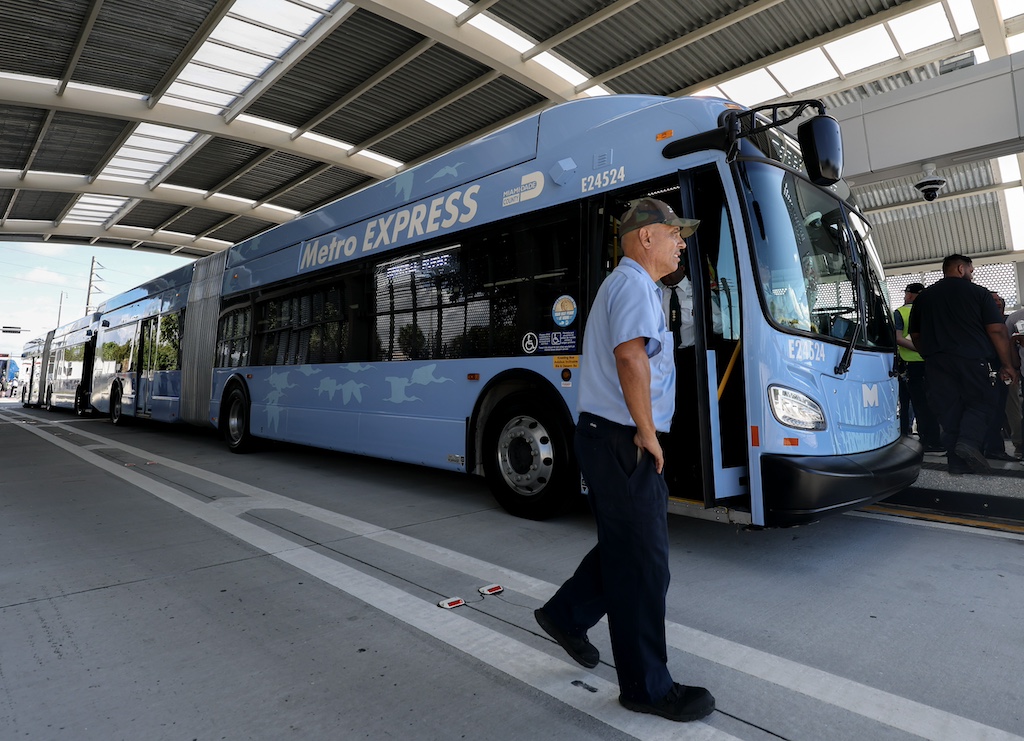
Florida transferred $244 million of its Surface Transportation Block Grant money into transit from 2021 to 2023. (Joe Raedle / Getty Images)
According to recent reports, the Trump administration is trying to cut transit funding to every state, fundamentally changing the way federal transportation policy has operated for more than four decades. The administration has been trying to reduce funding for months by tying grants to birth rates and banning certain types of transportation projects altogether like those related to pedestrian safety and bike lanes. This latest action is both an economic and political disaster: it will worsen the escalating affordability crisis and take away states’ ability to direct transportation dollars to benefit working people.
Donald Trump’s first proposal takes away states’ flexibility to fund transit, limiting their opportunities to address transportation affordability. Starting in 1976, Congress has routinely made the bipartisan decision to give states flexibility to spend federal highway dollars on public transit, and states’ consistent use of this ability shows the demand for transit funding. But in an apparent bid to kill public transit, the Trump administration is proposing to take away this flexibility from state and local governments.
The second proposal would eliminate the mass transit account from the Highway Trust Fund. In 1982, Congress created the transit account, in a move that tacitly acknowledged that more than one-third of people do not drive or have access to a car. The transit account is about 20 percent of the trust fund and sustains many transit services, especially in rural settings. Trump wants to kill it completely.
The administration may think these are targeted attacks on places that did not vote for Trump, but this is misguided. The Climate and Community Institute (CCI) acquired and studied three recent years of data from the Federal Highway Administration’s (FHWA) financial management information system that illustrate how each state is relying on the flexible nature of federal funding. We see that numerous states, including purple and red states like Nevada, Florida, Ohio, and Arizona, have consistently relied on transferring funding out of “highway” programs to provide essential transit services for their residents.
Florida, for example, transferred $244 million of its Surface Transportation Block Grant (STBG) money into transit from 2021 to 2023. During the same period, Arizona transferred $113 million from STBG and the Congestion Mitigation and Air Quality Improvement Program (CMAQ) to use for transit.
An analysis by Transportation for America of Mass Transit Account funding distribution tells a similar story. Most of the states that rely most heavily on their allocations from the Mass Transit Account to deliver transit service voted for Donald Trump, including Idaho, Kansas, Alabama, Mississippi, and South Carolina. Among rural transit agencies, those in Texas, Nevada, and Idaho would stand to lose the most.
To characterize the current process as moving highway money into transit is also inaccurate. Many programs housed within the FHWA were created by Congress for purposes distinct from highway building. Congress’s intent for STBG is that its flexible funding be used by states and municipalities to meet their transportation needs, as has been the case since the first incarnation of the program in 1991. CMAQ’s purpose is to reduce traffic congestion in order to improve air quality. States rely on these programs to build safe local streets that support mixed uses for walkers, bikes, buses, and cars.
Trump’s proposed changes will worsen the affordability crisis by forcing more people into transportation insecurity or financial crisis. In towns and counties across every part of the country, data shows that many people don’t drive a car. These are older adults who rely on transit or rides to get their groceries. They are teachers and health care workers who use the bus to get to work. They are people with disabilities who use transit, paratransit, and shared rides to access their families and jobs. The CCI’s analysis of census data finds that renters are six times more likely to live in zero-car households and that children in low-income households are eight times more likely to have no household car access.
If people currently relying on transit are forced to get a car, this could spell financial disaster for their households, potentially setting off impossible decisions between buying groceries, paying rent, and getting to work. Between loan or lease payments, insurance, fuel, maintenance, and repairs, car drivers in the United States pay an average of $1,015 per month to own and maintain a vehicle. Cash-strapped families would have to take this monthly amount away from their housing and grocery budgets. For this reason, a reduction of transit is an attack on affordability for the average American, especially for working-class people who already face mounting burdens of housing instability, soaring utility costs, and high grocery bills.
Taking away transit funding will also increase congestion and deliver chaos to the streets. It will not only hit people’s household budgets but also ripple through small businesses, medical facilities, schools, and grocery stores, all of whom rely on functioning transportation systems — including transit — to move goods, customers, and employees smoothly. Drivers and nondrivers alike will feel the impacts. Transportation is also the largest sectoral source of US greenhouse gas emissions, and reducing public transit would make that even worse, adding further fuel to the climate crisis.
States across the political spectrum are demanding more transit, not less. This latest move by the Trump administration accelerates a long trend of Republican attacks on transit as a public good, justified as guarding against government overspending and overreach. Its recent actions in Minnesota and beyond show it has no qualms about making streets inhospitable for working people for the sake of cultural warfare; this transit policy move shows its intent to spread harmful policies to red and blue cities and towns across the country.