Jeffrey Epstein’s French Allies Should Be Exposed
The latest release of Epstein files sheds more light on his ruling-class allies. In France, President Emmanuel Macron has resisted calls for a public debate on the subject despite Jeffrey Epstein’s far-reaching relations in business and diplomatic circles.
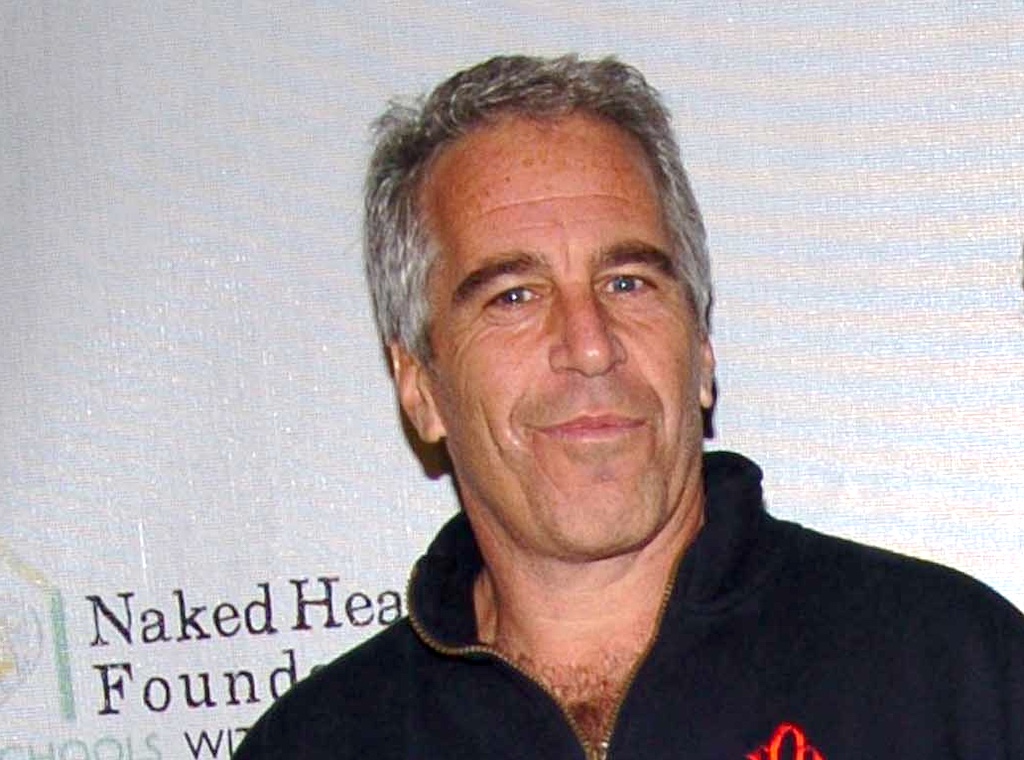
Jeffrey Epstein had a house in Paris and spent substantial portions of time there. (Joe Schildhorn / Patrick McMullan via Getty Images)
- Interview by
- Marlon Ettinger
As citizen investigators and journalists trawl through the latest Epstein files, questions about the billionaire pedophile’s influence continue to mount.
In some countries, this has forced investigations, public condemnation, and a measure of accountability. In Great Britain, accusations have focused on the former Prince Andrew, arrested on February 19, but also on New Labour politician Peter Mandelson, until recently ambassador to the United States. A stream of revelations about his ties to Jeffrey Epstein threatened Keir Starmer’s government itself, with the prime minister’s powerful chief of staff, Morgan McSweeney, stepping down over his role in appointing Mandelson. In Norway, former premier Thorbjørn Jagland has been charged over his association with Epstein, and the country has launched an independent commission to examine other possible crimes.
But what about France? Here, revelations from the files have already prompted at least one resignation. Jack Lang, the powerful former culture minister, began stepping down as president of the Institute of the Arab World after a blizzard of files and correspondence revealed his family’s financial links to Epstein as well as a close personal friendship between the two men.
Epstein had a house in Paris and spent substantial portions of time there, cultivating relationships with powerful business and diplomatic figures. One was Olivier Colom, a former chief diplomatic advisor to Nicolas Sarkozy, who more recently counseled Marine Le Pen on Africa policy and was an international advisor for the Edmond de Rothschild Group. Another was Fabrice Aidan, a high-ranking UN diplomat who reportedly shared sensitive information with Epstein and who fell under a child pornography investigation back in 2013, which seemed to have no impact on his career.
Despite relationships like these — and more connections to French personalities — President Emmanuel Macron has played down the issue. He told reporters on February 9 that the case is “a matter that primarily concerns the United States,” and that he doesn’t “want to take part in a public debate on the subject.”
By contrast, the left-wing La France Insoumise has called for a parliamentary committee to investigate the revelations, but one can only be formed with the support of other political groups. Their response has been guarded. Former prime minister Gabriel Attal, the head of Macron’s parliamentary group, said on February 11 that he wouldn’t be opposed to such a commission but that he wouldn’t be the one to take the initiative.
Antoine Léaument, a France Insoumise MP, spoke to Marlon Ettinger about why he thinks a commission is necessary, what it would investigate, and what chance it has of forming.
Marlon Ettinger
Why is such an investigative commission needed?
Antoine Léaument
For several reasons. The first is that there are elements in this case that should be handled by the courts. Two aspects in particular should fall under the justice system.
The first is an investigation into child sexual abuse and human trafficking. There may be victims in France who are concerned or figures in France who have participated in these horrors. There are also questions of foreign interference and illegal financing, including of French politics, which could be of interest to the justice system.
Launching an investigative commission would allow victims who wish to do so to contact the commission and testify before it. An investigative commission would also allow closed testimony that isn’t public but would allow witnesses to give information to national representatives. This sort of information could be very useful in this type of case.
Of course, these victims should also speak before the courts as well.
This commission would let us bring people in so we can question them and clarify what’s meant in some of the emails that we have, including on aspects that seem a little coded at times. We’d be able to try to figure out what the truth is, because everything would be filmed, and people would be obliged to come and testify — and to tell the truth.
An investigative commission would allow us to explain and shine a light publicly on aspects that are harder to read.
In France Insoumise at least, we’re also convinced that treating the Epstein affair politically will prevent people from being stuck on conspiracy theories, or even antisemitic theories, to explain it.
So, to treat this case politically, we can prevent people from saying, “Oh look, our elected officials don’t want to talk about it.” I’ve seen already in other countries there are parliamentary investigative committees that have been launched. In the United States there’s been one, and there’s going to be one in Norway now too.
Marlon Ettinger
You’ve mentioned all these elements that could be made public, but they’re all based on new documents that have been released by the United States. Might there be documents in the French courts or in the French government that could be made public by such a commission?
Antoine Léaument
Yes, of course. Not during the commission, but at the end of it, yes. An investigative commission gives special powers to the “rapporteurs de la commission.” They have investigative powers, over both documentary evidence and on-site investigations, so these “rapporteurs” can search for documents within all the public institutions.
What that would potentially let them do is see if there had been irregularities in the French judicial system in the Epstein case.
This is one of the major topics of debate in our country at the moment. [Last Monday], it was reported that the French courts had information about this topic, I believe, six years ago, but never opened an investigation into any specific aspect of this case.
There was one investigation open in France, but it was closed with the death of one of Epstein’s recruiters, Jean-Luc Brunel. That doesn’t mean that there weren’t other victims or that other people didn’t participate. But for the moment, it appears that the French justice system decided not to investigate these other elements, even though it seems that they were informed about them.
Marlon Ettinger
Are there other elements that there’s a particular interest in clearing up? Like you said, there’s the death of Jean Luc-Brunel, other French victims, etc.
Antoine Léaument
What we want to do first, and what we will do if we’re the ones in charge of it, is clear things up. Several French personalities’ names are mentioned in the files. We should be clear that the mere fact that somebody is cited in Epstein’s email exchanges doesn’t necessarily mean there’s something they should answer for. And even if they do have something to answer for, that doesn’t necessarily mean that they’re a child abuser. There are cases where, like I said before, the question is more about things like financing.
So, we think that the people mentioned in the email exchanges, and in particular those who are cited the most, should be interviewed by the investigatory commission to shed light on some murky points. I’ll give you some examples on the financing of political campaigns.
There was a discussion around a possible presidential campaign by [former finance minister] Bruno Le Maire and the potential financing of that campaign. There were emails on the financing of the Rassemblement National’s [the party of Marine Le Pen] European election campaign. That isn’t to say that anything illegal was necessarily done. But it’s a question worth knowing the answer to — why Steve Bannon and the Rassemblement National, in theory, were in contact.
And elsewhere, there were a huge number of personalities who were mentioned. At the moment, one of the cases that has hit this country — I forget his name, he was a diplomat who apparently —
Marlon Ettinger
Colom?
Antoine Léaument
No, not Colom, but Colom is interesting. He’s one of the people who had the most exchanges with Epstein. At the time, it appears that he was connected to Nicolas Sarkozy, and today that he’s in contact with, or that he was a counselor to, the Rassemblement National. So there are things there to look into. No, the diplomat is called [Fabrice] Aidan.
An investigative commission would be filmed and publicly broadcast. It would let citizens better understand an extremely complex case. I think there’s a duty to provide clarity, on the side of the media, who are working on it, and also on the political front.
Marlon Ettinger
To launch a commission you’d need to win a vote in the National Assembly. Are you preparing for that vote in France Insoumise? Are you searching for votes from other parties?
Antoine Léaument
Yes, of course. For the moment we’re looking for signatures from the other parties. We need ten signatures from the pro-government camp. So that’s the first step: to obtain a maximum number of signatures on the proposition. The second step is the vote. For now, deputies on the Left are mostly in favor, including the Parti Socialiste (PS). Despite this, not everybody in the PS is in favor. For example, I saw [the PS’s] Jérôme Guedj say that he wasn’t in favor of an investigative commission.
Marlon Ettinger
How about the Rassemblement National? Are they open to this?
Antoine Léaument
We haven’t asked them. When we draft a law, we don’t sign with them, and we don’t propose that they sign. I don’t know if they’d be for or against an investigative commission. I don’t think they’ve taken a position yet.
Marlon Ettinger
For the moment, with the signatures that you have, do you think that a vote will pass?
Antoine Léaument
If we asked for a vote today, would it pass? No. But I think the more time that passes, the more obvious the need for an investigative commission will be to everybody. I think that popular pressure will be strong, and MPs, elected by the people, should do what the people ask of them. Of course, some have forgotten that, but not me. So, I think it will somehow impose itself as a necessity. The second thing is that the documents that have come out so far are only part of the documents. We know that there are twelve terabytes of data collected by the US justice system. So this is just the first publication of documents, and there will be others.
And when there are other documents, if there’s shocking information or information of interest to the French justice system and parliament, for many people that will only increase the desire for an investigative commission.
Marlon Ettinger
But why are some people saying no?
Antoine Léaument
Guedj said no because he said that an investigative commission would feed into conspiracy theories. I think the opposite is true, really. To not investigate, it would be as if there were an elephant in the room and nobody was mentioning it. If we don’t talk about it and if we ignore the problem, that would feed into conspiracy theories.
Marlon Ettinger
Epstein was active in many countries. Why is it necessary to dig into him in France?
Antoine Léaument
To start with, he had a home in France, on Avenue Foch [in Paris]. I even think he had others elsewhere. But he came regularly to France, I believe he even spent half the year here. On top of that, he was in contact with many personalities in France. The best known among them, no doubt, is Jack Lang, who’s already resigned from the Institut du Monde Arabe.
So, the Epstein affair has already had an impact on France. Maybe what we’re seeing now is only the tip of the iceberg. If we interview people one after another, we can dig deeper and even discover things that aren’t necessarily in the email exchanges.
Marlon Ettinger
There was a message Epstein sent to Steve Bannon where he said, basically: I can’t talk now, I’m at the Élysée [presidential palace] for the next forty-five minutes. I wrote an article about this in December, and of course tried to contact the Élysée but got no response. I imagine that’s something an investigatory commission could clear up.
Antoine Léaument
That’s a good question. We wouldn’t have the right to summon the president before [a commission] but we could summon people who worked for the president. That’s included among our powers.
Marlon Ettinger
Like people who handle scheduling at the Élysée?
Antoine Léaument
Exactly.