Zohran Mamdani Has Quickly Gotten Down to Business
In his first week as mayor, Zohran Mamdani issued 12 executive orders targeting housing, consumer protection, and democratic participation. His pace rebuts critics who have accused him of gauzy promises destined to go unfulfilled.
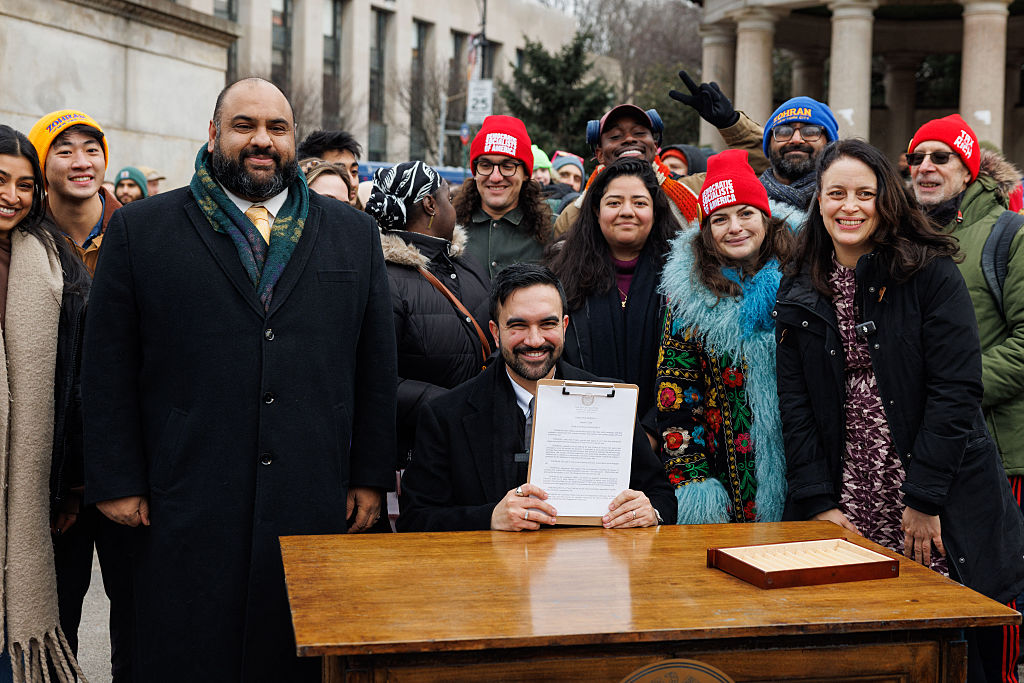
Even if you’re skeptical of Zohran Mamdani’s ability to implement big policy changes in New York City, the pace and breadth of what he has achieved in his first 10 days as mayor is unquestionably impressive. (Jason Alpert-Wisnia / Hans Lucas / AFP via Getty Images)
Sworn in as mayor of New York just over one week ago, Zohran Mamdani is wasting no time beginning to govern. In his first week in office, his administration issued twelve executive orders, including two emergency executive orders. The previous administration took several months to hit that number.
Many of the administration’s first-week executive orders, which are available on the mayor’s website and linked throughout, pertain to the campaign’s signature issue of housing affordability. Executive Order 3 revives the Mayor’s Office to Protect Tenants. The agency was created in 2019 but defunded and sidelined under Mayor Eric Adams. The new order charges it with coordinating tenant protection efforts across city government, cracking down on repeat-offending landlords, and advocating for renters’ interests in housing policy decisions.
“For too long, bad landlords have been allowed to mistreat their tenants with impunity. That ends today,” said Mamdani at a press conference announcing the order. Mamdani appointed longtime tenant advocate and organizer Cea Weaver to helm the office, citing her “peerless record of standing up for tenants in our city.” Weaver has since been embroiled in an absurd scandal over resurfaced, since-deleted social media posts made at the high-water mark of wokeism in left politics. (I thought the era of canceling people for their old tweets ended?) But Mamdani is rightly sticking by her appointment, citing her long history as one of the city and state’s most effective tenant organizers with a long track record of fighting for affordable housing, a central plank of the now-mayor’s campaign.
Two additional orders establish task forces aimed at expanding housing supply. The Land Inventory Fast Track (LIFT) task force, created by Executive Order 4, will comb through city-owned and city-affiliated properties to identify sites capable of supporting at least twenty-five thousand new units over the next decade. It lays the groundwork for the administration’s plan, unveiled during the campaign, to build two hundred thousand new housing units over the next decade, aimed at providing affordable shelter to many and bringing rents down for everyone else.
Executive Order 5 creates a parallel body, the Streamlining Procedures to Expedite Equitable Development (SPEED) task force, charged with identifying bottlenecks in the city’s notoriously arduous permitting and approval processes and recommending fixes within one hundred days. Together, these orders signal an administration that sees housing production and tenant protection — objectives that have often been pitted against each other in the “yes in my backyard” (YIMBY)-versus-tenant-advocate fights of the last decade — as complementary rather than competing goals.
A fourth housing order, Executive Order 8, directs multiple departments to collaboratively conduct public “Rental Ripoff” hearings throughout the city. The hearings will collect testimony from tenants, advocacy groups, and legal service providers about illegal fees, retaliation, neglected repairs, economic discrimination, and other abusive landlord practices. The agencies must then produce a public report with a concrete plan for using existing enforcement powers and proposing policy changes. The process is designed to surface the problems tenants face under bad landlords and translate them into government action.
Beyond housing, the Mamdani administration signed consumer protection measures that affect affordability more broadly — a direction consistent with the appointment of progressive former FTC commissioner Lina Khan, who has focused on such measures in her past work. Executive Order 9 establishes a task force to combat junk fees and hidden charges that inflate prices at checkout. Executive Order 10 targets subscription traps, the business practices that make it easy to sign up for a service and maddeningly difficult to cancel. Both measures frame consumer protection as an affordability issue: when corporations deceive customers about what things actually cost, ordinary working-class people pay the price.
Additional early executive orders focus on addressing health and safety issues at the city jail Riker’s Island, improving the city’s homeless shelter system, and reforming the process of appointing judges to city courts.
Finally, Executive Order 7 creates the Office of Mass Engagement, intended to mobilize everyday New Yorkers and invite them into the governing process and led by longtime democratic socialist organizer Tascha Van Auken (who recently sat for an extended interview with Jacobin on her previous role as campaign manager). The order seeks to address current political structures that box working-class people out of the democratic process, making it hard to get the ear of government officials unless you have time, money, and connections. The new office is charged with leading campaigns to get working-class New Yorkers engaged with city politics, creating accessible venues for public feedback, conducting outreach to underrepresented communities, and making sure the public’s input has a measurable impact on the administration’s policymaking.
If you believe, as I do, that there is a genuine crisis of democracy in this country, and that the muscle for bottom-up engagement in public life has withered in an era of corporate capture of our politics, you should be heartened by this intention of the order. The Office of Mass Engagement, at its best, could bring large numbers of everyday people into the political process in New York, in an embodiment of the “Not Me, Us” motto of Senator Bernie Sanders’s presidential campaigns (which Mamdani says inspired him to go into politics). Sanders argued that no one leader could actually carry out a pro-worker agenda alone; the pushback from corporations and the rich would prevent it. The only power great enough to surmount the obstacles erected by elite interests is the power of ordinary people in collective action, which Mamdani mobilized to great effect in the mayoral campaign but now must be sustained into his mayoralty.
Throughout his campaign, Mamdani faced the ubiquitous prediction that his administration would fail to follow through on its policy plans. In a way, the critique was flattering — the last resort of detractors who were forced to concede the reasonableness of Mamdani’s demands and the popular appeal of his program. If there isn’t anything particularly objectionable about his ideas themselves, then those who oppose his pro-worker politics are forced to argue that the real issue is that they’ll never happen. The new Mamdani administration appears eager to implement concrete changes that can both deliver swift economic relief for working-class New Yorkers and prove these critics wrong.
Mamdani’s agenda will be difficult to achieve, of course, thanks in large part to political pushback from opponents in politics and in the donor class. Still, early developments indicate that even some of his more ambitious plans are not only possible, but already underway.
One of Mamdani’s major campaign promises, universal childcare, was dismissed as pie-in-the-sky promises. But on Thursday, January 8, Mamdani was joined by New York State Governor Kathy Hochul to announce the rollout of free childcare for two-year-olds in New York City, backed by $1.7 billion in state funds. The initial rollout will be phased in over time and is currently only funded for two years, but it’s a strong start for an expensive but desperately needed social policy that Mamdani campaigned on.
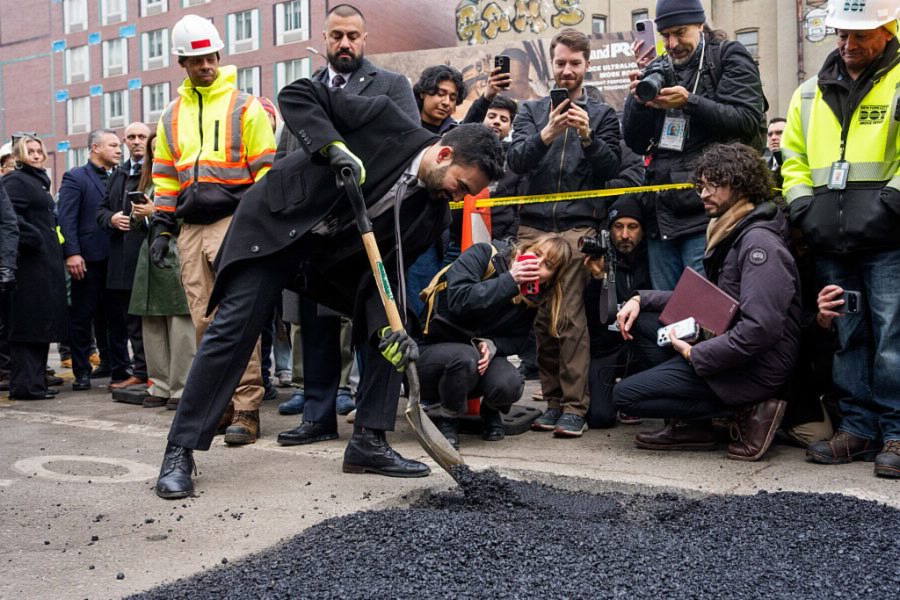
And on Wednesday, Mamdani joined workers from the New York Department of Transportation as they fixed the infamous Williamsburg Bridge bump, a dangerously narrow and sharply inclined ramp at the foot of the bridge’s bike lane in Manhattan. Known for sending bicyclists flying over their handlebars, the bump had been a safety hazard for so long that it had turned into a running joke about the city’s priorities and its bureaucratic sluggishness. As of this week, thanks to Mayor Mamdani, the bump is no more.
It’s a small action, only one part of a larger plan to improve cyclist and pedestrian safety in the area. But it was intended as a message to New York that Mamdani intends to “usher in a new era of excellence,” as writer Corey Robin recently characterized the mayor’s larger approach. If Mamdani succeeds, he will do more than improve working-class New Yorkers’ circumstances. He will lay to rest the axiomatic American belief that efficiency and innovation belong to the private sector and the governments most deferential to it.