Fallen Angels
Guardian Angels founder Curtis Sliwa’s unsuccessful run for mayor of New York was a stark reminder of how much has changed in NYC since the dark days of the fiscal crisis — and how much remains the same.
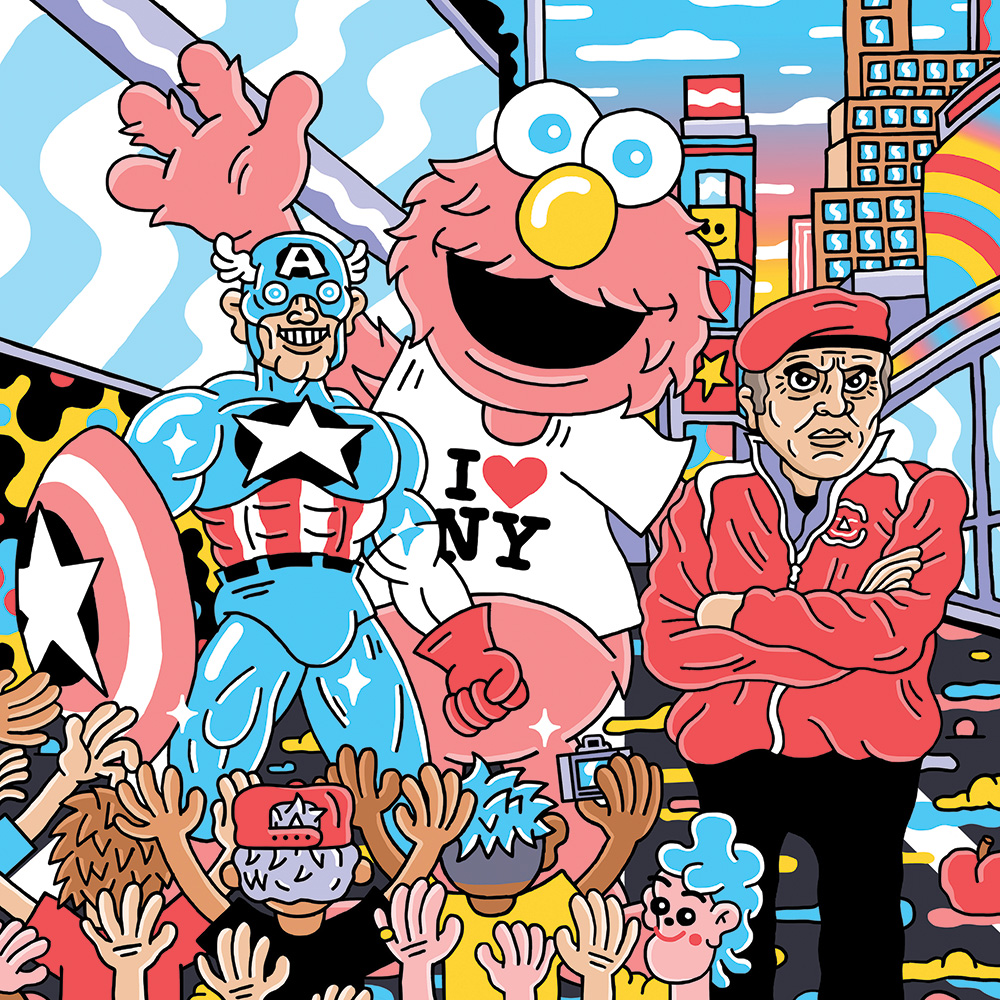
Illustration by Sam Taylor
In all the improbabilities of the 2025 mayoral race, the role played by Guardian Angels founder Curtis Sliwa ranks near the very top. Even his name is an echo from the 1970s, the punch line to a joke about red berets and old-school accents, a ghost from a formerly dangerous, broken city.
This year’s election campaign was waged in today’s New York — a radically, extraordinarily unequal city of finance bros and underpaid service workers, a metropolis of new immigrant populations. But it’s a city that is no longer haunted by the terrifying crime rates that first brought Sliwa to the national stage (there were 377 homicides in New York City last year, down from more than 2,000 around 1990).
And yet there he was on the debate stage, pugnacious and cocky, bereft of beret, admonishing the moderator that there are three candidates in the race — why don’t they throw a question or two his way? Channeling an old, forgotten New York, Sliwa speaks for a lost city of the house-proud white working class. His role in the election is the return of the repressed, unable to be either contained or channeled into support for the business order.