Remembering Red Ken
Ken Livingstone’s legacy in London reminds us just how much democratic socialist leadership can do for a single city.
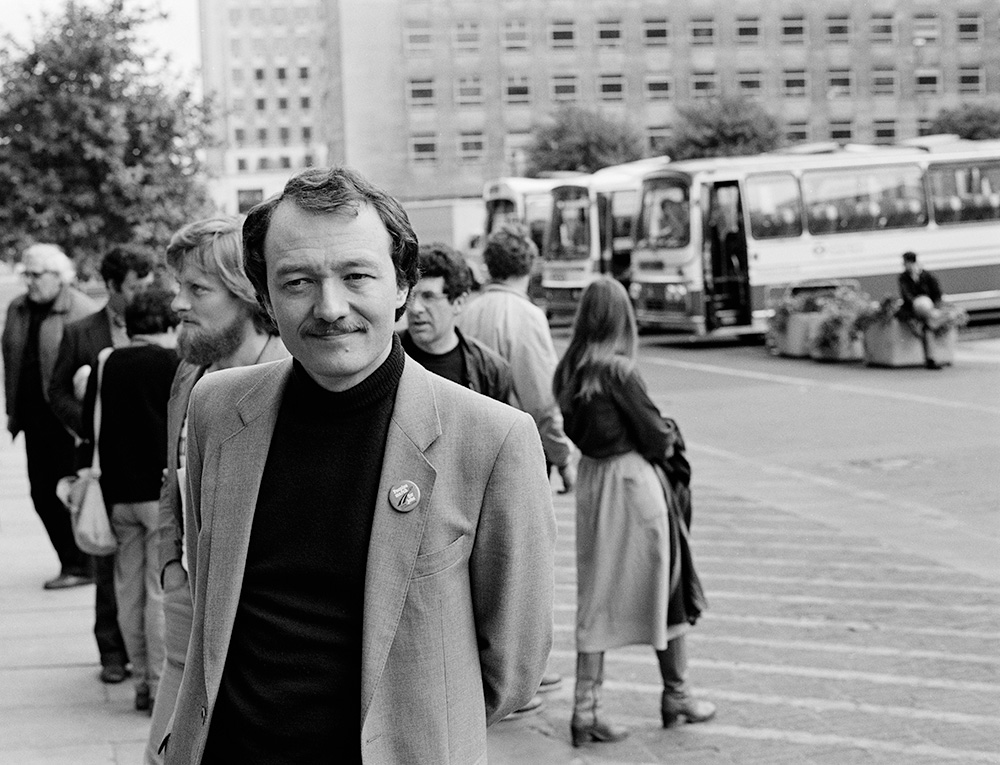
Pictured here in 1981, Livingstone wears a badge indicating his support for the People’s March for Jobs, a protest against high unemployment levels in 1980s London. (Roger George Clark / Getty Images)
Ken Livingstone never looked like a politician built for Britain’s establishment. He spoke plainly and didn’t bother to hide what he thought. While others in Labour trimmed and triangulated, he turned London into a stage for class conflict. From County Hall, just across the Thames from Parliament, he needled Margaret Thatcher and gave the capital’s working-class and marginalized communities a new sense of swagger and defiance. For some, he was a populist menace; for others, the only voice of sanity in an age of reaction. Either way, “Red Ken” showed that socialism in the UK could still make noise — and even win.
The conservative journalist Charles Moore once described Livingstone as “the only truly successful left-wing British politician of modern times.” It’s hard to disagree. Loathed and loved in equal measure, he was arguably Britain’s first modern celebrity politician, anticipating the more populist and reactionary figures that have since come to dominate UK politics. Yet more than just a memorable persona, Livingstone’s two stints running London, as leader of the Greater London Council (GLC) from 1981 to 1986 and as mayor from 2000 to 2008, transformed Britain’s capital and revealed the inspiring possibilities — and sobering limitations — of what a radical social democratic authority could achieve in a single city.
“Take the Power!”
First radicalized by the student revolts of 1968, Livingstone’s politics were defined by a highly participatory vision of democratic socialism and a libertarian abhorrence for what he deemed “puritan” social attitudes, including all forms of discrimination. Like many young radicals shaped by the New Left, he also loathed the paternalistic bureaucracies of postwar social democracy, particularly in local government, which had often denied real decision-making power to working-class communities and marginalized groups.