Lost Art
The Geneva Freeport is home to millions of masterpieces you and I will never see.lost-art
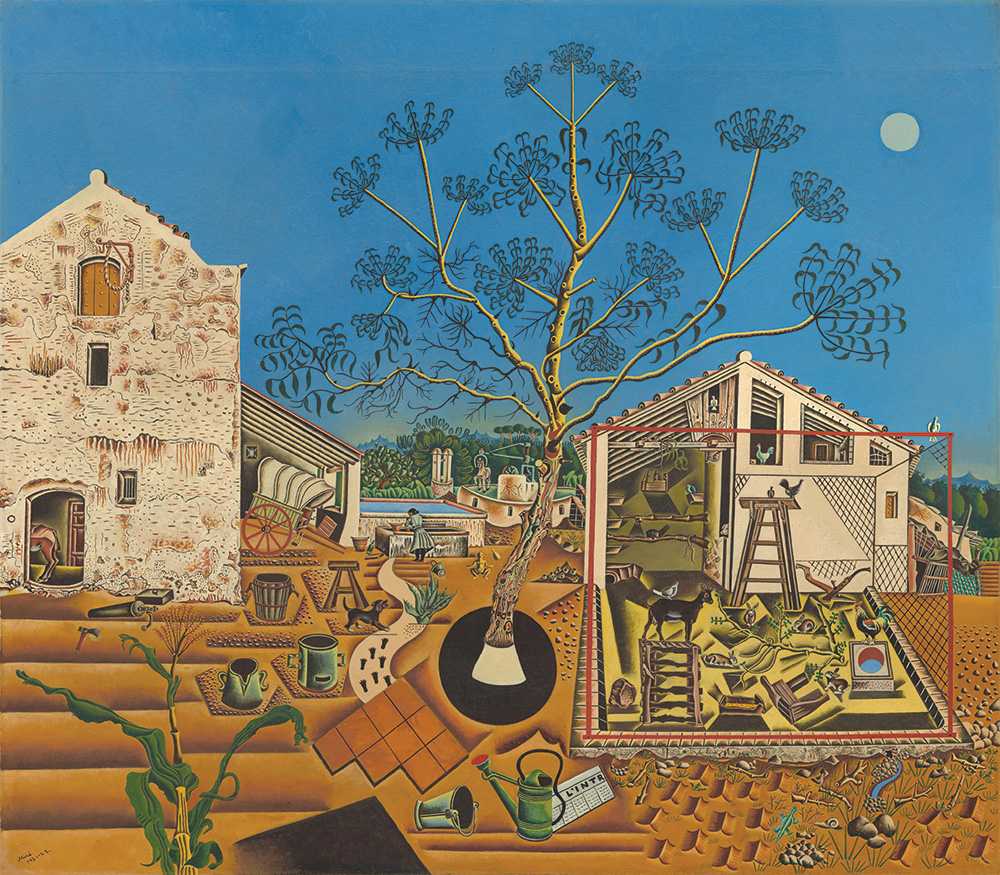
The Farm by Joan Miró. (Wikimedia Commons)
Hidden behind nondescript concrete walls near the Geneva airport lies one of the world’s most secretive art repositories: the Geneva Freeport. Officially, it’s a “customs-free zone,” a kind of legal limbo where goods can be stored indefinitely without triggering taxes or import duties. In practice, it’s a private vault for the global rich — a fortress containing some of our culture’s greatest treasures doubling as a financial instrument.
An estimated 1.2 million artworks are thought to be stored in the Freeport’s climate-controlled chambers, including pieces by Pablo Picasso, Claude Monet, and Leonardo da Vinci. Many have never been exhibited publicly. Some are held there for legitimate reasons like security or conservation, but others serve as speculative assets, shuffled between shell companies and hedge funds like blue-chip stocks. Much of Russian oligarch Dmitry Rybolovlev’s $2 billion collection, along with 5,000 works from the art-dealing Nahmad family’s $3.5 billion collection, remain in the Freeport today.
Freeports like Geneva’s thrive on opacity, with ownership records shielded by offshore entities. The result is a parallel art world, one unmoored from museums and audiences, governed instead by the logic of finance and secrecy.