A Poet in Practice
Aimé Césaire’s time as the mayor of Martinique’s capital city was characterized by his practical, progressive politics — but also by his poet’s eye for beauty.
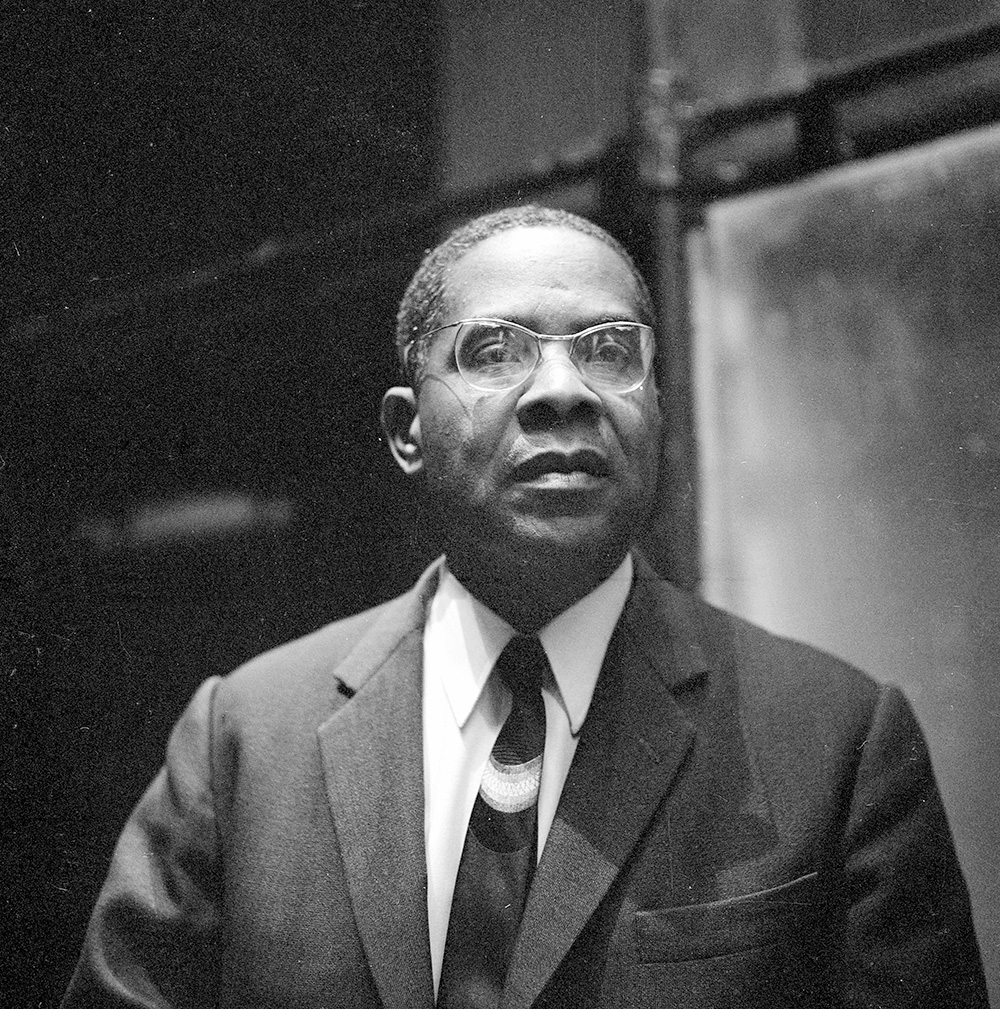
(Roger Viollet / Getty Images)
When people think of Aimé Césaire, a towering figure of arts and letters comes to mind, the legendary poet and cofounder of the Négritude movement. Less frequently remembered is his role, initially with the support of the French Communist Party, as mayor of Fort-de-France, Martinique’s capital, a position he held from 1945 until 2001.
From that post, Césaire transformed local governance into a platform for political and social emancipation, blending a poet’s yearning for utopian horizons with practical, everyday politics. As he was fond of saying, “If you want to understand my politics, read my poetry.” In the figure of Césaire, residents of Fort-de-France saw one of their own finally in power. “I’ve never stopped for a second thinking . . . that I am a man of the mangroves, that I am a man of the mountains,” as he put it. “And politics has kept that connection alive and that relationship alive.”
In 1956, after the full extent of Joseph Stalin’s crimes was revealed in Nikita Khrushchev’s “secret speech,” Césaire publicly broke with the Communist Party, seeing in Sovietism just another colonial force. “I shall anticipate an objection. Provincialism? Not at all,” he wrote in a letter to Maurice Thorez, the party’s general secretary. “There are two ways to lose oneself: walled segregation in the particular or dilution in the ‘universal.’” But although he was no longer a communist, Césaire never gave up the fight against inequality. As mayor, he oversaw the modernization of Fort-de-France, taking steps to improve sanitation and waste management systems that had fallen into disrepair under colonialism. He championed Martinican identity while navigating the complexities of integration within the French Republic, often critiquing the colonial status quo from within its very institutions.