Should We Invade Israel?
For decades, advocates of humanitarian intervention argued that the international community should take military action against states engaged in extreme human rights abuses. Israel is one such state.
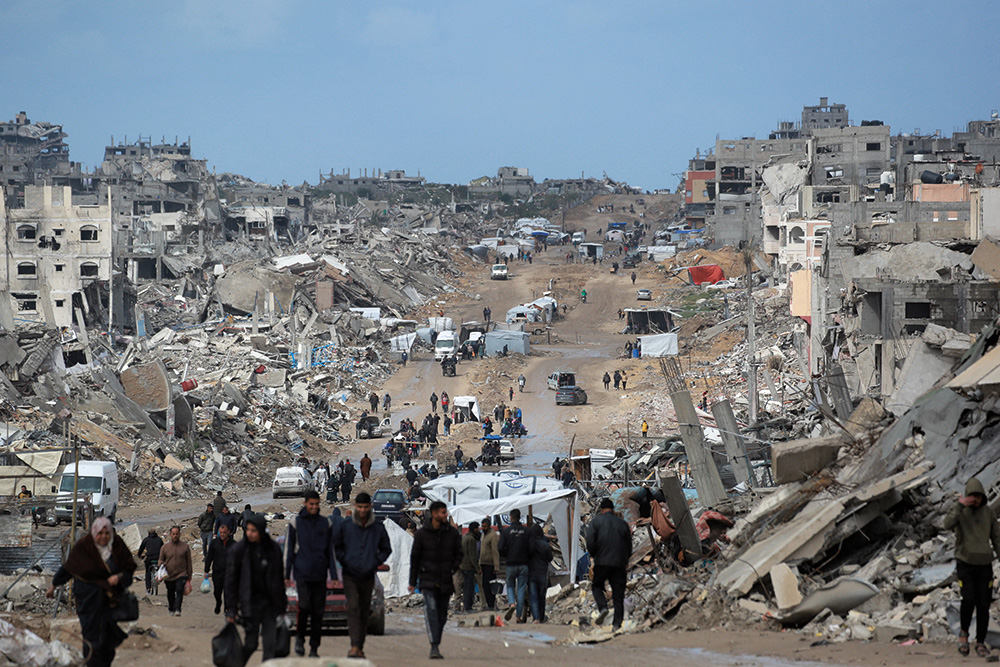
(Mahmoud Issa / Anadolu / Getty Images)
When I was in graduate school in the 1990s, the dominant idea in liberal foreign policy circles was that of humanitarian intervention, or the Responsibility to Protect principle. The claim was that, though states should ordinarily respect the sovereignty of other states, under extreme circumstances, say of genocide or ethnic cleansing, it was not just the right but the obligation of the international community to take coercive action to stop those crimes.
Occasionally, the theory went, this might involve or entail toppling the regime that was engaged in the genocide. Thus Vietnam was allowed to invade Cambodia and overthrow the Khmer Rouge, Tanzania was allowed to invade Uganda and topple the Idi Amin regime, NATO overthrew Slobodan Milošević, and so on.
While these actions were often framed as the obligation of the international community, the fact that the actors were usually neighboring states or former colonial overseers suggests that power politics was accepted as a legitimate adjunct to, even an underlying motivation of, the humanitarian intervention regime. That local or former colonial states might have other interests besides humanitarian ones — that the interveners were not always the United Nations as a whole but individual states with ulterior motives — did not detract from the fact that military violence was being used to stop genocide.