Democrats Are Already “Moderate.” It’s Not Working.

The perpetual advice to Democrats is that moving rightward will solve all their problems. But look where the party is at the moment: already embracing Republican affect and policies, yet still losing.
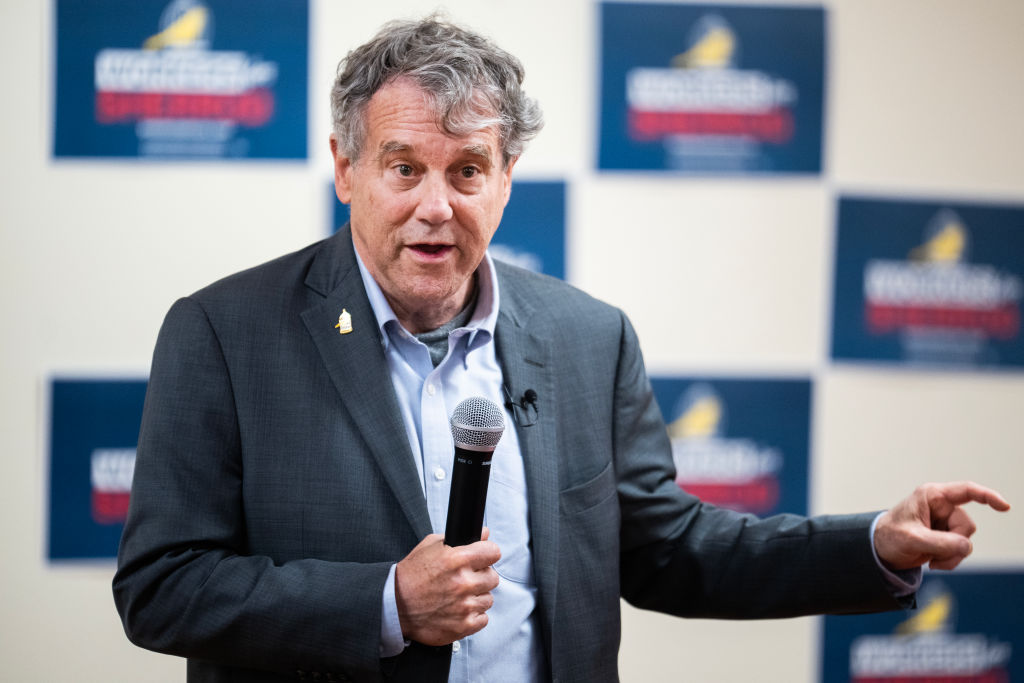
Sherrod Brown in Ohio

Democratic senator Sherrod Brown of Ohio is backing “the most conservative border bill in decades” and a fentanyl law bearing Donald Trump’s signature. (Tom Williams / CQ-Roll Call, Inc. via Getty Images)


Every election cycle produces the new miracle cure: Democrats should moderate. Ezra Klein has framed it as choosing power over purity — living with candidates who diverge from standard progressive preferences on abortion, immigration, or trans rights, the way Barack Obama once opposed same-sex marriage to win a national coalition. Matt Yglesias argues that economic populism can’t bribe noncollege voters out of disagreements on policing, immigration, guns, or gender; the party needs a more moderate national brand, not just a few carefully triangulated nominees. Adam Jentleson warns that celebrating competitiveness in Pennsylvania or Wisconsin while writing off Ohio or Florida is bar-lowering that cements minority status.

There’s wisdom in the call to moderation, but little novelty. I don’t even disagree with the instinct — it’s just that it doesn’t reckon with how Democrats already ran their 2024 campaigns.

Watch the highlight reel of some of the highest-spending advertisements of Democrats in swing seats in 2024:

  • In Ohio, Sherrod Brown sells “the most conservative border bill in decades,” backed by border agents, and points to a fentanyl law bearing Donald Trump’s signature. When hit on transgender inclusion in sports, he doesn’t sermonize; he notes Ohio already banned what the ad alleges and says local leagues should decide — citing Republican Gov. Mike DeWine.

  • In Texas, Colin Allred stands with law enforcement and border officials who say, “Colin’s got our back” and insist that Allred will be tougher than Ted Cruz on crime and the border.

  • In Montana, Jon Tester boasts that he pushed Joe Biden to expand oil drilling and says “no way to Democrats wanting to give people more money without requiring anything in return.”

  • In New Mexico’s 2nd, Gabe Vasquez talks about hiring twenty thousand border agents and cracking down on cartels, with law enforcement as witnesses.

  • In Pennsylvania’s 7th, Susan Wild said it outright: she “broke with Democrats” to crack down on cartels and worked with both parties to hire thousands of border agents.

  • In New York’s 17th, a police officer endorses Mondaire Jones in an ad saying he “voted for more border patrol agents.”

  • In Arizona’s 6th, Kirsten Engel’s ad has a law enforcement official saying she will “fully fund police” and work with both parties on border security.

The 2024 record is straightforward: frontline Democrats campaigned largely as moderates. Border and police funding, fentanyl crackdowns, oil drilling permits, law enforcement endorsements, bipartisan validators. The ads show badges and sheriffs. And yet the coalitions barely moved. It feels like talking into a headwind.

We reach for easy fixes because the alternative is a kind of vertigo. It is simpler to believe that swapping positions here and there unlocks the electorate than to sit with the possibility that the crisis is larger than message — that the map is unkind, that political identities have devoured localism, that the emotional weather is set somewhere offstage and rarely shifts on command.

It is comforting to explain losses as a failure of will or discipline on our side; it is harder to admit that much of what we can do, we already do, and the returns are thin. Because what remains is not a fix but a fog.