Cowboys and Italians
In the 1960s, Italian filmmakers took the cowboy out of America. They gave the western a wild, blood-soaked makeover that revived the genre for global audiences and imbued it with new political relevance.
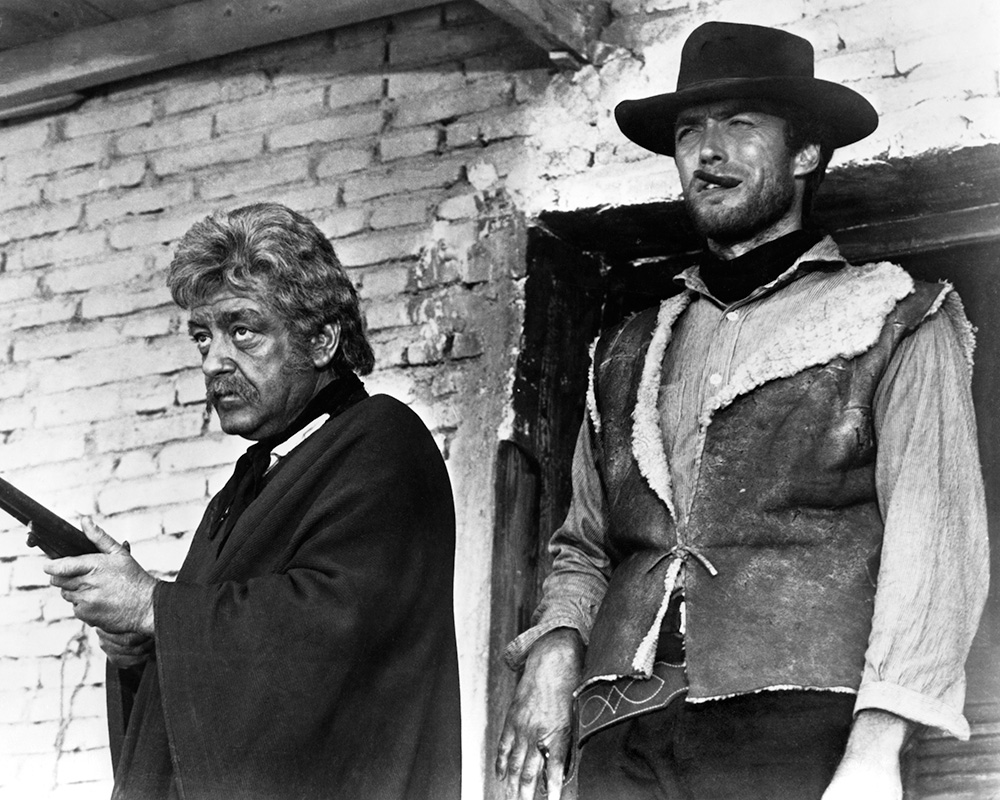
(Silver Screen Collection / Getty Images)
Even as the American appetite for westerns began to wane after a half century of popularity, the Europeans still couldn’t get enough of our cowboys and Indians. Thus, in the early 1960s, the spaghetti western was born in all its lurid, Technicolor glory.
Many film genres reflect the narrowly defined cultural concerns of single nations or regions. Genres like Japanese salaryman films about middle-class office workers and Mexican comedia ranchera films, for example, tend not to travel well. But the border-crossing spaghetti westerns played everywhere. The drama of the American frontier, it seems, had global appeal.
It all started when writer-director Sergio Leone, the preeminent figure in the subgenre, wanted to make an Italian western based on Akira Kurosawa’s samurai masterpiece Yojimbo (1961), which was itself based on American pulp genius Dashiell Hammett’s superb 1929 novel, Red Harvest, adapted in 1942 under the title The Glass Key. Wildly influential to this day, Red Harvest has been adapted and readapted countless times — often without credit. A line from the same novel would later inspire the title for Joel and Ethan Coen’s first film, Blood Simple (1984), as well as a good deal of the plot, tone, and thematic concerns of their magisterial neo-noir Miller’s Crossing (1990). The Bruce Willis flop Last Man Standing (1996) is officially a remake of Yojimbo, and Rian Johnson’s nicely done teenage neo-noir indie Brick (2005) also harkens back to aspects of Red Harvest.