Turn On, Tune In, Cash Out
In the 1960s, psychedelics seemed to promise social progress. Today their proponents are all about self-optimization under capitalism.
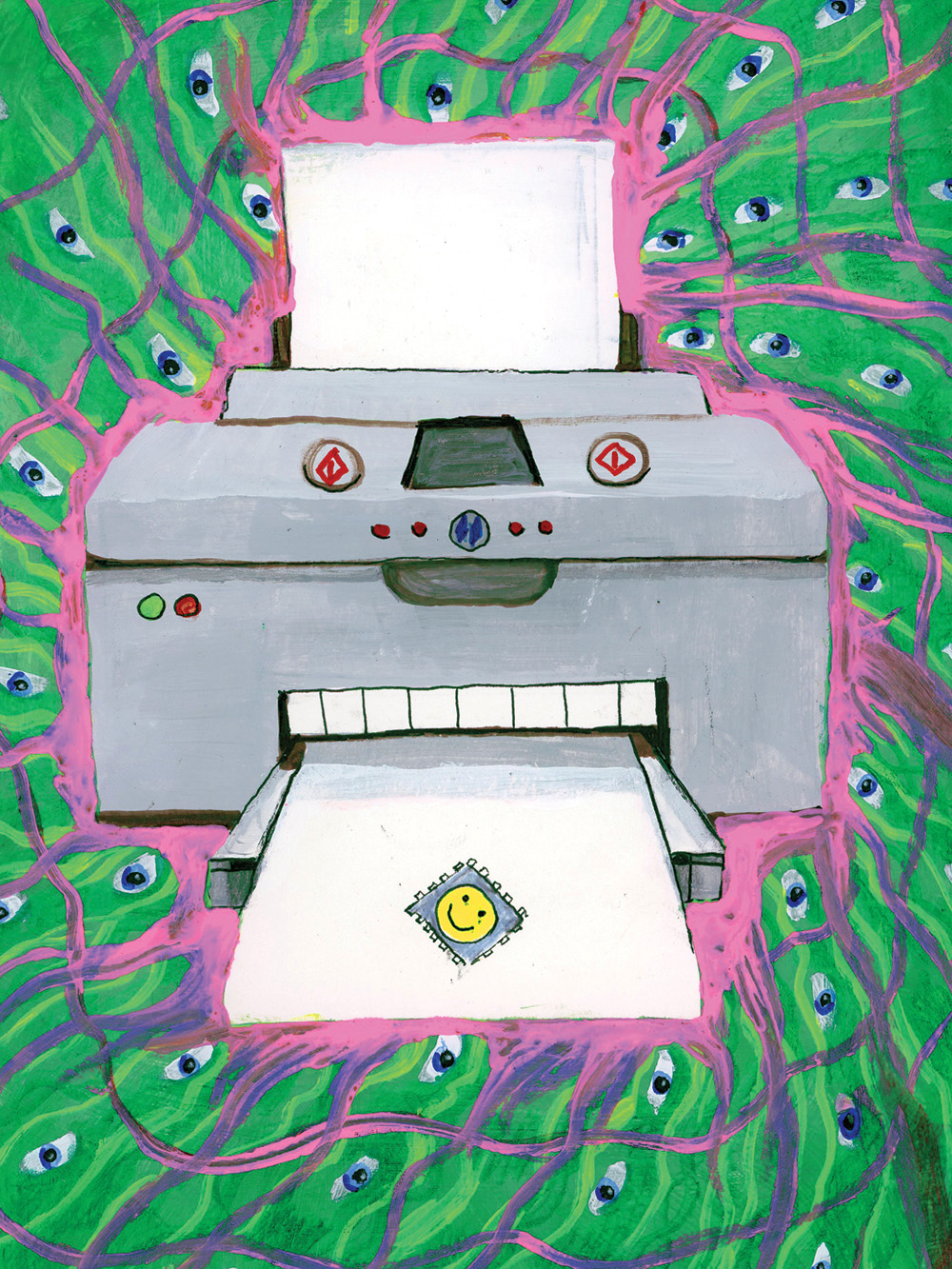
Illustration by Brandon Celi.
Timothy Leary became an apostle of psychedelia not by promising a good time but by preaching a new road to socialism — not a revolutionary or evolutionary one but a pharmacological one. For Leary, “The cause of social conflict is usually neurological. The cure is biochemical.”
In the late 1960s, belief in the socially progressive effects of using drugs like mescaline, LSD, and psilocybin was quite prevalent. No doubt there were plenty of thrill seekers, young people out for a lark, but all of the key psychedelic visionaries of that time — from the yin of Aldous Huxley to the yang of Ken Kesey — thought they were doing something for the good of society, something that would end war, exploitation, and violence and usher in a new era of peace, love, and understanding.
Some thought of the coming transformation along explicitly elitist lines; the mysterious Captain Al Hubbard, known as the Johnny Appleseed of LSD, reportedly introduced a number of Fortune 500 CEOs to the hallucinogen guided by the thought that change would come from the top. But most of these acolytes thought of the drug as a mass phenomenon; turn on a generation of young people, and they’re bound to demand more from life than what postwar capitalism had to offer. What Berkeley Free Speech Movement veteran Michael Rossman said of marijuana applied to psychedelics too: “When a young person took his first puff of psychoactive smoke, he also drew in the psychoactive culture as a whole, the entire matrix of law and association surrounding the drug, its induction and transaction.”