The Politics of Life and Death
Rising life expectancy has long been seen as proof of capitalism’s success. But it was socialists who insisted on investment in health and well-being.
For the materialist grounded in real human experience, few indicators are more telling than the statistics of life and death. They serve as the ultimate reality check on every other measure of well-being we might place confidence in — from income inequality to self-reported happiness — because the length of life lays bare the generic condition of human welfare.
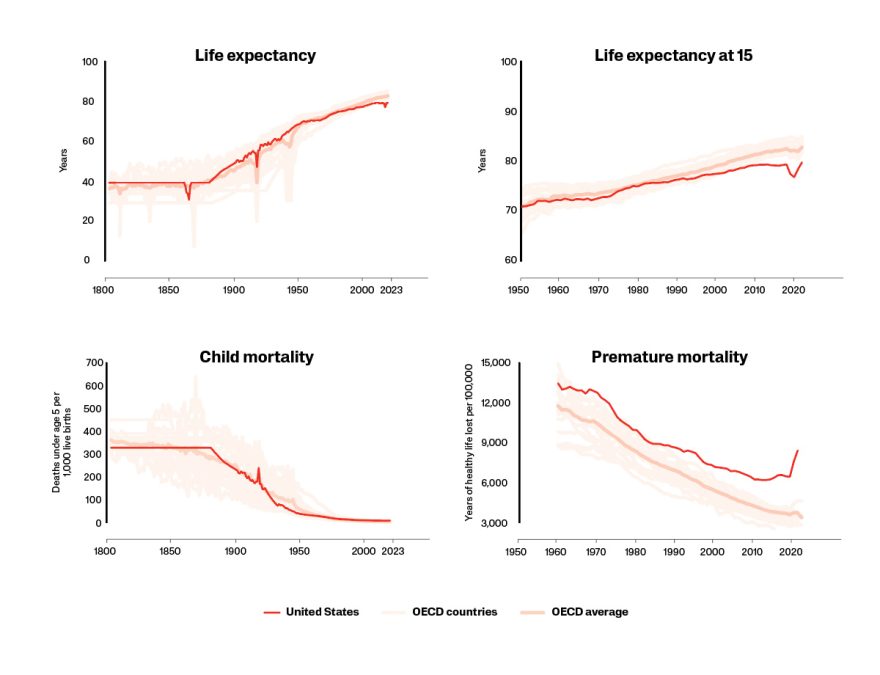
So what does the evidence say? Over the longue durée of capitalist history, the defining trend has been a massive improvement in health. There must have been something underwriting these trends to endure so long. Indeed, two centuries of improvements in wages and standards of living; reductions in oppression and material deprivation; expanding leisure time, social expenditures, and investment in health and sanitation all yielded lasting tangible gains. Many of these advances owe to socialistic policy, which translated into rising life expectancy, the most vital of all statistics. Life grew longer and healthier; death grew less untimely.