The Party of American Capital
The Democratic Party has become, improbably, the preferred party of the elites.
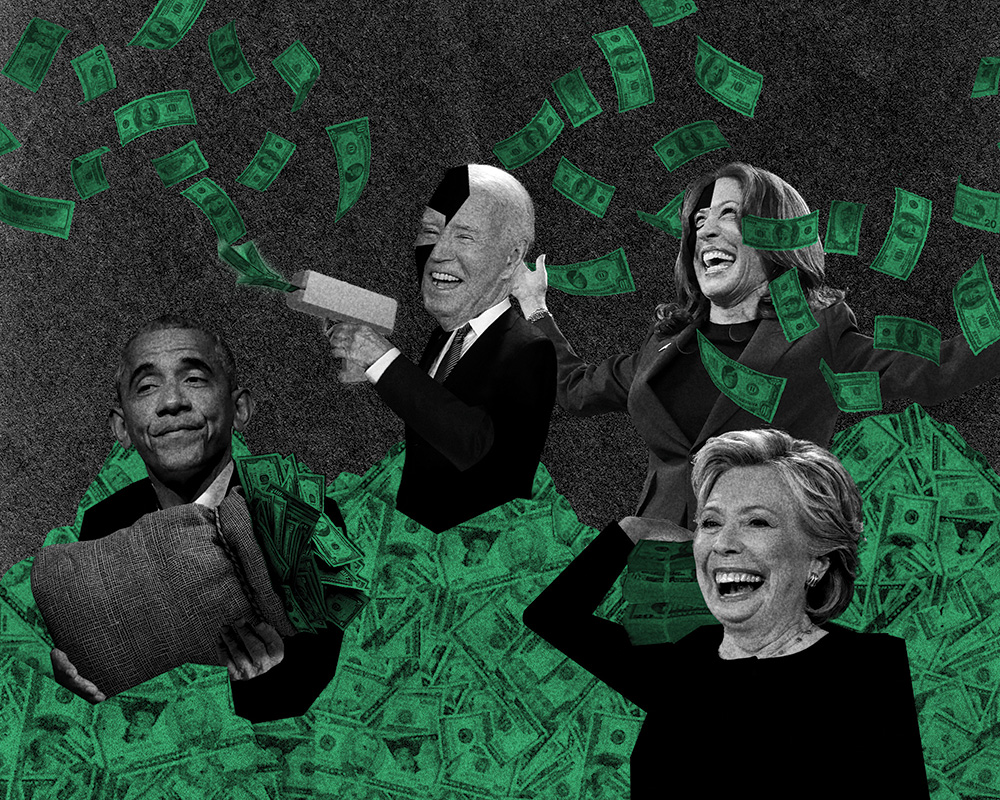
Illustration by Trevor Davis.
Shortly before the 2000 election, BusinessWeek magazine introduced a new kind of investment vehicle to the American public. Several firms, the article revealed, had constructed funds whose performance would be highly correlated with the outcome of the election. Customers could buy into a George W. Bush or an Al Gore fund, each of which was loaded with stocks and derivatives that would jump in value if its candidate won.
The composition of the funds is informative. The Bush ones were loaded with everything from Microsoft to financial firms, tobacco companies, and defense contractors — a substantial portion of the American economy. The Gore funds, meanwhile, were a bit thinner — their leading components were Microsoft’s competitors, environmental consultants, and pharmacy benefit managers. To make the Gore funds viable, finance companies had to fill them up with short positions on the Bush fund stocks. The upshot of “the Bushdaq vs. the Goredex,” as BusinessWeek put it, was that Bush could expect a lot more support from business than even as orthodox a New Democrat as Gore.
Two decades later, the situation is quite different. Now the Democrats are a fundraising juggernaut, and the Republicans scramble to keep up. In the Donald Trump era, the Democrats have become, improbably, the preferred party of American capital.