The Lost Future of Socialism
British Labour politician Anthony Crosland’s The Future of Socialism was once the bible of revisionist social democracy. Looked at today, it is far from prescient but surprisingly compelling.
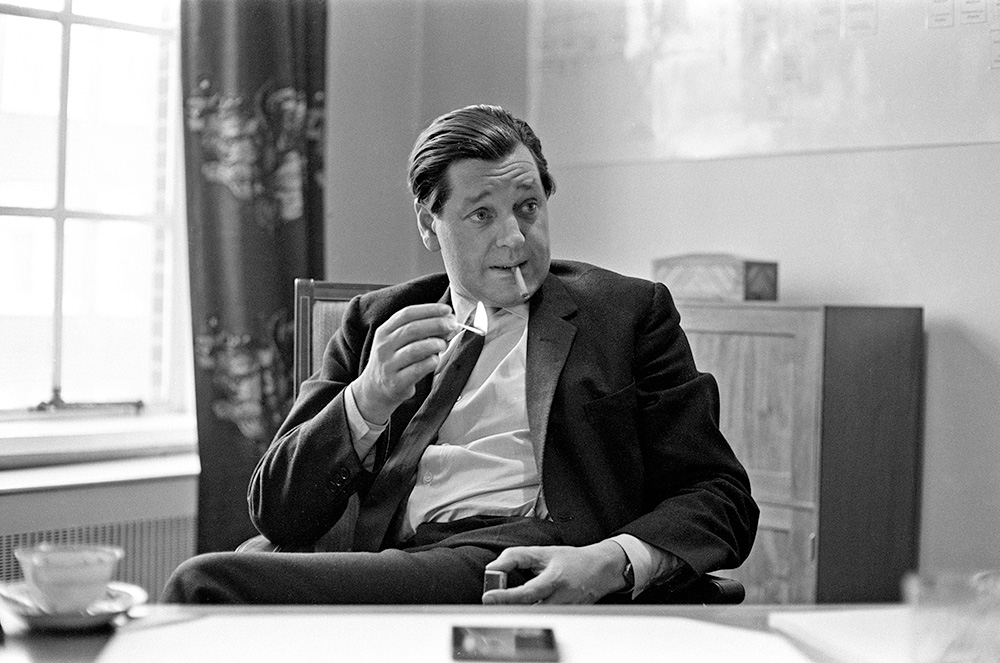
(Hope / Mirrorpix / Getty Images)
In the center of the English industrial port of Grimsby is a public library of great richness. From a distance, the building appears to be a simple concrete box, but go up close and you will notice five human figures, representations of “the Guardians of Knowledge,” carved into the facade. At the corner, an abstract modernist relief sculpture runs the full height of the building. A polychrome mosaic of the town’s historic seal is set into the entrance. Inside, the plate-glass windows bring light into the reading rooms and shelves, and delicate mid-century modern chandeliers look over abstract tapestries hanging from the walls. Without being excessive or kitsch, it’s both a public building and a genuinely pleasurable space — a model of modern socialist provision. A wood panel commemorates the building’s opening in 1968 by its Labour member of parliament, Anthony Crosland.
Crosland was once the doyen of the Labour’s revisionist right wing and the nearest thing it had to an intellectual. The Future of Socialism, which this scholar turned politician published the year after losing his first parliamentary seat in the 1955 general election, became a bestseller. It influenced those who wanted to drop the party’s commitment to nationalizing industry, enshrined in Clause IV of the Labour Party constitution. The dreams of these revisionists would only be achieved forty years later by Tony Blair’s New Labour.
The easiest thing to say about this once-famous book is that it was wrong. The class war was not over; the postwar settlement of full employment, high taxation, and strong welfare states was not permanent; and capitalism had not been reformed out of existence. But socialists should be wary of judging history with the power of hindsight — how many Marxists’ predictions from the same period bear closer examination? Reading Crosland today can tell us very little about postwar capitalism, but it can tell us a surprising amount about socialism.