Die Linke’s Missing Link
Germany’s Die Linke is now a party for the highly educated and middle-income. While its new leadership promises to rebuild the party’s working-class roots, it won’t be easy.
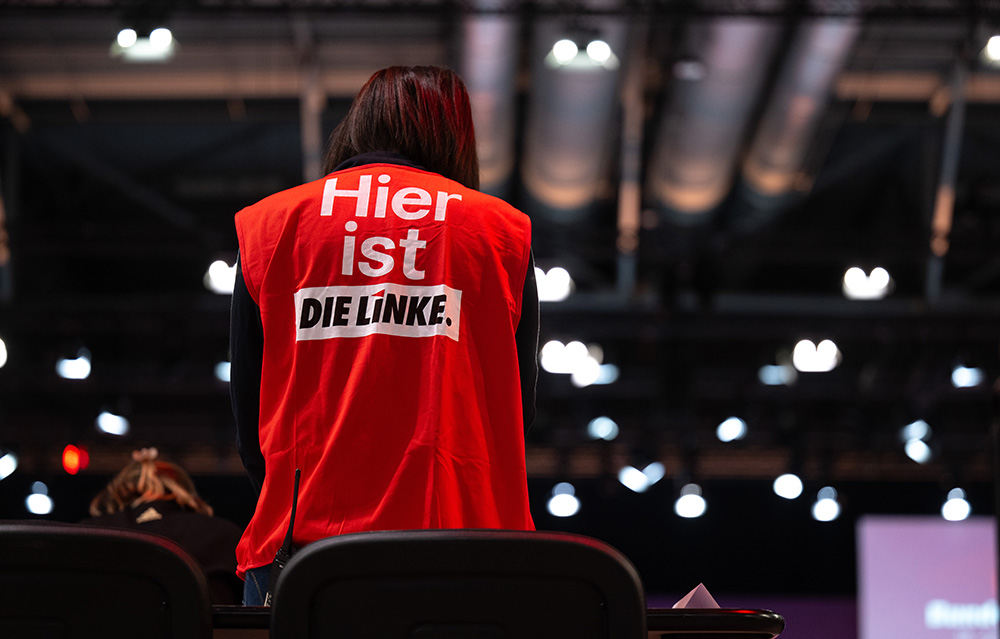
(Hendrik Schmidt / picture alliance / Getty Images)
Germany’s left-wing party Die Linke is in decline, and fundamental change is needed if it is even going to survive. Its weakness was brought into sharp relief during the 2021 elections, when it suffered a catastrophic defeat, falling under 5 percent support. If it weren’t for a few victories in local contests, Die Linke would have fallen out of the federal parliament.
What exactly is happening to the party? In a contribution for the Rosa Luxemburg Stiftung, Die Linke’s think tank, social scientist Carsten Braband argued that the Left’s electorate hasn’t just shrunk but has also moved decidedly into the middle class. Die Linke’s defeats, then, aren’t just due to unfavorable circumstances but to its own strategic orientation.
Facts, Not Vibes
At the recent party conference in Halle in October, mentions of “class,” “class politics,” and “class perspective” earned roaring applause. But among the party intelligentsia, the question of whether Die Linke is still rooted in class is a hotly debated topic. This is fundamentally an empirical question, so it’s surprising that there is such a slew of answers. On closer inspection, it becomes clear that this controversy is in large part due to a reliance on different data sets, but also because the various sides of this debate use disparate conceptual frameworks.