A Move Against Modi
We report from Kashmir’s first vote since the 2019 crackdown, where economic difficulties and a longing for autonomy drove support for an anti-Modi alternative.
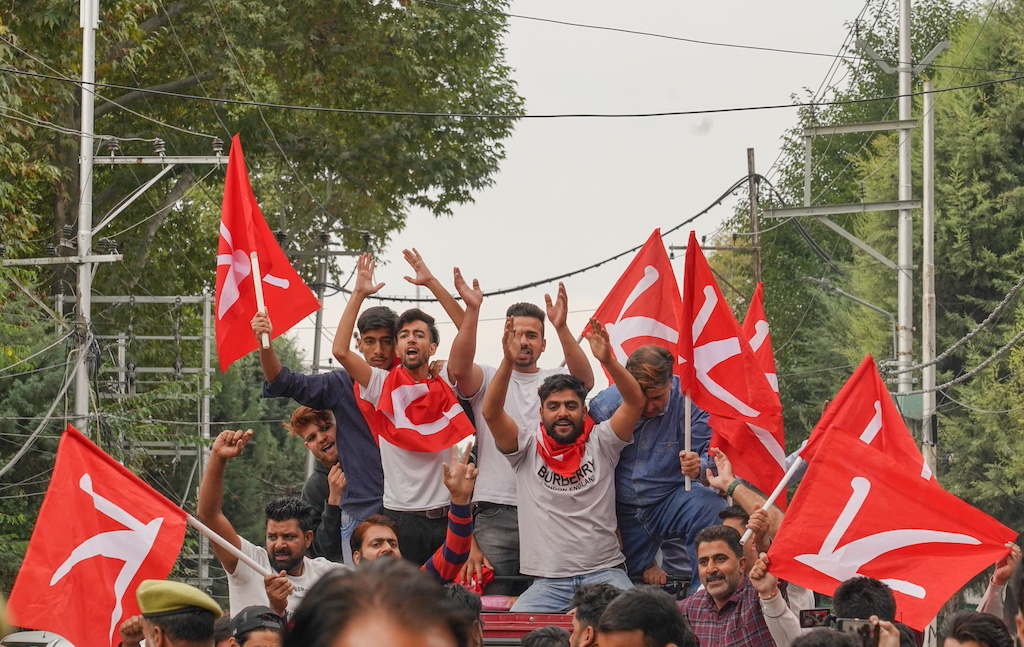
Supporters of the National Conference (JKNC) party shout slogans as they celebrate in Srinagar, the capital of India-Kashmir. (Credit Sajad Hameed / Jacobin)
Previously arrested several times for “anti-India” activities, twenty-three-year-old Ikhlas Amin Bhat, a resident of Anantnag, campaigned as an independent candidate in Kashmir’s first legislative assembly election in ten years. “My family has always boycotted polls, but this time we showed up, driven by the hope for real change in the region. We have pinned our faith on Indian democracy,” he said, sharing photos from the campaign trail.
He was among the many voters and campaigns that dealt a blow to Delhi through the election of a national assembly with a near majority for the center-left and regionalist Jammu and Kashmir National Conference (JKNC).
Bhat’s participation in these elections is symbolic of a broader shift in Kashmiri political engagement. The late 1980s witnessed the rise of a militant insurgency in Kashmir, with thousands of young Kashmiris taking up arms against Indian rule. This insurgency sparked decades of repression, during which human rights violations became the norm.