The Rise of a New Right
David Austin Walsh, a historian of American conservatism, talks to Jacobin about J. D. Vance, Project 2025, and the New Right’s political theory.
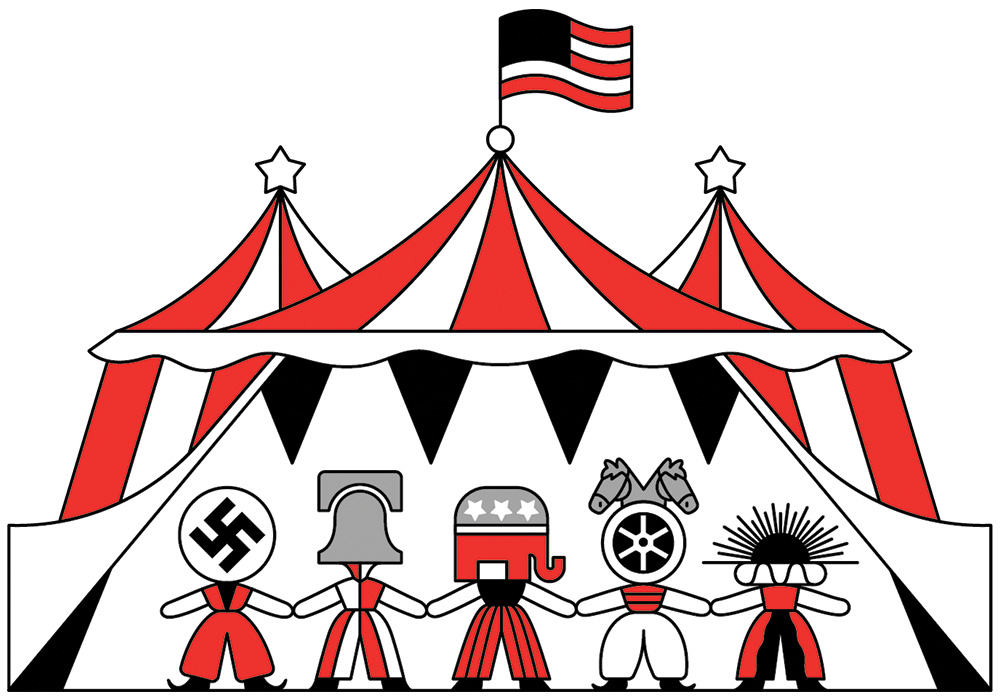
Illustration by Rose Wong
Editors
What do you think is at the root of conservatism, both historically and in its current form today?
David Austin Walsh
I think Corey Robin was basically right in The Reactionary Mind: the fundamental premise of modern American conservatism as a political project is the defense of hierarchy. That was the heart of the project at its birth in the 1930s — and one of the many reasons why, from the beginning, conservatism’s big tent even included fascists. Of course, it’s complicated given that American conservatism is really a coalition of diffuse factions with distinct material and ideological interests, not all of which align. We just saw this at the Republican National Convention, where you had venture capitalists speaking alongside self-proclaimed populist J. D. Vance and the head of the Teamsters. In general, though, conservatism holds up “bossism” as its guiding principle.
Editors
Did the surprising resurgence of socialism and mass protests from the Left in the 2010s play a role in summoning back radicalism on the Right?
David Austin Walsh