The Art of Being Wrong
Wyndham Lewis was perhaps the most talented English painter and novelist of the first half of the twentieth century. How did he become best known as a fascist?
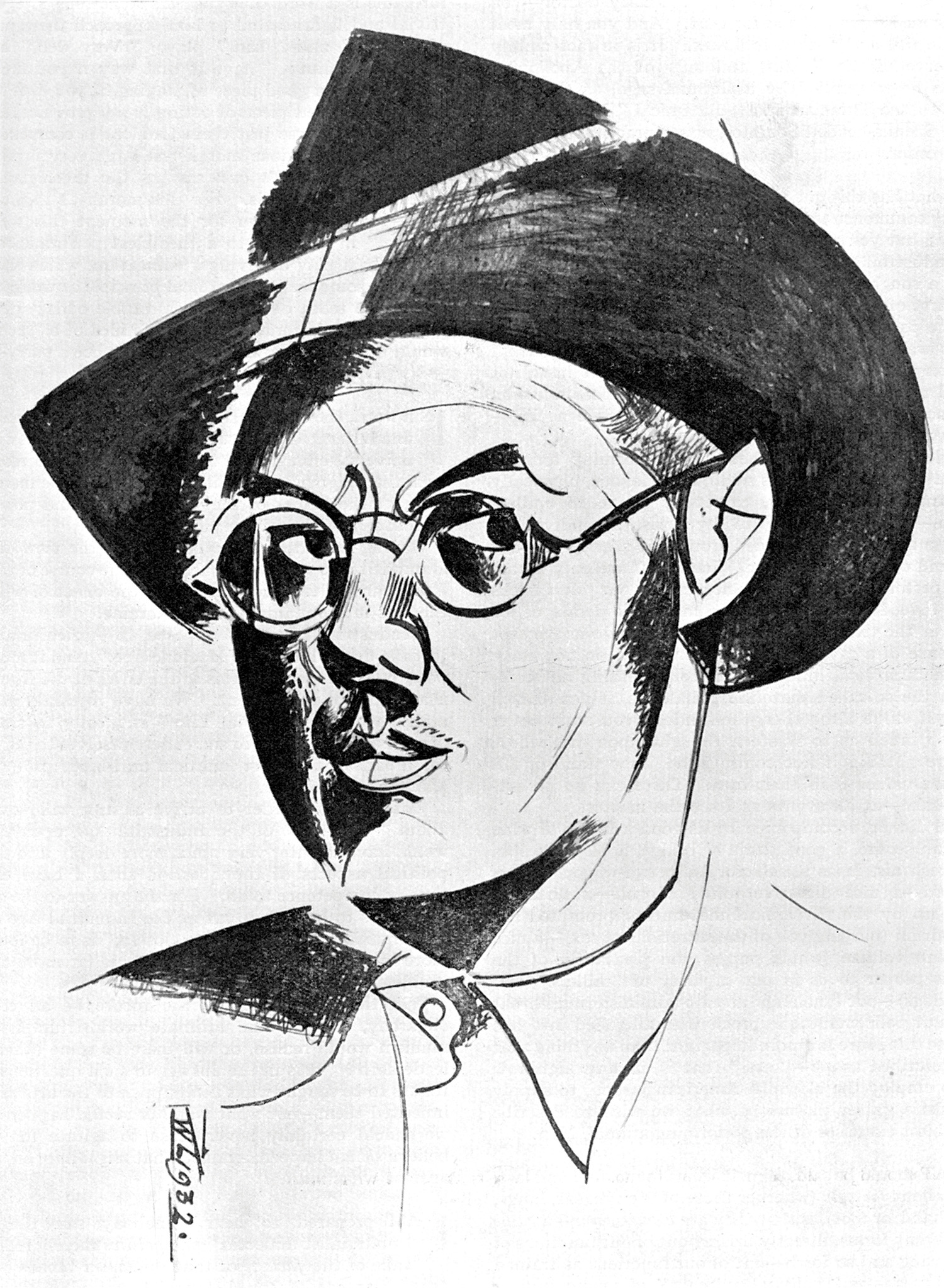
(Bridgeman / Getty Images)
It would be uncontroversial to state that the rise of the far right over the last decade has not resulted in particularly great art. Since the 1970s, nationalists and authoritarians have tended to prize either neoclassical kitsch or — for the street-fighting wing — fourth-rate punk rock.
But a hundred years ago in Europe, there was a distressing wealth of literary and artistic talent on the extreme right. Between World War I and World War II, varieties of fascism enraptured the American poet Ezra Pound, the Irish poet W. B. Yeats, the Italian poet-propagandist Filippo Tommaso Marinetti and his futurist movement, the French novelist Louis-Ferdinand Céline, the Spanish surrealist artist Salvador Dalí, the Norwegian writer Knut Hamsun, the Romanian essayists Emil Cioran and Mircea Eliade, and Germans like the painter Emil Nolde and the philosopher Martin Heidegger, to name just a handful. In interwar Britain, the greatest artist to be found expounding repugnant political philosophy was the painter, writer, and self-styled “Enemy” Wyndham Lewis.
Most of these figures are remembered as artists first and fascists second. Pound, for instance, is primarily recalled as a great poet more than as an unrelenting and unrepentant Nazi, which he also was. But Lewis is often recognized first for his politics. One of the more sympathetic studies of him, the Marxist philosopher Fredric Jameson’s Fables of Aggression, is simply subtitled The Modernist as Fascist. And as much as the Left since the 2000s has liked to construct its own usable pasts out of the interwar avant-garde — the plays of Bertolt Brecht, the art and design of the Soviet constructivists, the architecture of Red Vienna, say — so, too, has the resurgent far right. One of the most successful groups on the Italian far right in recent years has been CasaPound, named after the poet. Search for some of the more notorious, suppressed books of some early twentieth-century writers and you’ll find new, out-of-copyright editions published by small far-right presses. This is certainly the case with Lewis, whose nastiest books are readily available from such sources. But how Lewis became a fascist — and how he tried to escape being one — is a story that might elucidate how fascism managed to appeal to people who, one might think, would know better.