We Who Plowed the Prairies
Pastoral visions of farmwork don’t square with the reality of what it means to live in rural areas today.
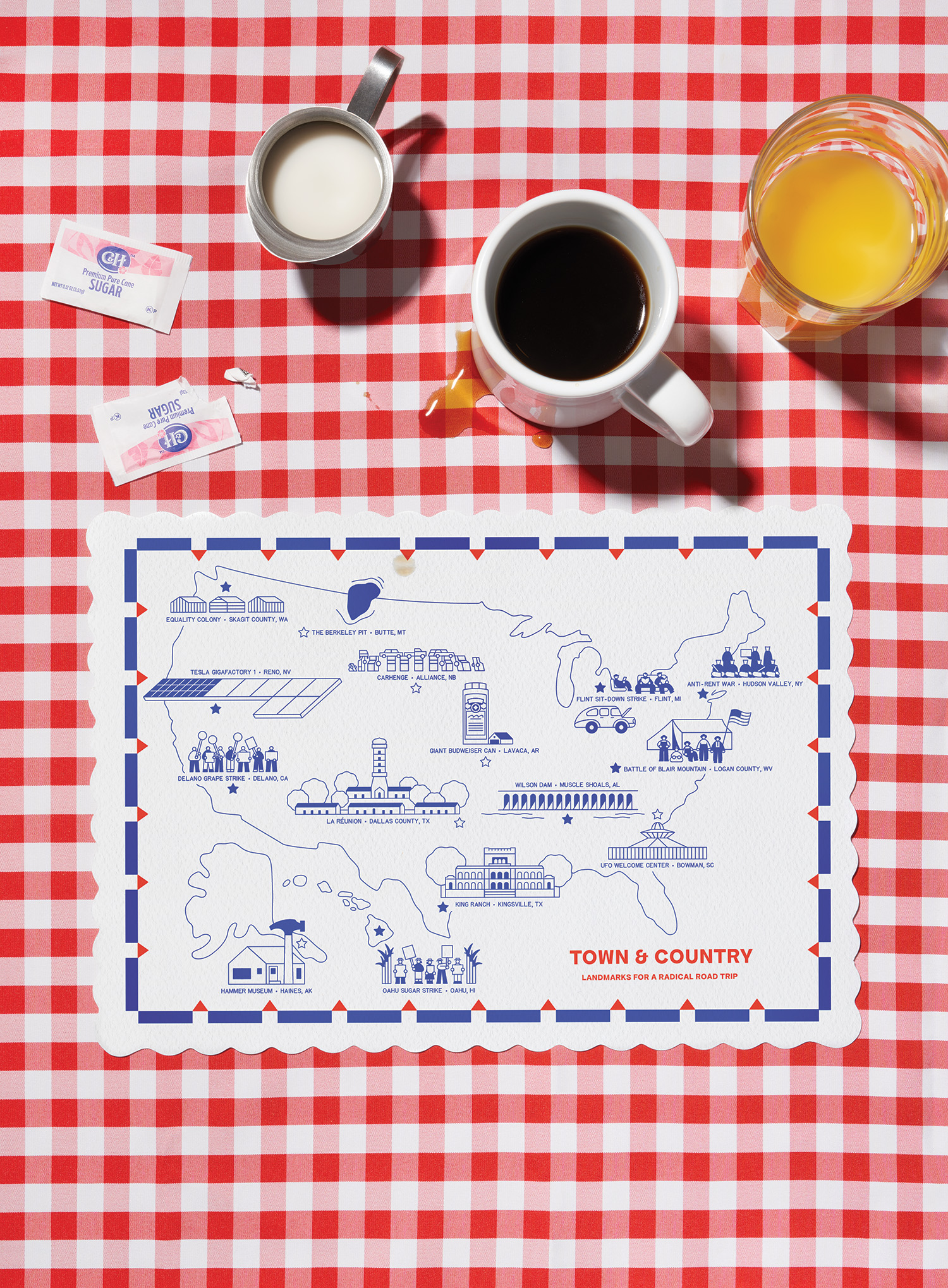
Photo by Margeaux Walter. Illustration by Rose Wong.
Golden bales of hay towered twenty feet or more above the crowd’s heads as protesting farmers rumbled up the Champs Élysées in their tractors. The Eiffel Tower was partially left in the shade, though its iron lattice peeked out from the side of the haystacks, as if catching a furtive glance at the peasants marauding through the tourist center. The image of effete Paris under siege by the honest sons of the soil soon went viral.
This February, as farmers demonstrated against cuts in diesel subsidies, European Union–proposed emissions caps, and low prices for their produce, it seemed as if their tractor convoys had literally taken over Europe’s main cities. Those whose very labor meant mud-spattered clothes and dirty fingernails were now invading the spaces usually reserved for the filthy rich.
This was, in many ways, an illusion. The iconic picture that excited the most attention online was itself AI-generated. Still, many whose contribution to humanity is decidedly immaterial saw the farmer protests as the very image of authenticity. Elon Musk responded earnestly to news of Dutch farmers protesting green quotas, as he ventured that “farming has no material effect on climate change.” How crazy that elites are pushing their environmentalist dogmas on people who actually live in the countryside! Emmanuel Macron’s government — usually eager to truncheon protesters into submission — pleaded for “dialogue” with the farmers who were dumping manure on the steps of its own offices.