Southern Strategy Soundtracks
Country music became the sound of Richard Nixon’s coalition in the early 1970s — but it has always been too unruly to be fully co-opted by a reactionary agenda.
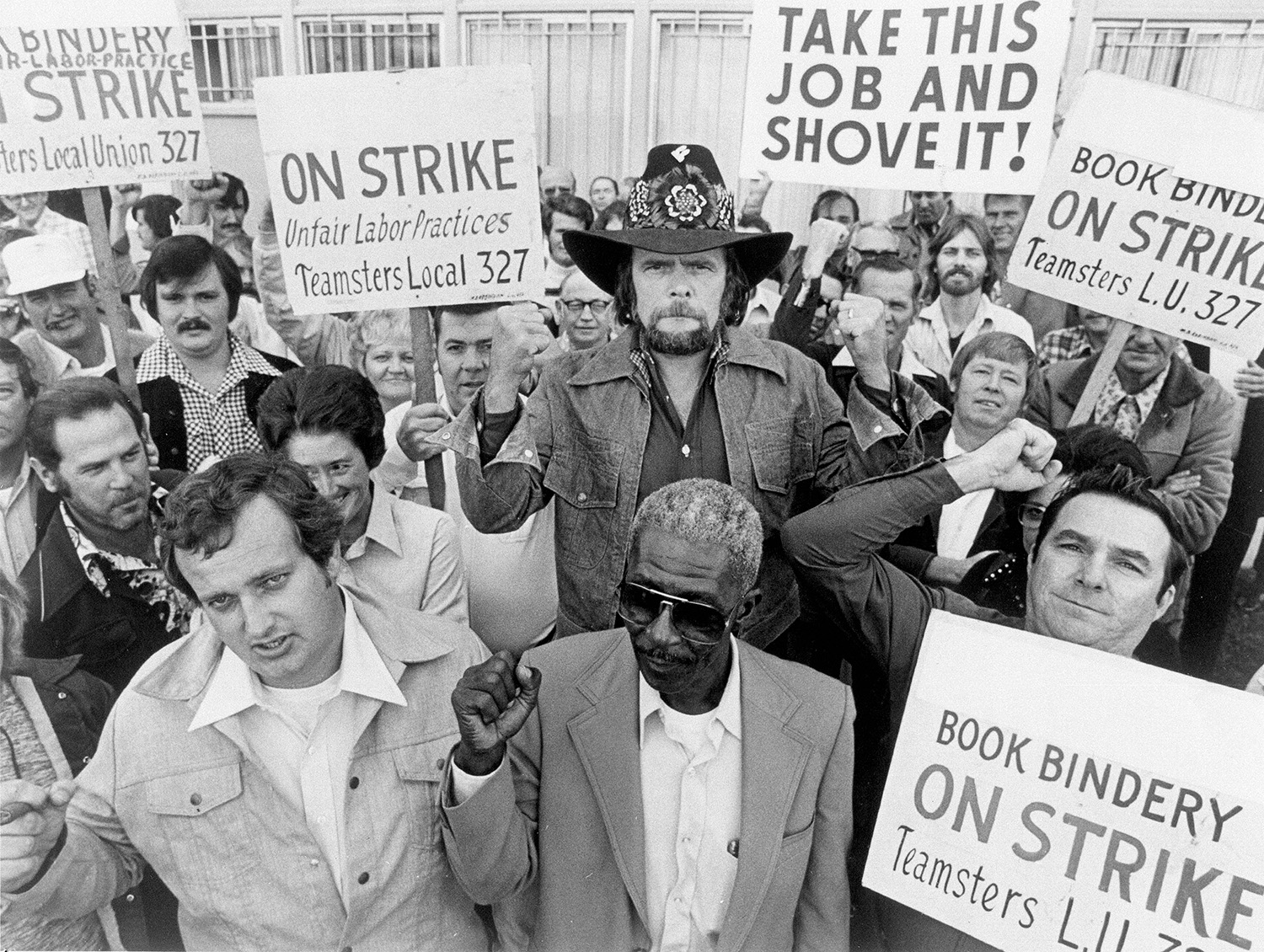
(Michael Ochs Archives / Getty Images)
These days, country music and reactionary politics seem to go together like grits and gravy, from Lee Greenwood’s “God Bless the USA” in 1984 to Toby Keith’s post-9/11 “Courtesy of the Red, White and Blue (The Angry American),” right up to Jason Aldean’s menacing 2023 MAGA hit “Try That in a Small Town.” The likes of Oliver Anthony’s “Rich Men North of Richmond” are hailed by the media as the voice of the “white working class” — but just as that phrase should always give the Left pause, so should concepts of country’s intrinsic conservatism.
Country’s hybrid of folk and blues was first segregated as “hillbilly” music for the rural South back in the 1920s. Undergirded by the New Deal, grounded by realist storytelling, and gilded by wordplay, country was working-class art, music made by and for farmers, truckers, and housewives. Back when the Steel Belt was oiled and gleaming, country crossed over to the mainstream with its everyday poetry of loss (Patsy Cline’s 1961 “Crazy”), poverty (Roger Miller’s 1965 “King of the Road”), work (Glen Campbell’s 1968 “Wichita Lineman”), and family (Bobbie Gentry’s 1967 “Ode to Billie Joe”). Amid the down-home detail, “Billie Joe” offered a subtle plea for empathy. Similarly, Jeannie C. Riley’s 1968 “Harper Valley PTA” was an exposé of small-town hypocrisy amid sweeping social change, while Campbell’s “Galveston” was a discreet anti–Vietnam War protest. By 1968, the country-counterculture crossover was two-way, with Bob Dylan’s John Wesley Harding, the Byrds’ Sweetheart of the Rodeo, and the Band’s Music From Big Pink emblematic not of a countercultural swing toward conservatism but of its preoccupation with a precapitalist pastoral.
With its student occupations and race riots, 1968 was the decade’s dividing line, indicated by Richard Nixon’s narrow presidential election victory and segregationist candidate George Wallace’s aggravation of white conservative resentment. If Wallace’s campaign anthem, Tammy Wynette’s “Stand by Your Man,” merely expressed anxiety at the social changes of the 1960s, Merle Haggard’s 1969 “Okie From Muskogee” articulated outright anti-hippie antipathy. “We don’t take our trips on LSD / We don’t burn our draft cards down on Main Street / ’Cause we like livin’ right and bein’ free.” While “Okie” was a parody of parochial attitudes, its success prompted Haggard to play to the redneck gallery: on 1970’s “The Fightin’ Side of Me,” Americanism is authoritarianism — if you don’t like the fighting in Vietnam, Merle’ll fight you. With Nixon’s Southern strategy deploying Wallace’s culture-war tactics to pry white workers from the clutches of the New Deal coalition, Haggard’s concurrent “Workin’ Man Blues” expresses a shift in class consciousness. There’s no expectation of change or sense of agency for the working man her — just the consolation of identity, alcohol, and country music. Similarly, Loretta Lynn’s 1970 song “Coal Miner’s Daughter” expresses pride in her family’s poverty, not anger — the material now eclipsed by the cultural amid conservative backlash.