Out of the Shtetl and Into the Heartland
What happened when assimilated German Jews tried to settle their Eastern European brethren in rural America?
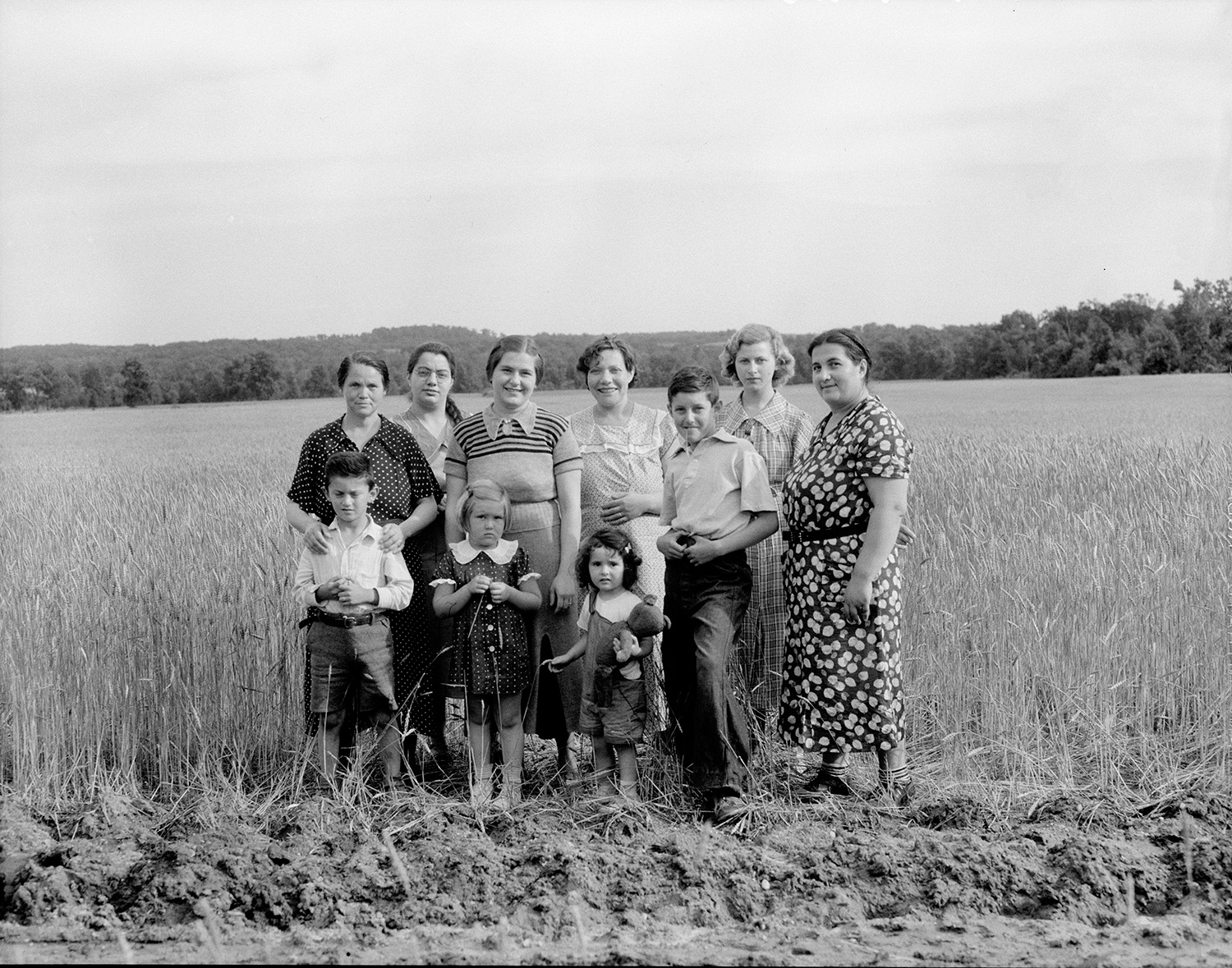
(Heritage Art / Heritage Images / Getty Images)
Abraham Cahan arrived by steamship from Vilna to Philadelphia in June 1882. From there he was shipped by train and ferry to Castle Garden, an immigration depot in Manhattan’s Battery Park. He would later become the editor of the Yiddish journal the Forward and a towering figure of New York socialism. But on his arrival, he saw the city only as a temporary stopover. There he would rendezvous with his revolutionary friends who had also fled the Russian Empire to avoid persecution after the assassination of Tsar Alexander, and they would go on to form communist agricultural colonies in rural America. These, he said, “should be an example to the world of what mutual help could do.”
From Castle Garden, Cahan crossed State Street to the Hebrew Emigrant Aid Society, where he was interviewed by a German Jewish aid officer. Contrary to the “mutual help” of his imagined commune, in America he found an aid group that was patronizing by design, filtering Jewish immigrants through its New York offices to exert a civilizing influence on arrival. Later, in his memoirs, Cahan reflected on his uneasy meeting with the officer: “I departed with the strong impression that he was a heartless bourgeois. And he probably suspected that I was a wild Russian. That is what they called us immigrants at that time, sometimes even to our faces.”
Ethnic obligation steeped in class antagonism — this was typical of the German-Russian encounter in Jewish New York. Cahan was an early immigrant among the 2.5 million who would flee Eastern Europe for the United States between 1881 and 1924, joining several hundred thousand German Jews who had mostly immigrated in the mid-century. At the time of Cahan’s immigration, prominent German Jewish organizations believed in restrictive immigration policies. The United Hebrew Charities even “forwarded” a small portion of immigrants back to Europe, making many of them pay their way on cattle boats — its 1887 annual report chides “the thoughtless immigration of people unable to work.” In subsequent decades, affected by reports of pogroms, German Jewish leaders changed tack. They became ardent lobbyists of mass immigration, which was under threat from nativists. They did not want their Eastern European Jewish kin to suffer under the tsar. But they were not so keen on their presence in New York either.