An Unusable Past
Nicolas Grospierre’s photographs of collective farm buildings in Israel and the Baltic states reveal these communities’ utopian dreams — and their uncomfortable colonial underpinnings.
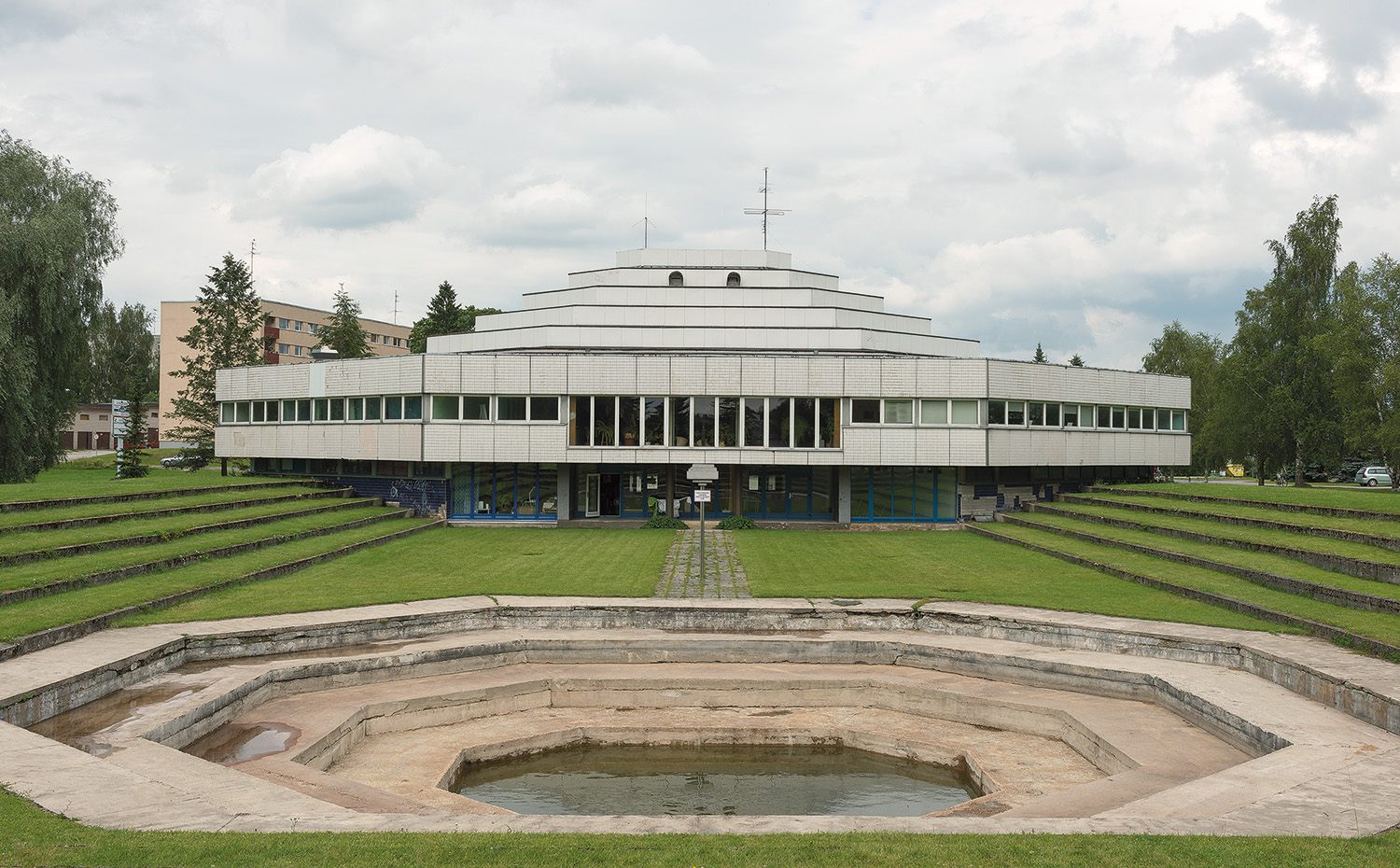
(Photography by Nicolas Grospierre)
One thing that anyone with even a minimal understanding of twentieth-century communism knows is that collective farming was a disaster. In the early 1930s, the Soviet collectivization project helped create a horrendous famine that killed millions. In the late 1950s, a similar project under China’s Great Leap Forward led to an even greater catastrophe, causing arguably the single most lethal famine in recorded history.
There are, however, two places where collective farms have found economic success: Israel and the Baltic states of Estonia, Latvia, and Lithuania. In each of these countries, collectives were able to produce far beyond their own subsistence and offer a relatively high quality of life, investing their surplus in impressive public buildings for the farmworkers.
The Polish French photographer Nicolas Grospierre’s recent book, A House for Culture, documents the collective buildings that stood at the center of these farms — both the Baltic kolkhoz and the Israeli kibbutz. These are extremely rare rural examples of the typology of the house of culture, an architectural form that began in the late nineteenth century with the likes of the Maison de Peuple in Brussels. These buildings held concerts and plays; housed public activities, meetings, and crèches; and had cafés and dining rooms attached — the sort of concrete monuments to the world of labor that socialists tend to be understandably nostalgic about today.