A Twenty-First-Century Horse Opera
Yellowstone sells a fantasy of rural America — and conservatism — no different from any other prime-time soap opera.
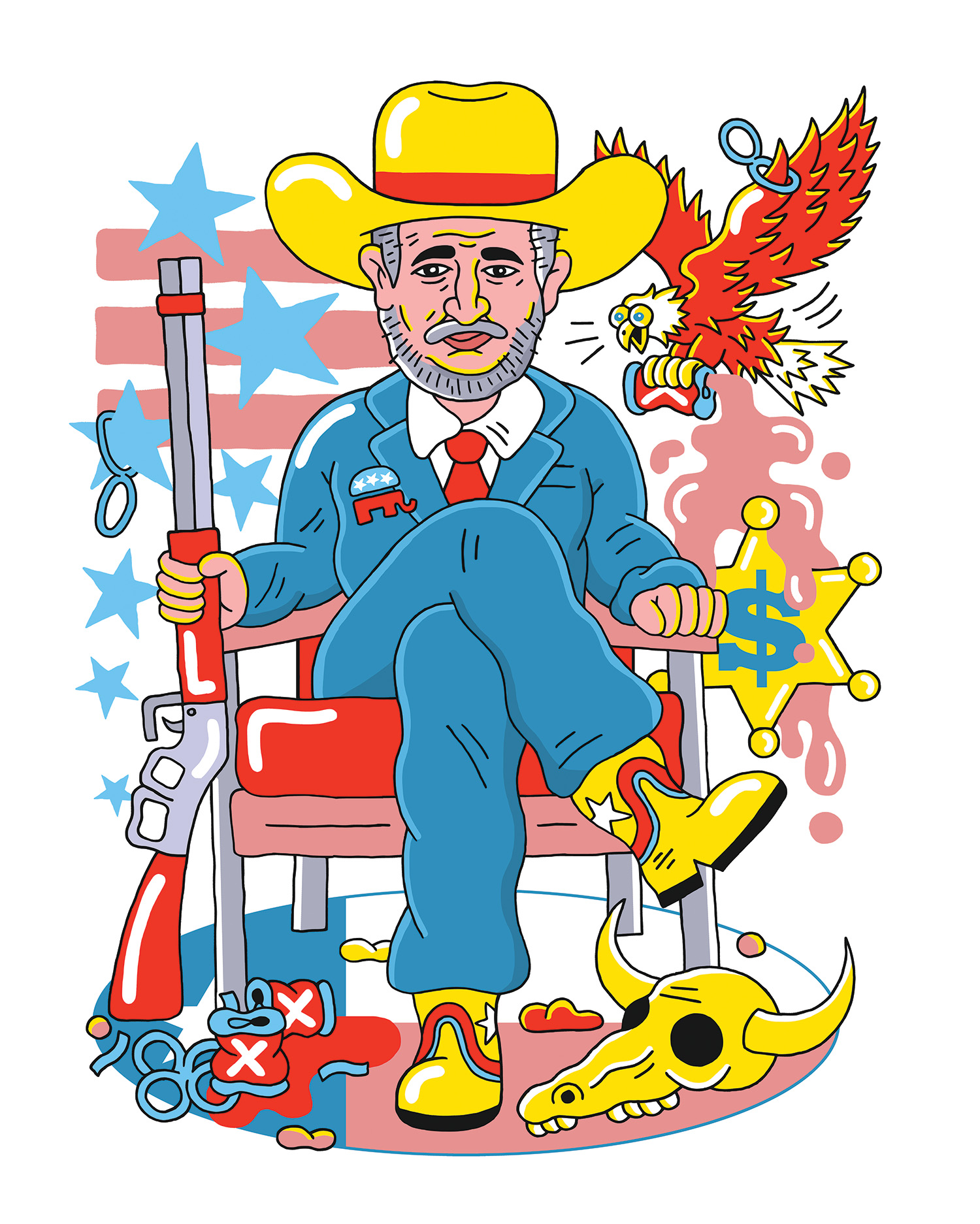
Illustration by Sam Taylor.
“This is America,” John Dutton growls at tourists in an early episode of Yellowstone. “We don’t share land here.” He’s got a point. Contrary to the famous Woody Guthrie song, much of this land isn’t made for you and me; it’s made for men like Dutton — rich guys who inherited property and will do anything to keep it.
The fact that the patriarch of the Paramount Network’s smash hit Yellowstone is often perceived as some kind of working-class hero reveals just how twisted today’s class analysis is and hints at how politicians — especially conservatives — exploit it.
Class has been almost completely decoupled from the means of production and confused with cultural and aesthetic signifiers. These days, popular conceptions of the American elite have an urban bias. We default to thinking of the owning class as globe-trotting cosmopolitan types who populate big cities, tony enclaves in the Hamptons, or sprawling California estates. They’re the jerks who hop in their BMWs and Teslas to commute to corner offices in glittering skyscrapers, eat fancy nine-course meals prepared in Michelin-starred restaurants, and sit in the luxury boxes at professional sporting events.