The Junta and the Monks
Buddhist nationalism has been a central tenet of Myanmar’s politics since independence. A new alliance against the military dictatorship could finally change things.
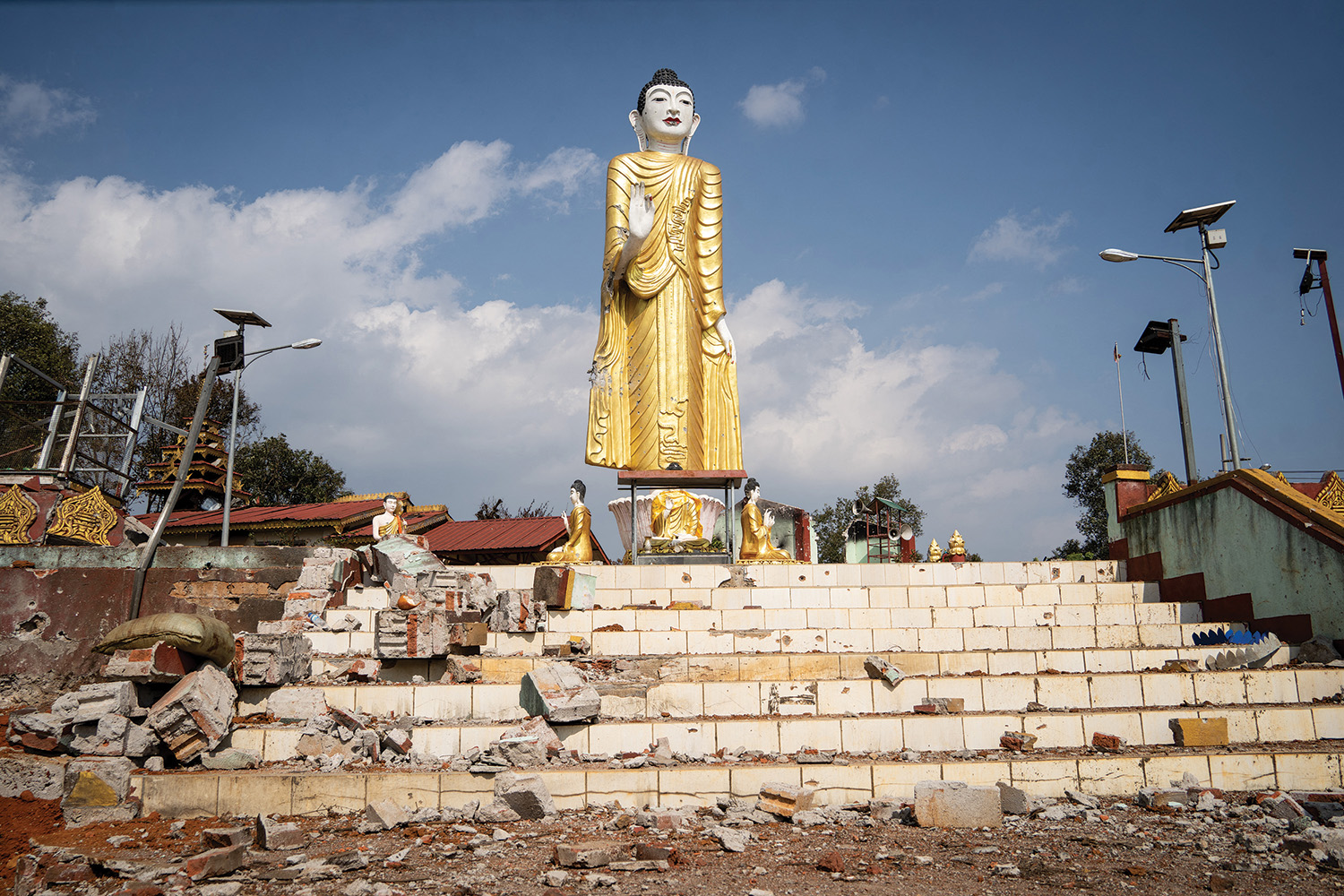
(STR / AFP / Getty Images)
In 2007, mass protests overtook Myanmar, sparked by the military dictatorship’s abandonment of fuel subsidies. Grievances regarding high commodity prices soon gave way to full-throated calls for democracy.
Buddhist monks took a starring role in the protests, marching through Yangon and Mandalay in the thousands with alms bowls upturned, symbolizing their rejection of material support from the military regime. That earned the movement the title “Saffron Revolution.” The rebellion arguably hastened the eventual power-sharing agreement that briefly brought democracy back to Myanmar.
That short experiment in democracy ended on February 1, 2021, when the country’s armed forces, known as the Tatmadaw, raided Congress and took Aung San Suu Kyi and her National League for Democracy (NLD) officials into custody. In contrast to 2007, monks protesting en masse have been nowhere to be found. Other images, circulated daily in state media, intend to convey the new junta’s deference to Buddhism as well as the clergy’s implicit backing.