The Holy Spirit Has Nigeria in Its Grip
Nigeria’s Pentecostal pastors have brought their angels and devils into the halls of power.
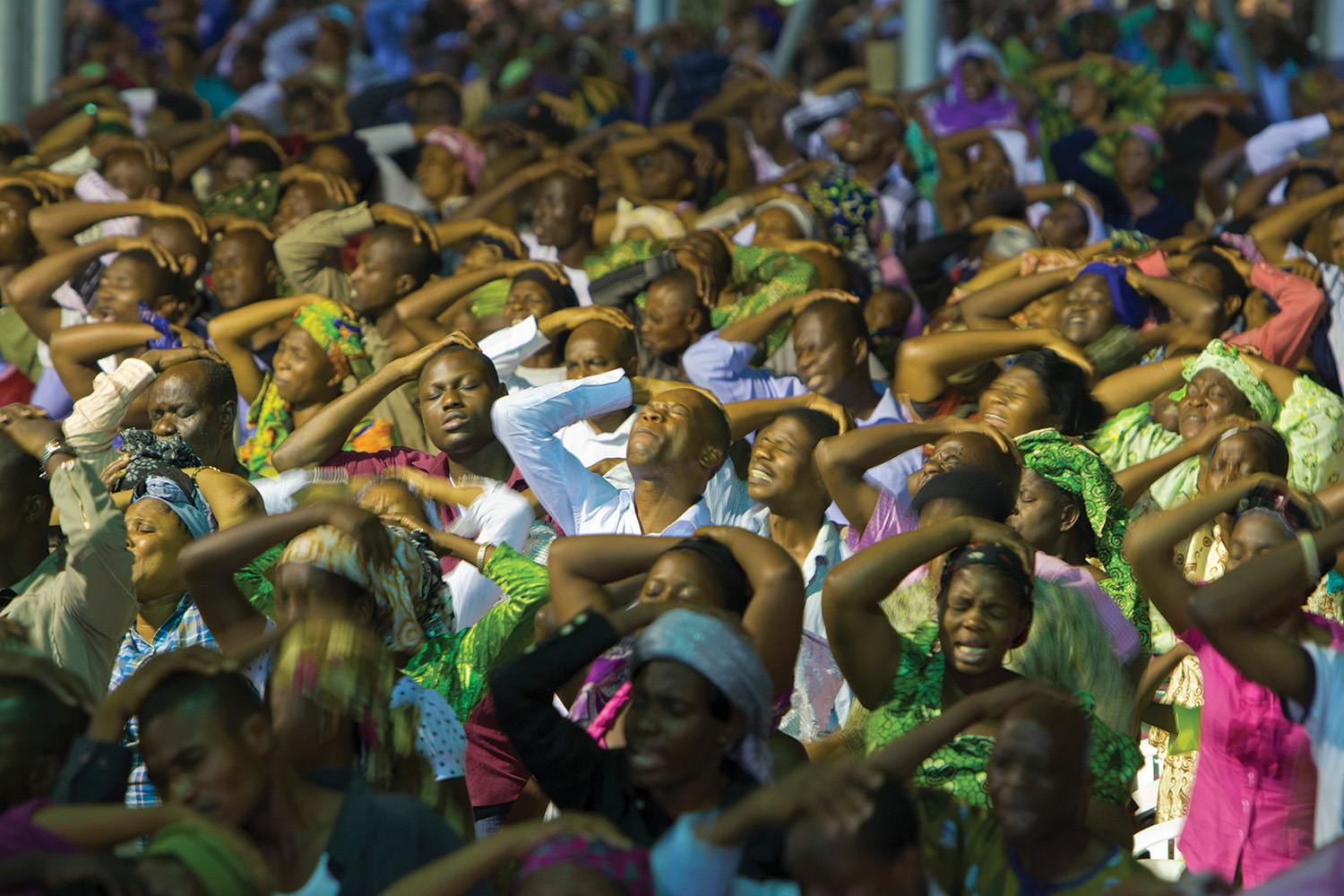
(STR / AFP / Getty Images)
In Lagos, the word of God comes shrink-wrapped. Typically it arrives as a slim, plastic-encased DVD or a colorful softcover booklet con-taining biblical instruction, recorded sermons, and educational melodramas. These cheap packages are produced by the thousands of Pentecostal churches that dot the city and sold alongside sweet snacks and fizzy drinks by roadside hawkers. They convey an enticing promise: instant release from poverty and privation and, in their place, a brighter, better future, free of strife and filled with prosperity.
In a nation where almost half the population lives below the poverty line, the minimum monthly wage is $41, and wealth inequality is extreme, this message has become extraordinarily popular. Nigeria is now home to more born-again Christians than any other African nation; by some counts, there are more than sixty million nationally. The country’s Pentecostal movement exploded in the 1980s, taking flight in Nigeria’s southern half during the successive economic downturns and military juntas that followed the end of its oil boom. These Pentecostal churches advertise themselves as uniquely equipped to tackle the daily challenges that the nation’s dire economic conditions have produced. Today evangelicalism cuts across the country’s myriad ethnic groups and class boundaries, while its most successful ministries maintain hundreds of thousands of outposts across the country, housed in makeshift shelters, former warehouses, and vacated cinemas.
In contrast to other, more established branches of Christianity, which favor rigid priestly hierarchies, restrained forms of worship, and holding out for the promise of great riches and health in the next life, Pentecostalism makes few compromises. Instead, its adherents declare that any ordinary citizen can receive God’s blessing directly and achieve great prosperity and power in the here and now — so long as they participate in frequent gatherings, pay regular tithes, and pray forcefully for the miracles God has in store for them.