The Counterculture’s Come-to-Jesus Moment
How a corruption of New Left ideology became fodder for the religious right.
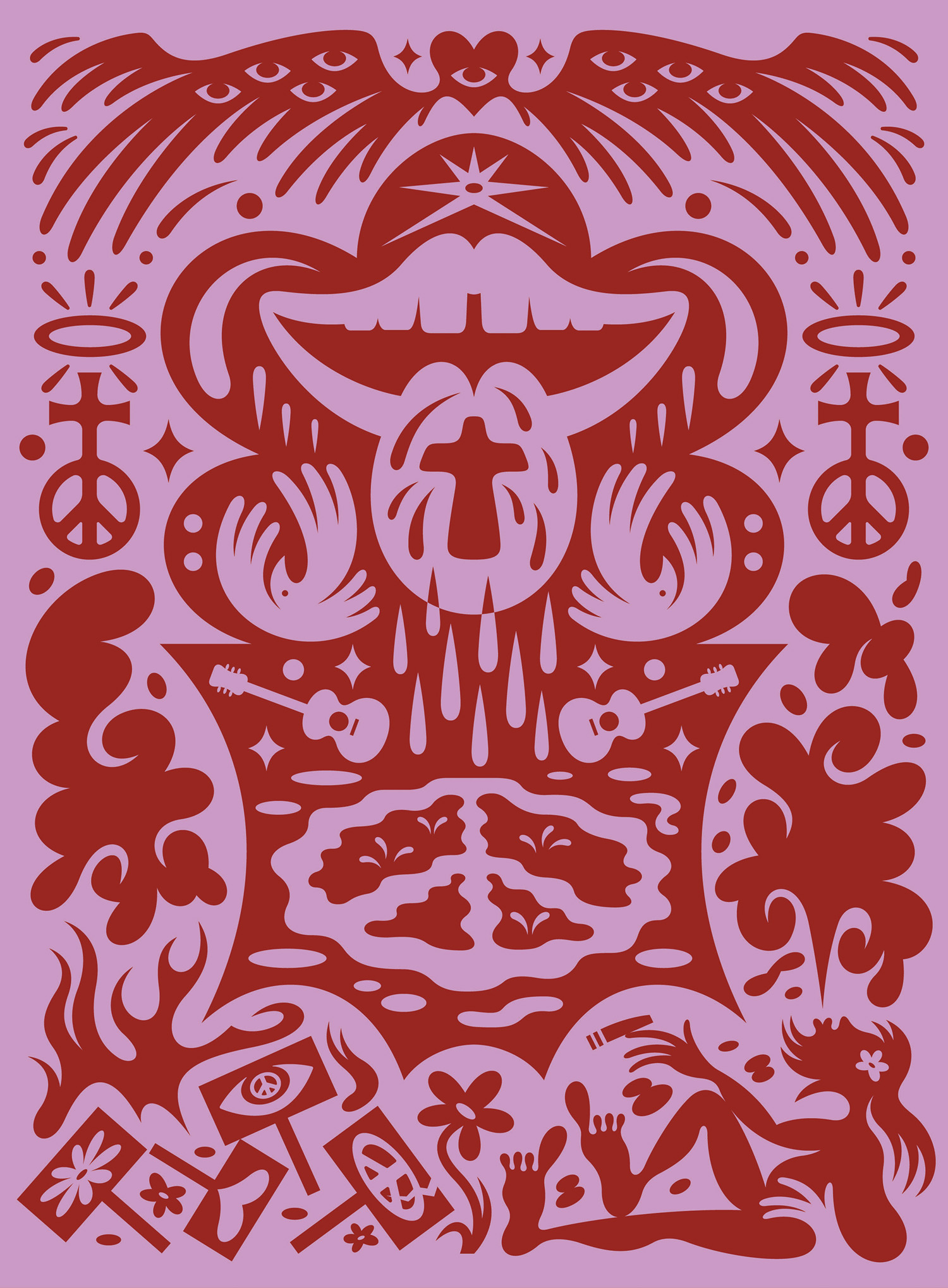
Illustration by Benedikt Luft
In October 30, 1971, the front page of the Augusta Chronicle ran an article on the decline of the New Left side by side with a report on a “modern Pentecost” sweeping the nation. The placement was fitting: hippies and Yippies alike competed over middle-class youths who had breathed the heady air of Haight-Ashbury and other countercultural hubs.
But antiwar demonstrations in Washington, DC, had proven smaller that year than in the preceding two: “The campus atmosphere has been largely normalized,” read the first article. “There no doubt remain pockets of intense New Left feeling . . . [but] for the most part the students are attending to their studies, drinking some beer and looking forward to a weekend date and the exploits of the football team . . . . They don’t much care if we bomb the daylights out of the Ho Chi Minh Trail.” Meanwhile, in that next column over, a fellow Georgia reporter described the spiritual renewal being helmed by “Jesus people,” a youth-driven charismatic movement across the country that had found “expression in song, in witnessing, in prophecy and, for some, in the gift of tongues.”
The news in Augusta that day was merely a harbinger of what was to come, as the New Left fell victim to sectarianism and repression, and a new kind of nonconformist inherited the earth. They looked like hippies had throughout the late 1960s — with long hair, informal clothes, and the characteristic grime of Haight-Ashbury’s itinerant children — but they differed from their countercultural cousins in one key sense: these beatniks weren’t high on hash; they were high on God Most High.