What a Marxist Classic Can Teach Us About AI
Almost 50 years ago, Harry Braverman’s Labor and Monopoly Capital showed us how workers can become the masters of technology rather than letting it rule over them.
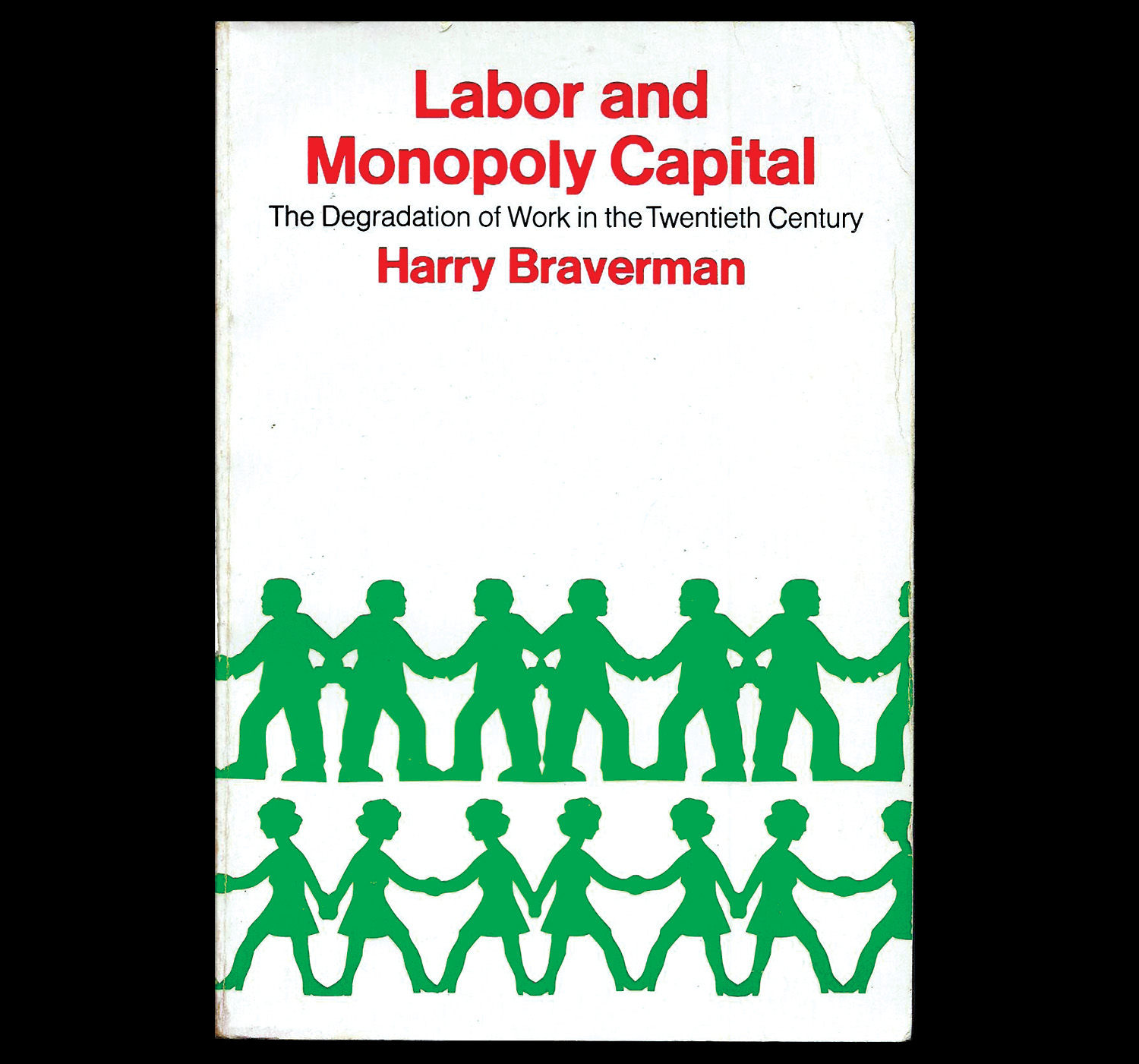
Only yesterday, artificial intelligence was still the stuff of science fiction; now it casts a portentous shadow over the future of work. Depending upon which breathless commentator one believes, AI promises to relieve us of the tedious aspects of our work — or threatens to deprive us of our jobs entirely. Seeking historical perspective, I reached for the classic account of the evolution of the labor process under capitalism, Harry Braverman’s 1974 book Labor and Monopoly Capital.
Braverman’s book ranges further and sees more deeply than its blunt subtitle, “The Degradation of Work in the Twentieth Century,” might suggest. Like his acknowledged model, Karl Marx’s description of the transformation of the production process in Capital, Braverman provides a meticulous investigation of the restless making and remaking of the organization of labor under capitalism. But he never loses sight of the impact of these upheavals on the working class.
Braverman rejected simplistic interpretations of Marx as a technological determinist. Rather, he points out that inventions always present multiple possibilities. In the near term, the dominant social relations shape which of these outcomes are cultivated and which are actively foreclosed. Capitalist relations of production exhibit an “incessant drive to enlarge and perfect machinery on the one hand, and to diminish the worker on the other.” This dynamic reflects capitalism’s larger tendency to separate conception from execution — the work of the brain and the work of the hand. The result is a small stratum of highly trained (and handsomely paid) professionals on the one side and a swelling mass of proletarianized laborers on the other.