Henry in the Gulf
On the “cynical operation” of Kissinger’s Kurdish affair.
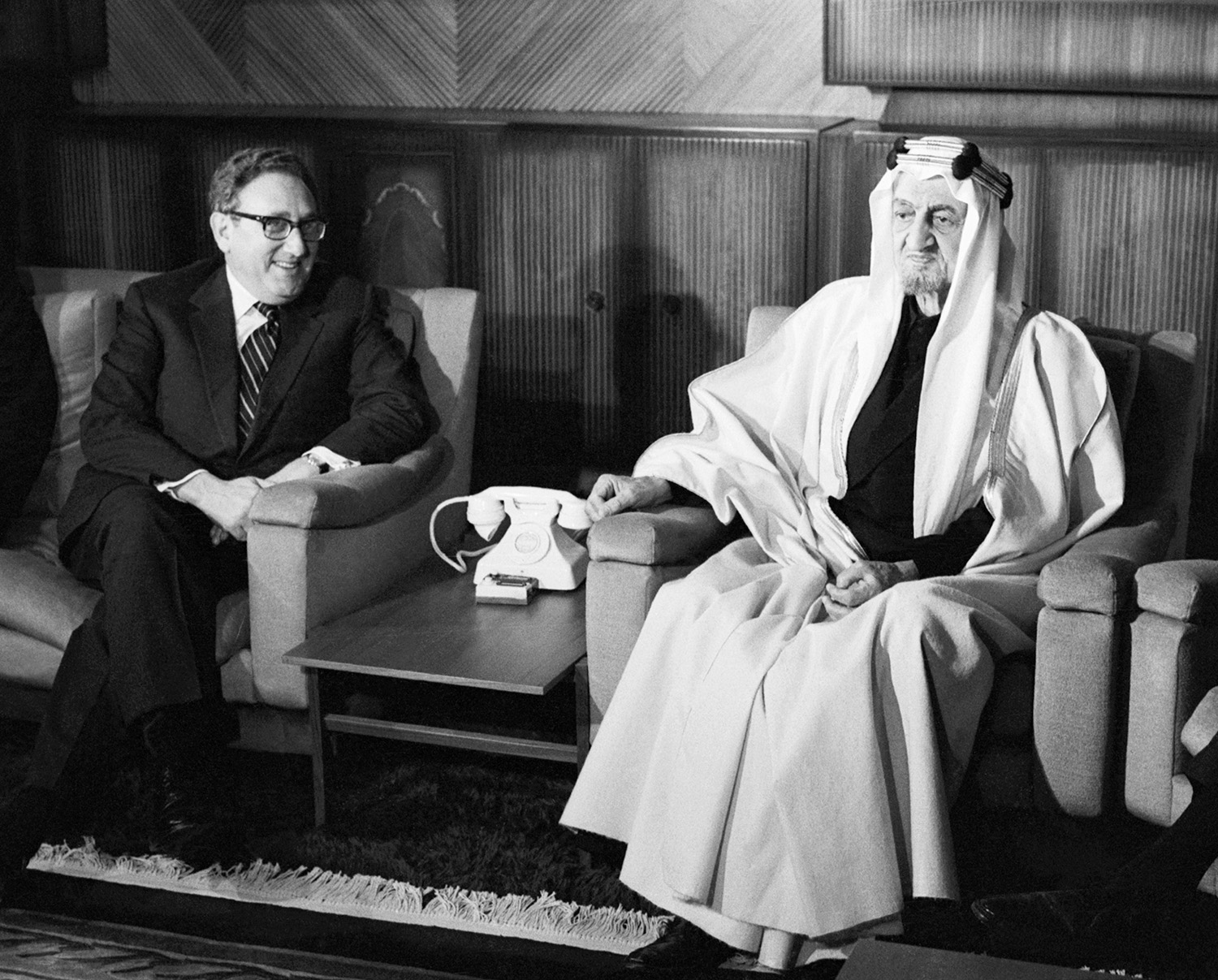
(Bettmann / Contributor)
Henry Kissinger was certainly not the only architect of US empire with blood on his hands, but he was the one who wore that blood most proudly. He seemed to think of world affairs as a game of Risk, describing other countries as spaces on a board to be occupied by plastic game pieces. Kissinger was willing to justify human rights abuses by appealing to the value of “strategic real estate,” as he did to justify American support for the shah’s brutal regime in Iran.
Evidence for the secretary of state’s villainy rested, in part, on his own tongue.
He once told a horrified congressional committee that “covert action should not be confused with missionary work.” He was also known to use a variation of that phrase: “one should not confuse undercover action with social work.” By the time Kissinger said these words in the late 1960s, the Central Intelligence Agency’s pattern of using covert action to overthrow democratically elected governments, back authoritarian regimes, and provide cover for massacres had come under popular scrutiny. With mass movements against the war in Vietnam tying domestic racism and repression to American imperialism, the CIA was for the first time put on the defensive, and elected officials had to at least feign concern.