Cautionary Tales
The English science-fiction writer J. G. Ballard claimed to believe in nothing. Yet his prophetic dystopias reveal a deep awareness of the brutality of class rule and imperialism.
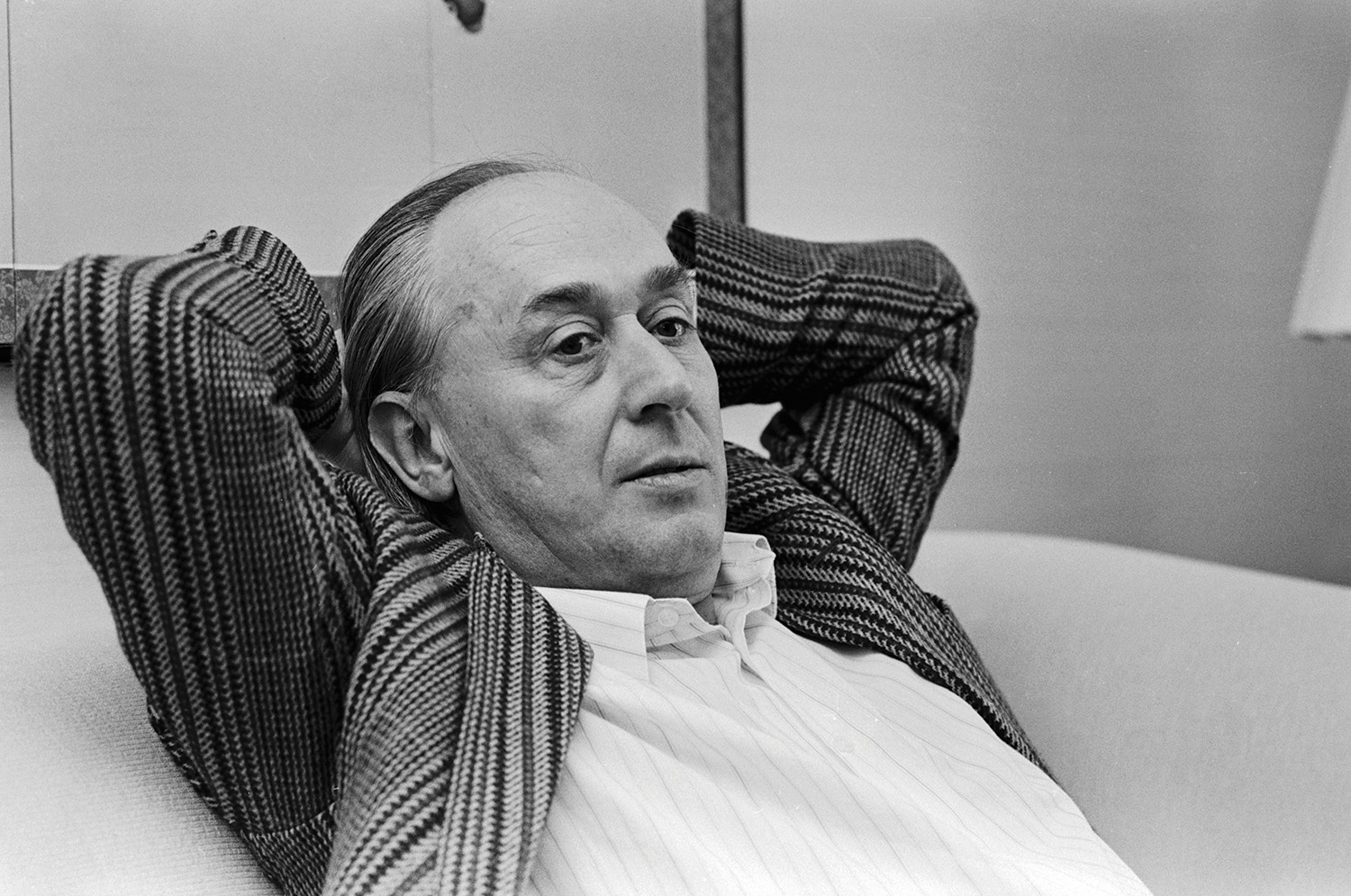
(Bettmann / Contributor)
The English science-fiction writer J. G. Ballard acquired a reputation as a prophet, but what did he believe in? In 1984, he told the small magazine Interzone.
“I believe in the next five minutes,” he writes. “I believe in my own obsessions, in the beauty of the car crash, in the peace of the submerged forest, in the excitements of the deserted holiday beach, in the elegance of automobile graveyards, in the mystery of multi-storey car parks, in the poetry of abandoned hotels.” A couple of years after the Falklands War, he writes, “I believe in the mysterious beauty of Margaret Thatcher, in the arch of her nostrils and the sheen on her lower lip; in the melancholy of wounded Argentine conscripts.” He believes, he continues, “in my dream of Margaret Thatcher caressed by that young Argentine soldier in a forgotten motel watched by a tubercular filling station attendant.”
This apocalyptic credo is the highlight of Selected Nonfiction, 1962–2007, a new anthology from MIT Press collecting what Ballard wrote outside of his novels and short stories. These are statements of apparent amorality from someone in rapturous awe at the modern world without obvious concern for its suffering — and at the same time, of a writer who has somehow stripped off the blinkers that make it appear less terrifying than it actually is. It’s also the work of a great comic writer. The humor doesn’t always translate, but listening to Ballard’s plummy, upper-class accent as he reads this credo in a special 2006 episode of the South Bank Show, it’s difficult not to fall into hysterical laughter.