Automation: Roll Out!
At the heart of the US-Japanese franchise Transformers is a tension between visions of robotics as liberation and as enslavement.
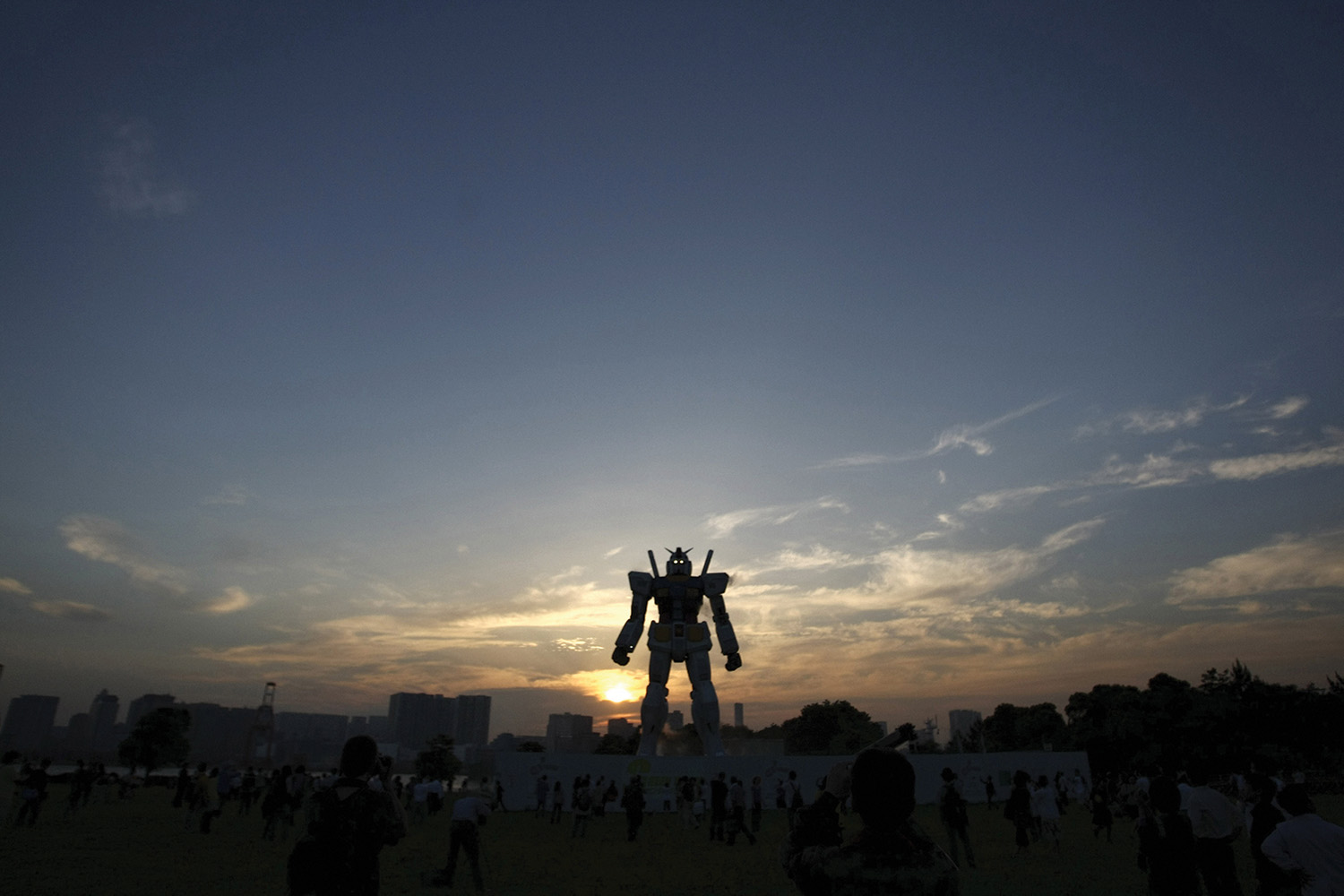
(Yamada Hitoshi / Gamma-Rapho / Getty Images)
For many Generation Xers, watching an old toy commercial on YouTube for a beloved childhood franchise like Transformers provides a sugary rush of nostalgia. But look a little closer at those ads and you’ll find that the “robots in disguise” were the harbingers of all kinds of Reaganite doom and dread, packaged in laser-outlined, high-tech gloss for the kids of the ’80s.
The toys that became household names for North American children under the single banner and storyline known as Transformers — Optimus Prime, Bumblebee, Megatron — in fact sprang from two different lines both manufactured by Tokyo’s Takara Tomy toy company: Diaclone, which featured giant robots that could turn into creatures and contemporary automobiles, and Micro Change, which featured robots hiding inside everyday objects like stereos, watches, and cameras. The Diaclone robots also contained tiny 1:50-scale human pilots who’d steer these massive robots into battle. By the early 1980s, the piloted giant robot would have been a familiar trope to Japanese kids, due to the explosion of what’s now known as mecha manga and anime.
Karakuri automata in Edo-period Japan — mechanical dolls created to provide theatrical and household entertainment for the wealthy — are one of the cultural precursors of Japan’s postwar interest in fictional robots. Mecha series of the ’70s like Mazinger Z, Gundam, and Macross featured heroic young pilots battling alien invaders. Space Battleship Yamato, imported into the United States as Star Blazers in 1979, explicitly referenced industrialized warmaking and the scars left by wartime nationalism and imperialism in Japan with its titular Space Battleship, built by humanity two centuries in the future from a sunken Japanese World War II battleship. The mecha genre also touched upon another hot topic in Japanese postwar discourse: the country’s increasing dependence on robotics to power its industrial dominance.